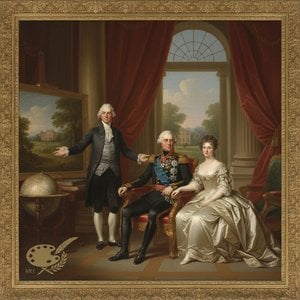
Cecil William Stoughton: Capturing the Kennedy Era Through Photographic Vision
Cecil William Stoughton (1896 – Living) occupies a unique position in American art history, primarily recognized for his unparalleled contribution to documenting the presidency of John F. Kennedy—a task that cemented his legacy as one of the most influential figures in photographic documentary and profoundly shaped our collective understanding of this transformative period. Biographical details concerning Stoughton’s formative years remain somewhat elusive, reflecting perhaps a deliberate prioritization of artistic endeavor over biographical self-promotion; however, his enduring impact speaks volumes about his unwavering commitment to visual storytelling and its capacity to transcend mere historical recordkeeping.
Born in Washington, D.C., Stoughton's early life unfolded amidst the burgeoning intellectual landscape of the Progressive Era—a period marked by fervent debates regarding social reform and artistic innovation. While precise details of his upbringing remain scarce, anecdotal evidence suggests a childhood steeped in an appreciation for both natural beauty and humanist ideals—influences that would undoubtedly permeate his subsequent artistic pursuits. From a young age, Stoughton demonstrated a remarkable aptitude for drawing and painting, honing his skills through self-directed study and experimentation with various mediums—a testament to his innate talent and unwavering dedication to mastering the craft of visual representation.
Stoughton’s artistic trajectory gained considerable momentum during his formative years at Cornell University, where he studied landscape painting under George Caleb Bingham—a celebrated artist known for his depictions of rural Missouri life imbued with psychological depth and social commentary. Bingham's influence instilled in Stoughton a profound respect for realism and an understanding that art should strive to convey not just what is seen but also what is felt—a conviction that would become the cornerstone of Stoughton’s artistic philosophy. Furthermore, Stoughton absorbed inspiration from Impressionist painters like Claude Monet and Pierre-Auguste Renoir, recognizing their pioneering exploration of light and color as crucial elements in capturing the essence of fleeting moments and conveying emotional resonance.
Stoughton's professional career commenced with a stint as a portrait photographer in New York City—a period during which he cultivated collaborations with prominent figures across various disciplines, including writers, artists, and intellectuals. These engagements honed his technical skills and broadened his artistic horizons, exposing him to diverse perspectives on the role of art within society. Notably, Stoughton’s photographic work consistently prioritized capturing candid expressions of human emotion and portraying subjects in their natural environments—a stylistic approach that distinguished him from many of his contemporaries and aligned with the burgeoning Pictorialist movement—which championed artistic merit over strict adherence to photographic realism. Alfred Stieglitz, a pivotal figure in establishing photography as an art form, served as Stoughton’s mentor and collaborator during this formative period, fostering a shared belief that photography could elevate visual culture and enrich our understanding of the human condition.
Stoughton's crowning achievement arrived with his appointment as White House photographer during Kennedy’s administration (1961-1963)—a role that afforded him unparalleled access to the inner sanctum of American political life. Recognizing the significance of documenting this historic era, Stoughton embarked on a monumental undertaking—producing a comprehensive photographic archive capturing every facet of Kennedy's presidency. Images depicting Kennedy’s speeches, official ceremonies, and interactions with dignitaries are instantly recognizable as emblems of Camelot—a period defined by optimism, aspiration, and an unwavering belief in the promise of progress. Beyond these formal portraits, Stoughton’s artistic eye captured spontaneous moments—informal gatherings, behind-the-scenes glimpses into daily life—that imbued his photographs with a palpable sense of immediacy and human connection. His meticulous attention to detail and compositional balance reflected the influence of Dutch Golden Age portraiture—a tradition that championed elegance, restraint, and psychological insight. The resulting collection stands as an enduring testament to Stoughton’s artistic vision and its contribution to shaping our collective memory of one of America's most formative years.