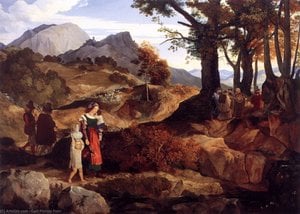
Una Vita di Malinconica Bellezza: La Breve Brillantezza di Carl Philipp Fohr
La storia di Carl Philipp Fohr è una narrazione di profonda e fugace brillantezza—il racconto di un giovane talento la cui vita fu tragicamente interrotta, ma il cui retaggio artistico rimane impresso nei paesaggi evocativi dell'era Romantica. Nato nel 1795 nella storica città di Heidelberg, in Germania, Fohr emerse da una stirpe intellettale che fornì il terreno fertile necessario per la sua crescente creatività. Sebbene la sua permanenza sulla terra sia stata straordinariamente breve, durata solo ventitré anni, egli riuscì a catturare un'essenza specifica e inquietante del mondo naturale che continua a risuonare con collezionisti e storici allo stesso modo. I suoi primi anni furono definiti da una ricerca della maestria che bypassò i rigidi vincoli dell'accademia tradizionale in favore di una connessione più viscerale ed emotiva con il proprio soggetto.
Il viaggio artistico di Fohr fu plasmato da incontri cruciali e dal patrocinio di figure influenti. Sotto la guida di Friedrich Rottmann, iniziò a raffinare le sue sensibilità tecniche, ma fu il suo trasferimento a Darmstadt nel 1811 a catalizzare veramente la sua carriera. Grazie al riconoscimento di Georg Wilhelm Issel, Fohr entrò nell'orbita della Granduchessa Wilhelmine d'Assia, le cui generose commissioni gli fornirono la stabilità e le risorse necessarie per esplorare le profondità della sua immaginazione. Questo periodo di mecenatismo gli permise di colmare il divario tra studente e professionista, mentre cercava un ulteriore perfezionamento attraverso collaborazioni con figure come Ludwig Sigismund Ruhl presso l'Accademia di Belle Arti di Monaco. Questi primi legami gli infondarono una doppia maestria, sia nella delicata trasparenza dell'acquerello che nella ricca e materica profondità della pittura a olio.
Il Wanderlust Romano e lo Spirito Romantico
Nel 1816, spinto da un'insaziabile sete di nuova luce e di ispirazione classica, Fohr abbandonò i percorsi strutturati della sua formazione tedesca per intraprendere un viaggio trasformativo verso l'Italia settentrionale. Questo pellegrinaggio a Roma fu molto più di un semplice cambio di scenario; fu un'immersione spirituale nel cuore del mondo classico. Nell'atmosfera vibrante e baciata dal sole dell'Italia, Fohr incontrò le opere di Joseph Anton Koch, i cui vasti e drammatici paesaggi fornirono un modello profondo per la sua estetica in divenire. L'influenza del paesaggio romano—l'interazione tra antiche rovine e il flusso senza tempo del fiume Tevere—infuse la sua opera con un senso di grandezza e di peso storico.
La sua tecnica durante questo periodo raggiunse l'apice della sensibilità, caratterizzata da un comando squisito della luce e del colore. Fohr possedendo una rara capacità di utilizzare l'acquerello sopra la grafite per creare atmosfere che sembravano al contempo tangibili e oniriche. Le sue composizioni catturavano spesso i seguenti elementi con un'emozione senza pari:
- Il Dramma della Luce: Catturare i momenti fugaci dell'alba e del tramonto che definiscono l'umore Romantico.
- La Grandezza Architettonica: Integrare rovine e strutture storiche nel paesaggio naturale per evocare il senso del tempo che passa.
- La Profondità Atmosferica: Utilizzare velature morbide e linee precise per creare un senso di spazio immenso e pulsante all'interno delle sue vedute.
Eredità e Significato Artistico
Forse nessuna opera racchiude la capacità di Fohr di coniugare il monumentale con l'intimo meglio del suo progetto per “I Quattro Castelli di Neckarsteinach.” In questo magnifico acquerello, egli ritrae le imponenti rovine del Castello di Heidelberg, non semplicemente come pietra e malta, ma come un protagonista drammatico immerso in un cielo turbolento ed emotivo. È in questi momenti—dove il paesaggio diventa uno specchio per l'anima umana—che risiede la vera importanza di Fohr. Era un pittore che comprendeva che il paesaggio non era mai solo scenario; era un contenitore di memoria, desiderio e sublime.
Sebbene la sua morte nel 1818 abbia lasciato il mondo dell'arte a piangere una voce che aveva appena iniziato a cantare, i contributi di Carl Philipp Fohr al Romanticismo tedesco rimangono indelebili. Egli si erge come testimonianza del potere dello spirito indipendente, un artista che cercò la verità tra le ombre delle rovine e la brillantezza del sole italiano. Oggi, le sue opere fungono da preziosi finestrini su un'epoca passata, invitandoci a sperimentare lo stesso senso di meraviglia e malinconia che ha definito la sua breve ma luminosa vita.
Domande e risposte
A quali movimenti appartiene l'opera di Carl Philipp Fohr?
La pagina Tutti i movimenti raggruppa le opere di Carl Philipp Fohr per movimento artistico.
In quale città e in quale paese è nato/a Carl Philipp Fohr?
Carl Philipp Fohr è nato a Heidelberg, in Germania.
Quali colori ha usato più spesso Carl Philipp Fohr?
Il Profilo Cromatico dell'Artista di Carl Philipp Fohr è una pagina che presenta il profilo cromatico dell'intera produzione dell'artista.