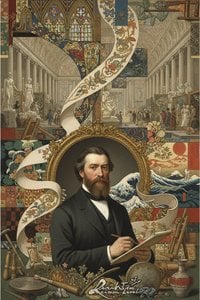
Carl Johann Spielter: A Window into 19th-Century German Life
Carl Johann Spielter (1851-1922) emerges as a significant figure in late 19th-century German art, renowned for his evocative depictions of everyday life and the burgeoning spirit of the Victorian era. Born in Munich, Spielter’s artistic journey was shaped by a confluence of influences – from the rigorous training at the School of Applied Arts, where he studied under Ferdinand Barth, to the mentorship of Hungarian masters like Gyula Benczúr and Otto Seitz within Vienna's prestigious Academy.
Spielter’s early career saw him working as a commercial artist, honing his skills in depicting scenes of commerce and trade. However, it was his shift towards capturing the nuances of 19th-century life that truly cemented his reputation. He became particularly celebrated for his ‘English’ series – a collection of paintings that offered intimate glimpses into the lives of English families, merchants, and artisans. These works weren't merely portraits; they were carefully constructed narratives, imbued with a keen observation of social customs, economic realities, and the subtle dramas unfolding within domestic settings.
The Spitzweg Collection and Architectural Inspiration
Spielter’s artistic vision was deeply rooted in the architectural styles prevalent during his time. His paintings frequently feature meticulously rendered Baroque interiors – grand halls, cozy parlors, and bustling workshops – reflecting a fascination with the grandeur of the past and its influence on contemporary life. This interest is often linked to his association with the Spitzweg collection, a group of artists who sought to revive and reinterpret the spirit of the Baroque era through their work. Spielter’s ability to capture the atmosphere and details of these spaces – from the rich textures of tapestries to the warm glow of candlelight – contributed significantly to the enduring appeal of his paintings.
His works often showcased antique dealer scenes, capturing a sense of nostalgia for a bygone era. The meticulous attention to detail in depicting furniture, textiles, and decorative objects speaks volumes about Spielter’s artistic sensibility and his desire to transport viewers back in time. Furthermore, the influence of artists like Hans Makart, who emphasized dramatic lighting and emotional intensity, is evident in Spielter's compositions.
Themes and Artistic Style
Spielter’s paintings are characterized by a remarkable blend of realism and romanticism. He avoided overly sentimental or idealized portrayals, instead opting for a nuanced approach that captured the complexities of human relationships and social dynamics. His scenes often depict moments of quiet contemplation, familial affection, and the subtle tensions inherent in everyday life. Spielter’s use of light and shadow is particularly noteworthy, creating a sense of depth and atmosphere that draws the viewer into the depicted world.
His subjects frequently included members of the middle class – merchants, artisans, and their families – offering a rare glimpse into the lives of those who shaped the economic and social fabric of 19th-century Germany. Spielter’s work provides valuable insights into the values, customs, and aspirations of this period.
Legacy and Recognition
During his lifetime, Carl Johann Spielter enjoyed considerable acclaim and his works achieved high prices at international auctions. His paintings continue to be exhibited in museums worldwide, including those within the Spitzweg collection – a testament to their enduring artistic merit. Spielter’s legacy lies not only in his technical skill but also in his ability to capture the spirit of an era, offering viewers a poignant and insightful reflection on the complexities of human experience.