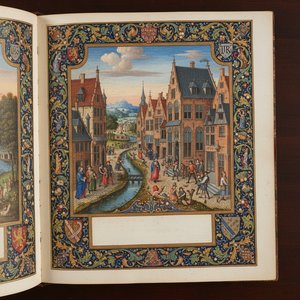
Camillo Procaccini: The Vasari of Lombardy
Camillo Procaccini (1561-1629) stands as a pivotal figure in the artistic landscape of 16th-century Lombardy, earning him the moniker “The Vasari of Lombardy” – a testament to his prolific output and enduring legacy as a fresco painter. Unlike Giorgio Vasari, whose biographical sketches championed Renaissance ideals, Procaccini’s oeuvre delves into the complexities of Mannerist aesthetics and reflects the turbulent religious fervor of the Counter Reformation era. His work transcends mere decoration; it embodies an emotional intensity and dramatic narrative that cemented his place among the most influential artists of his time.
Early Life & Training: Born in Bologna, Procaccini’s artistic lineage traced back to Ercole Procaccini the Elder, a respected Bolognese painter who instilled in his son a foundational understanding of classical principles blended with Mannerist innovation. Alongside his brothers Giulio Cesare and Carlo Antonio – all accomplished artists themselves – Camillo honed his skills within the vibrant Bolognese atelier, absorbing stylistic influences from Correggio and Parmigianino. This formative period established him as a disciple of artistic excellence, preparing him for a distinguished career. He studied under his father, mastering techniques that would become hallmarks of his distinctive style.
Milanese Patronage & Artistic Flourishing: Procaccini’s relocation to Milan in 1587 marked the zenith of his artistic ambitions. Count Camillo Visconti Borromeo, a fervent supporter of the arts and humanist ideals, recognized Procaccini's talent and commissioned him to adorn Lainate Villa – a project that showcased Procaccini’s mastery of spatial illusion and dramatic composition. Subsequent commissions from the Milanese Cathedral and collaborations with Giuseppe Meda and Ambrogio Figino solidified his reputation as Lombardy’s foremost fresco artist. These undertakings weren’t merely aesthetically driven; they served as powerful instruments for disseminating Catholic dogma during a period marked by religious upheaval, demonstrating Procaccini's ability to convey profound spiritual messages through visual art.
Style & Technique: Procaccini’s artistic style is characterized by a distinctive blend of Mannerist elegance and expressive dynamism. He eschewed the idealized forms favored by Raphael and Michelangelo, opting instead for figures rendered with subtle distortions—a technique known as *sprezzatura*—that conveyed psychological depth and emotional intensity. His meticulous attention to detail—particularly in drapery folds and facial expressions—created a palpable sense of realism despite stylistic conventions. Procaccini’s use of chiaroscuro – dramatic contrasts between light and dark – heightened the visual impact of his frescoes, imbuing them with an aura of solemn grandeur. He perfected the art of illusionistic painting, creating breathtaking vistas that captivated viewers and reinforced the grandeur of religious spaces.
Notable Works & Collaborations: Procaccini's artistic output spanned decades and encompassed a breathtaking array of commissions. Among his most celebrated achievements are the frescoes of the Basilica della Ghiara in Reggio Emilia (1587), where he demonstrated his ability to capture movement and emotion with unparalleled precision; the Lainate Villa decorations, showcasing innovative spatial perspectives; and the monumental altar panels for Milan Cathedral (1605-1609) alongside Meda and Figino – a collaborative effort that exemplifies Procaccini’s artistic vision. His frescoes in Piacenza Cathedral and San Barnaba Church stand as enduring monuments to his skill and dedication, reflecting the influence of humanist ideals on Lombardy's artistic landscape.
Legacy & Influence: Camillo Procaccini's influence extended far beyond his immediate contemporaries. He established an academy in Milan, nurturing the talents of younger artists and shaping the artistic sensibilities of a generation. His unwavering commitment to Mannerist principles—particularly its expressive power and psychological realism—challenged prevailing aesthetic norms and paved the way for subsequent developments in Baroque art. Procaccini’s reputation as “The Vasari of Lombardy” persists today – a recognition of his unparalleled contribution to Italian Renaissance painting and his enduring legacy as an artist who captured the spirit of his time, securing his place as one of the most important figures in Lombardy's artistic history.