A Life Immersed in Color and Form
Nicholas Brice Marden Jr., known to the art world simply as Brice Marden, was a pivotal figure in American painting whose career spanned over six decades. Born October 15, 1938, in Bronxville, New York, and passing away August 9, 2023, in Tivoli, New York, Marden’s artistic journey defied easy categorization, existing at the intersection of minimalism, abstract expressionism, color field painting, and lyrical abstraction. His life was as multifaceted as his art—a blend of rigorous formal exploration, deep engagement with historical precedents, and a restless curiosity that led him to diverse cultural landscapes. Growing up in Briarcliff Manor, New York, Marden’s early exposure to the arts laid the foundation for his future pursuits. He attended Florida Southern College before earning his BFA from Boston University's School of Fine and Applied Arts in 1961. It was at Yale School of Art and Architecture where he completed his MFA in 1963, that Marden truly began to forge his artistic path, studying under a constellation of influential figures including Esteban Vicente, Alex Katz, and Jack Tworkov. His cohort included future luminaries like Richard Serra, Chuck Close, and Vija Celmins, fostering an environment of intense creative exchange.Early Explorations: Minimalism and the Monochrome
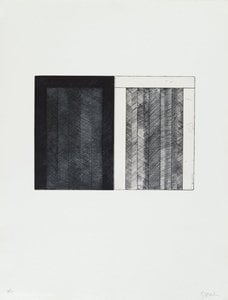
Marden’s initial artistic endeavors centered on minimalist principles—a deliberate reduction to essential forms and colors—influenced by artists such as Josef Albers and Agnes Martin. He began experimenting with charcoal and graphite grid-patterned drawings, meticulously tracing geometric shapes onto paper with unwavering precision. This methodical approach served as a springboard for his signature monochrome panels—works executed in oil and beeswax that explored the subtle nuances of tonal variation within limited palettes. These canvases weren’t merely exercises in simplification but rather investigations into the inherent qualities of paint itself: its viscosity, texture, and capacity to evoke mood and atmosphere. Pieces like “The Dylan Painting” (1966) exemplify this early period—quietly powerful statements that challenged conventional notions of representation and embraced the expressive potential of pure form. Marden’s meticulous layering technique—applying thin coats of paint over multiple sessions—created surfaces that seemed to shimmer with an inner luminescence, reflecting his profound respect for material properties. He wasn't striving for emptiness but rather a palpable sense of presence—a deliberate confrontation with the fundamental elements of visual experience.Influences and Artistic Dialogue
Marden’s artistic vision was profoundly shaped by encounters with seminal artists whose work resonated deeply within him. His formative years were marked by an immersion in the American folk music revival scene, based in Cambridge, Massachusetts, where he absorbed the expressive energy of songwriters like Joni Mitchell and Bob Dylan. Simultaneously, Marden studied the paintings of Robert Rauschenberg extensively—particularly his early explorations of collage and assemblage—drawing inspiration from Rauschenberg’s willingness to disrupt traditional artistic conventions. He was particularly captivated by the Baroque masters Francisco de Zurbarán, Francisco Goya, and Diego Velázquez—artists whose masterful use of chiaroscuro and psychological depth served as models for Marden's own compositional strategies. These influences informed his stylistic choices throughout his career, resulting in a distinctive visual language characterized by understated elegance and intellectual rigor.Expanding Horizons: From Hydra to Asia
A transformative experience occurred during Marden’s visit to the Greek island of Hydra in 1971—accompanied by Helen Harrington—where he was captivated by the luminous Mediterranean light and the ancient ruins that permeated the landscape. This journey ignited a renewed interest in color and texture, propelling him toward bolder explorations of materiality and surface treatment. He began experimenting with marble fragments—creating paintings directly onto the stone surface—a practice that underscored his commitment to confronting the physicality of art. Furthermore, Marden’s fascination with Asian art—particularly calligraphy and architectural grandeur—influenced his artistic sensibilities during the 1980s. His travels through Thailand, Sri Lanka, and India yielded inspiration for works imbued with meditative qualities—such as “Shell Drawings” (1985-87) and the celebrated "Cold Mountain" series (1989-1991)—which combined gestural lines with pale backgrounds to evoke a sense of expansive space.Legacy and Recognition
Brice Marden’s artistic legacy extends far beyond his individual oeuvre—he profoundly impacted subsequent generations of painters who embraced his minimalist aesthetic and championed the expressive potential of monochrome. His unwavering dedication to formal exploration, coupled with his intellectual curiosity and sensitivity to cultural traditions, cemented his place as one of America's most distinguished artists of the 20th century. Marden’s works are held in major museum collections worldwide—including the Museum of Modern Art, the Solomon R. Guggenheim Museum, and the San Francisco Museum of Modern Art—testaments to the enduring power of his vision and its continuing relevance to contemporary art discourse. He leaves behind a body of work that continues to inspire awe and contemplation—a testament to his unwavering belief in the transformative capacity of art.Domande e risposte
A quale periodo storico appartiene l'opera di Brice Marden?
Brice Marden ha operato nel periodo Età Moderna, collocando storicamente la sua attività.
Esiste una linea del tempo delle opere di Brice Marden?
È disponibile una cronologia delle opere di Brice Marden: la pagina Cronologia delle opere dell'artista presenta le opere in ordine cronologico.
È disponibile un elenco completo delle opere di Brice Marden?
Tutte le opere di Brice Marden presenti su questo sito web sono consultabili nella pagina Tutte le opere dell'artista.