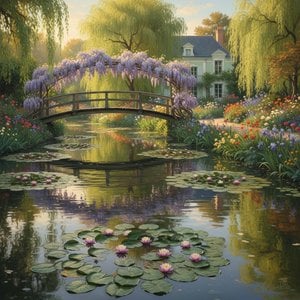
Blanche Hoschedé-Monet: Una Compagna Silenziosa dell'Impressionismo
All'interno del luminoso e spesso turbolento arazzo del movimento impressionista, certi nomi risplendono di una brillantezza innegabile, mentre altri esistono in un tenue bagliore periferico. Blanche Hoschedé-Monet (1865-1947) appartiene a questa evocativa seconda categoria: una figura di un'arte silenziosa e profonda, la cui vita era inestricabilmente intrecciata con la trama stessa di Giverny. Nata a Parigi il 10 novembre 1865, Blanche era la figlia di Ernest Hoschéde, un eminente uomo d'affari e un vitale mecenate di Claude Monet. I suoi primi anni furono segnati dall'intersezione tra commercio e alta arte, poiché la collezione di suo padre contribuì a nutrire il talento nascente dell'uomo che sarebbe diventato il suo mentore, il suo patrigno e, infine, suo marito.
La traiettoria della vita di Blanche fu irrevocabilmente alterata dai mutamenti delle fortune familiari. Quando l'impero finanziario di Ernest Hoschéde crollò nel 1877, la successiva asta della sua collezione impose un trasferimento nel pittoresco paesaggio di Vétheuil. Fu qui, tra le ampie vedute del fiume e la serenità pastorale, che Blanche iniziò a trovare la propria voce artistica. Sebbene la storia la ricordi spesso attraverso la lente del suo rapporto con Claude Monet, la sua presenza a Giverny fu molto più di quella di una semplice parente; fu una studentessa dedita e un'assistente devota, assorbendo le tecniche del maestro della pittura en plein air e applicandole alle proprie sensibili osservazioni della natura.
L'Arte della Luce e l'Eredità di Giverny
Lo sviluppo artistico di Blanche fu caratterizzato da una profonda, ritmica connessione con i cicli stagionali dei giardini di Giverny. Man mano che evolveva nei ruoli di studentessa e collaboratrice, la sua pennellata iniziò a rispecchiare le qualità effimere della luce e dell'atmosfera che definirono l'epoca impressionista. Non si limitava a dipingere paesaggi; documentava l'anima del giardino. Le sue opere si concentravano spesso sul delicato intreccio tra acqua, flora e luce, catturando i salici piangenti e le ninfee galleggianti con una precisione che risultava allo stesso tempo intima ed espansiva.
Il suo approccio tecnico fu fortemente influenzato dalla stretta vicinanza ai capolavori del tardo periodo di Monet. Imparò a navigare nelle complessità della teoria del colore e nel modo in cui la luce dissolve la forma, pur mantenendo una sensibilità distinta. I suoi paesaggi possiedee spesso una certa quiete, una qualità contemplativa che li distingue dalle pennellate più energiche dei suoi contemporanei. Questo periodo della sua vita fu segnato anche da uno scambio artistico; collaborò con espatriati americani come Theodore Earl Butler e John Leslie Breck, creando opere che fondevano le tradizioni impressioniste francesi con una fresca prospettiva transatlantica.
Un'Impressione Duratura nella Storia dell'Arte
Sebbene per molti decenni il suo nome sia stato sussurrato nelle ombre dell'eredità di Monet, la moderna storia dell'arte ha iniziato a rivendicare Blanche Hoschedé-Monet come una pittrice significativa a pieno titolo. La sua importanza risiede non solo nella sua abilità tecnica, ma nel suo ruolo di custode dell'estetica di Giverny. Ha vissuto la trasformazione del movimento impressionista da nuovo e radicale modo di vedere a pilastro celebrato della storia dell'arte, e i suoi dipinti fungono da documenti primari vitali dell'atmosfera di quell'epoca.
Oggi, la sua eredità è preservata in varie collezioni e istituzioni, in particolare all'interno del Musée Blanche Hoschedé-Monet (precedentemente il Musée Municipal A.g. Poulain de Vernon). Studiare il suo lavoro significa sperimentare una versione più intima dell'Impressionismo, una che riguarda meno lo splendore grandioso della luce e più la bellezza silenziosa e duratura che si trova negli angoli di un giardino amato. La sua vita rimane una testimonianza del potere della devozione artistica e dei segni sottili e indelebili lasciati da coloro che lavorano accanto alla grandezza.
Domande e risposte
Dove si possono trovare le opere di Blanche Hoschedé-Monet raggruppate per parole chiave?
La pagina Per parole chiave di Blanche Hoschedé-Monet raggruppa le opere dell'artista per parole chiave.
È possibile visitare un museo virtuale delle opere di Blanche Hoschedé-Monet?
La Galleria 3D di Blanche Hoschedé-Monet è una pagina che presenta le opere dell'artista all'interno di una galleria virtuale tridimensionale.
Dove si possono esplorare le opere di Blanche Hoschedé-Monet organizzate per colore?
La pagina Indice dei colori di Blanche Hoschedé-Monet organizza le opere dell'artista in base al colore.