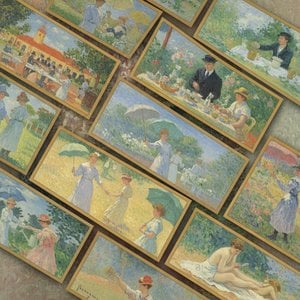
Il Pittore dell'Eleganza Parigina
Auguste Toulmouche (1829-1890) si staglia come una figura luminosa nel mosaico dell'arte francese del XIX secolo, un maestro il cui pennello seppe catturare l'essenza stessa della Belle Époque. Nato a Nantes da Emile Toulmouche, un prospero broker, la sua infanzia fu immersa in un'atmosico di apprezzamento artistico, nutrita dal costante incoraggiamento paterno. Questo sostegno fondamentale gli permise di intraprendere una rigorosa educazione classica, iniziando con lo studio del disegno e della scultura sotto la guida di Amédée Ménard. Il suo percorso lo condusse infine nel cuore di Parigi, dove cercò l'insegnamento dell'estimato Charles Gleyre. Sotto la tutela di Gleyre, Toulmouche affinò il suo dominio del realismo accademico, sviluppando una sofisticata capacità di trasporre le trame dell'alta società sulla tela con una precisione senza pari.
La brillantezza del talento di Toulmouche fu riconosciuta quasi immediatamente dall'establishment artistico. Alla tenera età di diciannove anni, fece il suo debutto al prestigioso Salon di Parigi nel 1848, un ingresso che segnalò l'arrivo di una nuova e formidabile voce nella pittura di genere francese. I suoi successivi trionfi ai Salon del 1852 e del 1861, dove fu onorato con delle medaglie, consolidarono la sua posizione tra l'avanguardia artistica. Questo periodo di crescente fama fu ulteriormente elevato dalla più alta forma di riconoscimento: il patrocinio imperiale. Quando Napoleone III commissionò ‘La Fille’, un ritratto di Eugénie de Bourbon, l'opera servì come profondo testamento della fiducia dell'Imperatore nella visione di Toulmouche e cementò lo status dell'artista come uno dei pittori più alla moda e ricercati dell'epoca.
Una Visione di Opulenza e Introspezione
L'opera di Toulmouche è caratterizzata da una devozione mozzafiato all'estetica dell'alta borghesia. Egli non si limitò a documentare le vite delle donne parigine; creò una visione idealizzata, quasi onirica, del raffinamento domestico. Le sue tele sono celebrate per la meticolosa resa di tessuti opulenti: la lucentezza vibrante della seta, il peso avvolgente del velluto e la delicata complessità del pizzo. Attraverso i suoi occhi, assistiamo a un mondo di arredi sontuosi e interni dorati che incarnano il lusso della Francia del XIX secolo. Eppure, sotto questa superficie di splendore materiale, risiede una profonda profondità psicologica.
In opere come ‘La Fiancée Hesitante’ e ‘The Reluctant Bride’, Toulmouche esplora le sfumature emotive dei suoi soggetti. Possedeva un talento unico nel catturare momenti di quieta introspezione, dove uno sguardo in uno specchio ornato o un sottile movimento del capo suggeriscono una complessa vita interiore. I suoi dipinti invitano spesso lo spettatore a contemplare temi legati all'identità, alla bellezza e alla natura fuggevole della giovinezza. Questa maestria nella luce e nell'ombra — l'interazione tra tenui toni rosa contro blu profondi e ori caldi — crea un'atmosfera che è allo stesso tempo intima e grandiosa, trascinando l'osservatore nei santuari privati ed eleganti dei suoi soggetti.
L'Eredità del Realismo Accademico
Il significato storico di Auguste Toulmouche risiede nella sua capacità di colmare il divario tra la rigorosa tradizione accademica e la suggestiva narrazione della pittura di genere. Mentre la sua tecnica rimaneva radicata nel realismo disciplinato insegnato da Gleyre, i suoi soggetti abbracciavano i mutamenti sociali contemporanei del suo tempo. Egli divenne il cronista di uno specifico strato sociale, preservando l'eleganza sartoriale e i rituali domestici di un'epoca passata per la posterità. Il suo lavoro rimane una finestra vitale sul battito culturale di Parigi durante un periodo di immense trasformazioni.
Ancora oggi, l'influenza di Toulmouche persiste attraverso il fascino duraturo delle sue composizioni. Collezionisti e appassionati d'arte continuano a essere attratti dalla sua capacità di evocare nostalgia e meraviglia. La sua eredità è definita da:
- Maestria Tecnica: Un'abilità senza pari nel rendere texture, luce e le qualità tattili dei beni di lusso.
- Documentazione Culturale: L'offerta di un registro visivo dettagliato delle gerarchie sociali e dei valori estetici della Belle Époque.
- Risonanza Emotiva: La capacità di infondere in ritratti altamente stilizzati un autentico sentimento umano e una complessità psicologica.
Domande e risposte
Quanto sono popolari le opere di Auguste Toulmouche?
Le statistiche relative alle opere di Auguste Toulmouche sono disponibili nella pagina Statistiche dell'artista.
Quante opere di Auguste Toulmouche sono disponibili nel catalogo?
Puoi sfogliare 22 opere d'arte opere di Auguste Toulmouche nella pagina Tutte le opere.
Posso studiare l'uso del colore di Auguste Toulmouche in tutte le sue opere?
L'uso del colore di Auguste Toulmouche nelle opere presenti su questo sito web può essere approfondito consultando la pagina Profilo Cromatico dell'Artista dell'artista.