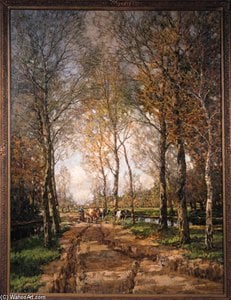
Una Visione Tranquilla dei Paesaggi Olandesi
Arnold Marc Gorter (1866, Almelo – 1933, Amsterdam) si staglia come una figura silenziosa ma di grande rilievo nella tradizione della pittura di paesaggio dei Paesi Bassi tra la fine del XIX e l'inizio del XX secolo. Sebbene possa non godere della stessa fama globale di alcuni dei suoi contemporanei impressionisti, come Franz Marc o Auguste Renoir, l'osservazione meticolosa e la maestria esecutiva di Gorter gli hanno assicurato un posto venerato tra le luminari della sua epoca. La sua capacità di catturare l'essenza stessa della vita rurale olandese con una sensibilità straordinaria fu così profonda da renderlo un artista prediletto dalla Regina Wilhelmina stessa, un onore che dice molto sulla risonanza emotiva e la grazia tecnica presenti nelle sue tele.
Nato nella città orientale di Almelo, il percorso artistico di Gorter fu plasmato da una rigorosa formazione accademica nel cuore di Amsterdam. Nel 1888, iniziò i suoi studi sotto l'egida stimata di August Allebé e Pierre Cuypers presso la Rijksnormaalschool voor teekenonderwijzers. Questo periodo formativo gli trasmise una comprensione fondamentale della tecnica realista, che perfezionò successivamente frequentando la Rijksakademie van beeldende kunsten tra il 1889 e il 1891. Questi anni di studio disciplinato stabilirono il suo impegno nel ritrarre il mondo naturale con uno sguardo capace di coniugare precisione strutturale e profondità atmosferica.
Maestria della Luce e dell'Atmosfera
Con il progredire della carriera di Gorter, la sua opera iniziò a riflettere le correnti stilistiche più ampie che attraversavano l'arte europea. Pur rimanendo radicato nel realismo, il suo approccio si evolse verso una tavolozza più eterea, dove l'attenzione si spostò dal dettaglio topografico preciso alla trasmissione del sentimento e dell'atmosfera. Si può percepire la sottile influenza delle filosofie impressioniste nella sua produzione, in particolare nel modo in cui manipolava la luce per evocare specifiche emozioni stagionali. Che stesse ritraendo la luce argentea e malinconica di una giornata invernale o la vibrante vitalità soleggiata di un sentiero autunnale, Gorter possedeva il dono unico di rendere il paesaggio vivo e pulsante.
La sua abilità tecnica non era solo una questione di soddisfazione personale, ma fu riconosciuta sui palcoscenici internazionali più prestigiosi. Un momento decisivo della sua vita professionale avvenne nel 1910, quando ricevette una medaglia d'oro al Salon di Parigi, un traguardo che consolidò la sua reputazione ben oltre i confini dei Paesi Bassi. I suoi dipinti invitano spesso lo spettatore in un mondo dove il tempo sembra rallentare; in opere come Canal Landscape with Trees, la terra appare a riposo e incolta sotto cieli pesanti, creando un senso di realismo poetico che è allo stesso tempo crudo e profondamente confortante.
Eredità e Leadership Artistica
Al di là del cavalletto, Gorter fu un pilastro della comunità artistica olandese. Il suo impegno attivo in prestigiose organizzazioni come il Pulchri Studio e l'Arti et Amicitiae sottolinea la sua dedizione nel promuovere l'innovazione e nell'elevare gli standard delle arti visive. Non si limitò a partecipare a questi circoli, ma li guidò, ricoprendo la carica di presidente dell'associazione degli artisti Arti et Amicitiae. Questo ruolo di leadership gli permise di influenzare la direzione dell'arte olandese e di connettersi con una vasta gamma di figure influenti, dai colleghi pittori alla famiglia reale.
Il significato storico della vita di Gorter è forse illustrato magnificamente dal suo legame personale con la monarchia olandese. Nel 1922, accompagnò la Regina Wilhelmina in un viaggio attraverso la Norvegia, fungendo non solo da compagno ma anche da suo maestro di pittura. Questo ruolo intimo evidenzia il rispetto in cui era considerato il suo talento. La sua eredità continua attraverso i numerosi allievi che ha guidato, tra cui Marinus Bies e Carel Lodewijk Dake, assicurando che la sua dedizione alla bellezza del mondo naturale possa riverberarsi nelle generazioni successive di pittori di paesaggio.
Domande e risposte
In quale città e in quale paese è nato/a Arnold Marc Gorter?
Arnold Marc Gorter è nato a Almelo, in Paesi Bassi.
Quali sono il luogo e l'anno di nascita di Arnold Marc Gorter?
Arnold Marc Gorter è nato a Almelo nel 1866.
Posso esplorare le opere di Arnold Marc Gorter in base allo spettro dei colori?
Le opere di Arnold Marc Gorter possono essere esplorate per colore nella pagina Indice Spettrale dell'artista.