Antônio Francisco Soares: Un pioniere del Carnevale brasiliano
Primi anni e origini
- Nascita: Rio de Janeiro, Brasile, 1754.
- Pochissime informazioni giungono fino a noi riguardo agli anni formativi o all'addestramento artistico ufficiale di Antônio Francisco Soares. La sua figura emerse non attraverso i circuiti accademici consolidati, ma grazie ai suoi preziosi e pratici contributi alle celebrazioni pubbliche.
- La sua identità era profondamente intrecciata con le strutture sociali del Brasile coloniale: egli non fu solo un artista, ma ricoprì anche il ruolo di ufficiale militare, dimostrando una versatilità di talenti che univa l'estro creativo al rigore della funzione pubblica.
Contributi artistici e le festività del 1786
- Un ruolo cruciale: Soares è ricordato principalmente per il suo contributo fondamentale nell'organizzazione delle sontuose festività ospitate dal Viceré Luís de Vasconcelos e Sousa a Rio de Janeiro nel 1786.
- Le sue responsabilità erano vaste e ambiziose, comprendendo la progettazione e la costruzione di elaborati carri, scenografie e l'intera gestione dello spettacolo visivo per tali eventi. Non si trattava di semplici elementi decorativi, ma di componenti essenziali per dare vita a un'esperienza pubblica vibrante e coinvolgente.
- I suoi progetti includevano carri allegorici intricati, rappresentazioni simboliche e performance teatrali capaci di incantare il pubblico dell'epoca.
Un precursore del Carnevale moderno
- Innovazione: Soares è considerato un vero precursore delle moderne celebrazioni del Carnevale in Brasile, avendo introdotto innovazioni che hanno trasformato diversi aspetti delle feste di strada.
- Il suo genio si manifestò attraverso progressi nella scenografia, creando ambienti immersivi e visivamente sbalorditivi; nel design teatrale, integrando performance drammatiche; nell'uso di elementi architettonici, con la costruzione di strutture temporanee per le celebrazioni; e nelle rappresentazioni simboliche, impiegando l'iconografia per trasmettere significati profondi e coinvolgere i partecipanti.
- La sua opera andò ben oltre la semplice sfilata, gettando le basi per le complesse e sfaccettate tradizioni del Carnevale che si sono evolute nei secoli.
Stile artistico e opere degne di nota
- Stile: Lo stile artistico di Soares affonda le sue radici nella tradizione barocca, caratterizzata da dettagli ornamentali, un senso del dramma e una maestosa grandiosità. Questa estetica, predominante nel XVIII secolo, si sposava perfettamente con la natura sfarzosa delle celebrazioni da lui ideate.
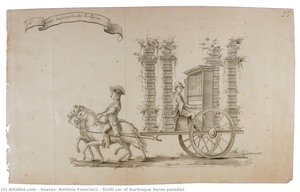
- Le sue opere note consistono principalmente in incisioni che ritraggono i carri e gli apparati decorativi creati per le festività del 1786.
- Tra le opere più significative troviamo: “Sesto carro delle parate equestri burlesche”, “Quinto carro della parata equestre”, “Secondo carro e monte di Giove”, “Terzo carro e monte di Bacco”, “Primo monte e carro del vulcano” e “Quarto carro dei mori”. Queste incisioni offrono una finestra preziosa sulla sua visione creativa.
Significato storico ed eredità
- Un pioniere sottovalutato: Nonostante i suoi contributi straordinari, Antônio Francisco Soares è rimasto in gran parte ignorato dalla storia dell'arte brasiliana per molti anni. La sua biografia è scarsamente documentata e la sua figura è spesso assente dai principali resoconti storici.
- Tuttavia, la ricerca accademica recente ha iniziato a riconoscere la sua importanza come figura fondante nello sviluppo dell'identità culturale brasiliana e delle tradizioni del Carnevale.
- Il suo approccio innovativo allo spettacolo pubblico ha gettato le fondamenta per una delle celebrazioni più iconiche del Brasile, consolidando il suo posto come figura chiave nel patrimonio artistico e culturale della nazione.