CONSULENZA D'ARTE GRATUITA

x

Antonín Chittussi

1847 - 1891

Brevi note biografiche

  • Also known as: Antonin Chittussi
  • Died: 1891
  • Art period: XIX Secolo
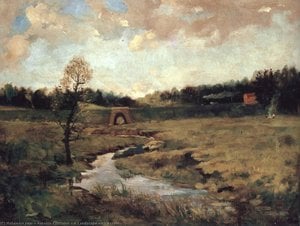
  • Top-ranked work: A Landscape with a train
  • Museums on APS:
    • Národní Galerie v Praze
    • Národní Galerie v Praze
    • Národní Galerie v Praze
    • Národní Galerie v Praze
    • Národní Galerie v Praze
  • Nationality: Boemia
  • Espandi dettagli…
  • Top 3 works:
    • A Landscape with a train
    • A Landscape with a Quarry at Champigny
  • Born: 1847, Boemia
  • Works on APS: 2
  • Lifespan: 44 years
  • Copyright status: Public domain

Quiz d'arte

Per ogni domanda è presente una sola risposta corretta.

Domanda 1:
Qual era la professione del padre di Antonín Chittussi?
Domanda 2:
Dove Chittussi studiò inizialmente le tecniche di disegno?
Domanda 3:
Perché Chittussi e Aleš furono espulsi dall’Accademia delle Belle Arti di Praga?
Domanda 4:
Chi influenzò l’approccio pittorico di Chittussi introducendolo nello stile della Barbizon?
Domanda 5:
Qual era principalmente l’interesse artistico di Chittussi nella sua carriera?

Antonín Chittussi (1847–1891): Bridging Barbizon and Parisian Impressionism

Antonín Chittussi (1 December 1847 in Ronov nad Doubravou – 1 May 1891, Prague) was a Czech Impressionist landscape and cityscape painter whose artistic vision seamlessly blended the traditions of the Barbizon School with the burgeoning dynamism of Parisian Impressionism. Born into a family of merchants who migrated to Bohemia during Napoleon’s invasion, Chittussi possessed an innate talent for art recognized early by his teachers at Čáslav Grammar School, propelling him towards a formal education in Kutná Hora under František Bohumír Zwěřina. This formative period instilled in him a foundational understanding of drawing techniques and artistic principles that would underpin his subsequent oeuvre. At eighteen, Chittussi embarked on a journey to Prague with aspirations of pursuing engineering studies; however, he swiftly redirected his energies towards the Academy of Fine Arts, where he found himself disillusioned by its academic rigidity. Seeking inspiration beyond the confines of Prague’s art scene, he traveled to Munich, encountering a more experimental artistic environment that challenged his preconceived notions. Despite brief stints at the academy and military service, Chittussi returned to Prague determined to refine his craft, focusing primarily on landscape painting—a genre profoundly influenced by the Barbizon School's emphasis on tonal harmonies and atmospheric perspective. Zwěřina’s instruction instilled in him a meticulous attention to detail and a mastery of chiaroscuro, techniques that would become hallmarks of Chittussi’s distinctive style. The pivotal moment in Chittussi’s artistic trajectory arrived in 1876 when he participated in a student protest against Alfred Woltmann, a professor at Charles University who espoused nationalist sentiments deemed offensive to Czech sensibilities. This courageous act resulted in his expulsion from the academy following a police investigation and five days of imprisonment alongside Mikoláš Aleš—the organizers of the demonstration—marking a significant setback yet simultaneously galvanizing him into pursuing independent artistic endeavors. He secured employment illustrating for Česká Včela (The Czech Bee) and other periodicals, fostering connections within Prague’s patriotic social circles and attracting the patronage of František August Brauner, a prominent member of the Imperial Council. Notably, Brauner's daughter, Zdenka, served as an influential mentor, introducing Chittussi to the stylistic innovations of the Barbizon School. By 1877, Chittussi established a studio with František Ženíšek, cementing his commitment to landscape painting and furthering his artistic exploration. This collaborative venture allowed him to hone his skills and develop a distinctive visual language characterized by luminous color palettes and meticulous attention to detail—traits characteristic of both Barbizon and Impressionist aesthetics. His paintings depict serene vistas of Bohemian countryside alongside urban scenes capturing the essence of Prague’s bustling life, reflecting the broader cultural currents shaping late nineteenth-century Bohemia. He skillfully blended the muted tones and atmospheric haze favored by Barbizon artists with the vibrant hues and fleeting effects of light observed by Impressionists, creating images that convey both grandeur and intimacy. Chittussi's artistic legacy extends beyond his individual works; he championed Czech art and culture during a period marked by national revival. He actively engaged in debates surrounding artistic expression and intellectual freedom, demonstrating unwavering conviction in upholding liberal values. His paintings continue to resonate with viewers today, offering glimpses into a bygone era while simultaneously embodying the enduring beauty of Impressionist landscape painting—a testament to Chittussi’s profound contribution to Czech art history. Among his celebrated canvases are “A Landscape with a Quarry at Champigny” and “A Landscape with a Train,” which exemplify his masterful command of tonal gradation and compositional balance. These works stand as enduring symbols of Bohemian artistic spirit during the late nineteenth century.