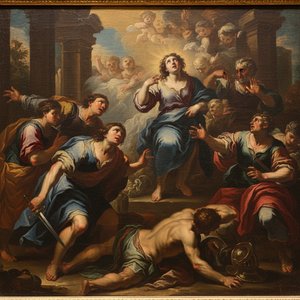
Andrea di Leone: A Baroque Visionary of Naples
Andrea di Leone (1610–1685), born in Naples, Italy, stands as a pivotal figure within the vibrant tapestry of Baroque art—specifically its dramatic depictions of battle and religious fervor. His artistic journey began under the tutelage of Belisario Corenzio and Salvator Rosa, two masters who instilled in him a foundational understanding of classical ideals blended with emotive expression. Following Corenzio’s departure from Naples, Leone ascended to his former role as director of painting for the royal palace, cementing his reputation as a skilled craftsman and interpreter of grandeur.
Early Influences: Corenzio and Rosa's teachings emphasized meticulous observation and idealized beauty, shaping Leone’s initial artistic sensibilities. He absorbed their dedication to detail and their ability to convey profound emotion through visual representation—qualities that would become hallmarks of his distinctive style. This formative period instilled in him a deep appreciation for both classical aesthetics and the expressive potential of art as a vehicle for conveying spiritual truths.
Palace Commissions: His work for the Viceregal Palace showcased his remarkable talent for capturing monumental events—particularly battlefield confrontations—with breathtaking realism and theatrical lighting. Commissioned by the royal court, Leone undertook ambitious projects that demanded technical mastery and artistic vision. These commissions allowed him to explore innovative compositional techniques and experiment with color palettes designed to heighten dramatic impact, establishing him as a leading artist of his time.
Leone’s distinctive style quickly gained recognition for its bold compositions and masterful use of color, mirroring the stylistic innovations championed by Aniello Falcone. While Falcone excelled in portraying similar dramatic scenes, Leone developed a unique approach characterized by nuanced detail and psychological depth. This talent earned him commissions to decorate prominent churches like San Paolo Maggiore at Milan and the Cathedral of Naples, securing his place among the most celebrated artists of his era. He skillfully blended classical influences with Baroque fervor, creating artworks that resonated powerfully with audiences seeking inspiration and spiritual contemplation.
Notable Paintings: Among his masterpieces are depictions of biblical narratives—particularly scenes from Genesis—executed with meticulous precision and imbued with spiritual resonance. Leone’s artistic vision focused on conveying the grandeur and complexity of religious themes through masterful brushwork and evocative color harmonies. His paintings served as visual interpretations of sacred stories, inviting viewers to engage in contemplation and reflection on fundamental questions of faith and morality.
Milanese Patronage: His frescoes in San Paolo Maggiore exemplify the Baroque’s penchant for grandeur and emotional intensity, reflecting the artistic spirit of Lombardy during Leone's lifetime. The Cathedral of Naples benefited from his considerable skill and dedication, resulting in monumental artworks that continue to inspire awe and admiration. These projects underscored Leone’s commitment to serving as a conduit for artistic excellence and upholding the legacy of Neapolitan Renaissance tradition within the broader context of European Baroque art.
Andrea di Leone's legacy extends beyond his individual artworks; he represents a crucial link between Neapolitan Renaissance tradition and the burgeoning dynamism of Baroque painting. His contributions to the visual arts solidified Naples’ position as a center for artistic innovation and ensured that his dramatic battle scenes and evocative religious imagery continue to captivate audiences centuries later. He remains an enduring testament to the transformative power of art during a period defined by both political upheaval and spiritual renewal.