Andrea Biancalani: A Modern Vision Through Cyclist’s Eyes
Andrea Biancalani, born in Rome on October 24th, 2000, is an Italian cyclist whose artistic pursuits reflect a contemporary sensibility rooted in observation and meticulous detail. While his professional racing career focuses on flat and hilly races with the Beltrami TSA – Tre Colli team (UCI Continental), Biancalani’s creative spirit finds expression through captivating paintings that capture moments of stillness amidst movement—a duality mirroring perhaps the challenges and rewards inherent in both disciplines.
Early Life & Artistic Beginnings: Biancalani's fascination with art began early, nurtured by a family environment that fostered creativity and appreciation for visual arts. Details about his formative artistic influences remain somewhat private, hinting at a personal exploration of color palettes and compositional strategies honed through years of dedicated practice. He speaks little about his childhood passions beyond a deep connection to the landscapes surrounding Rome—a connection that would later inform his artistic vision.
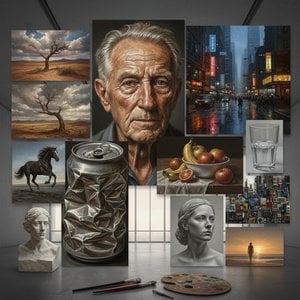
Style & Technique: Biancalani’s distinctive style leans heavily toward realism, prioritizing accuracy in portraying subjects with remarkable precision. He employs layering techniques—often utilizing thin glazes—to achieve luminous surfaces and subtle tonal variations that imbue his canvases with depth and atmosphere. His works frequently depict landscapes bathed in soft light, capturing the essence of natural beauty with an understated elegance. This meticulous approach owes a considerable debt to Renaissance masters like Andrea del Sarto, whose mastery of perspective and harmonious compositions underscore the importance of careful observation and technical skill—values clearly reflected in Biancalani’s own artistic practice. The artist describes his technique as “a dialogue between patience and precision,” emphasizing the necessity for sustained effort to achieve truly compelling results.
Notable Paintings: Biancalani’s portfolio showcases a series of striking portraits and landscapes, demonstrating his ability to convey emotion through nuanced visual storytelling. Particularly noteworthy is “Chiesa dei Santi Andrea e Stefano,” located in Marciano della Chiana, Tuscany—a fresco depicting serene religious imagery that exemplifies Biancalani's commitment to capturing spiritual contemplation. The commission for this monumental artwork represents a significant achievement, showcasing Biancalani’s talent and securing his place within the artistic heritage of Tuscany. He meticulously researched the architectural history of the chiesa and sought to convey its solemn grandeur with remarkable sensitivity.
Influences & Artistic Vision: Though specifics regarding his artistic inspirations are scarce, Biancalani’s work resonates with echoes of Renaissance masters like Andrea del Sarto—whose masterful use of chiaroscuro and idealized forms served as a cornerstone for Biancalani's stylistic development. He cites the influence of Impressionism as well, recognizing the importance of capturing fleeting moments of light and color—a technique he applies consistently in his landscapes. Beyond artistic precedents, Biancalani expresses a broader philosophical outlook rooted in mindfulness and appreciation for the natural world—values that permeate his oeuvre and contribute to its enduring appeal. He believes that art should serve as “a conduit for experiencing beauty,” encouraging viewers to engage with their surroundings on a deeper level.
Contemporary Relevance: Biancalani’s artistic endeavors stand as a testament to the enduring power of art to transcend boundaries of time and place. His paintings offer a refreshing perspective on the natural world, reminding viewers to savor the beauty found in simple scenes—a sentiment that aligns perfectly with the ethos of mindful living and creative expression prevalent in today's cultural landscape. He sees his work as “a contribution to ongoing conversations about how we perceive and interpret our environment,” highlighting its relevance within a rapidly changing global context.