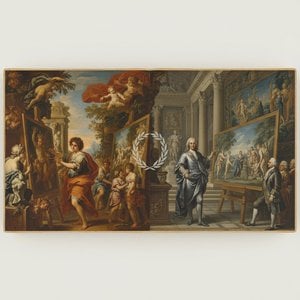
L'Architetto dello Stile Luigi XIV
André-Charles Boulle (1642 – 1732) si erge come un titano tra gli ebanisti francesi, il suo nome è sinonimo di un artigianato opulento e della stessa incarnazione della grandezza di Luigi XIV. Più che un semplice creatore di mobili, Boulle fu un innovatore che trasformò radicalmente il gusto europeo, stabilendo uno stile distintivo — la marquetry "Boulle" — che avrebbe affascinato re e aristocratici per i decenni a venire. La sua eredità continua a ispirare gli artigiani di oggi, consolidando il suo posto tra le figure più influenti delle arti decorative del XVII secolo.
Nato a Parigi intorno al 1642, egli discendeva da una famiglia profondamente immersa nella tradizione artigianale; suo padre, Jean Boulle, era egli stesso un rispettato ebanista. Questo legame familiare gli fornì una base inestimabile nel mestiere, instillando in lui non solo la maestria tecnica, ma anche un profondo apprezzamento per il dettaglio meticoloso e la visione artistica. Sebbene i dettagli biografici dei suoi primi anni rimangano avvolti nelle nebbie del tempo, la sua formazione lo preparò indubbiamente alle straordinarie imprese che sarebbero seguite, permettendogli di ascendere alla prestigiosa posizione di ébéniste du roi.
La Rivoluzione della Marquetry
Il genio di Boulle risiedeva principalmente nella sua maestria nella marquetry, una tecnica che prevedeva l'intarsio di materiali decorativi come tartarughetta, ottone, peltro e avorio su impiallacciature di ebano o noce. A differenza dei metodi precedenti, basati su tecniche di intaglio più semplici, Boulle perfezionò un processo rivoluzionario capace di raggiungere livelli di complessità e realismo senza precedenti. Egli martellava meticolosamente sottili fogli di metallo – principalmente ottone – sulla superficie dell'impiallacciatura in legno, creando un effetto a rilievo che imitava texture naturali come fogliame e pietra.
Questo lavoro estenuante richiedeva una precisione e una pazienza eccezionali, dando vita a pezzi d'arredamento dotati di una bellezza mozzafiato e di una complessità tecnica straordinaria. Le sue opere presentavano spesso:
- Intricati intarsi in ottone: l'uso di raffinata lavorazione metallica per creare motivi scintillanti che catturano la luce.
- Eleganza della tartarughetta: l'incorporazione di materiali organici e traslucidi per aggiungere profondità e calore.
- Simbolismo reale: disegni che riflettevano il potere, il prestigio e l'autorità assoluta della monarchia francese.
Un'Eredità di Opulenza e Innovazione
L'impatto dell'opera di Boulle si estese ben oltre i confini della Francia, influenzando le arti decorative di interi continenti. La sua capacità di fondere il design neoclassico con le nascenti fioriture del periodo Rococò permise ai suoi pezzi di rimanere rilevanti attraverso i mutamenti delle correnti estetiche. Che si trattasse di un Barômetre en ébène et bronze doré, specchio della curiosità scientifica dell'epoca, o di un opulento Cabinet del 1675 che esibiva la grandezza regale, ogni pezzo fungeva da testimonianza della sua abilità senza pari.
Persino in opere più piccole e delicate, come i quadranti degli orologi del 1715, si può osservare il dettaglio mozzafiato dell'oro dorato e dei cherubini che definirono la sua epoca. La sua maestria nel bronzo dorato e nei pattern complessi creò un linguaggio visivo del lusso che rimane ancora oggi il punto di riferimento per l'alta ebanisteria. Oggi, quando contempliamo gli intricati strati di ottone ed ebano, non stiamo semplicemente guardando dei mobili, ma stiamo assistendo allo spirito eterno di un artista che ha trasformato il legno e il metallo in poesia eterna.
Domande e risposte
Come posso trovare le opere di André-Charles Boulle in una specifica palette cromatica?
Le opere di André-Charles Boulle possono essere consultate per palette cromatica nella pagina Per palette dell'artista.
Quali colori ha usato più spesso André-Charles Boulle?
Il profilo cromatico delle opere di André-Charles Boulle è visualizzabile nella pagina Genoma della Palette dell'artista.
Dove posso vedere le opere di André-Charles Boulle in ordine cronologico?
La pagina Cronologia opere dell'artista presenta le opere di André-Charles Boulle ordinate per data, anno dopo anno.