Amer Deeb Mohammad Khalil: A Portrait of Jordanian Resilience
Amer Deeb Mohammad Khalil, born February 4, 1980, in Amman, Jordan, represents more than just a footballer; he embodies the spirit of perseverance and national pride within Jordanian culture. His artistic journey began not on canvas but on the pitch, where his talent shone brightly for Al-Wehdat SC and several other clubs across Jordan and Saudi Arabia, culminating in a distinguished career marked by international appearances and unforgettable goals. Yet, it’s Khalil's quiet dedication to capturing the essence of human experience—expressed through his captivating ‘Villager’ series—that cements his place as a significant contributor to contemporary art.
Early Life & Football Beginnings
Khalil’s formative years were steeped in Palestinian heritage and Jordanian identity. Growing up in Amman instilled within him a deep appreciation for tradition, community, and the beauty of everyday life – themes that would later permeate his artistic vision. His involvement with Hay Al-Amir Hassan Club from 1995 to 1999 provided invaluable experience honing his athletic skills and fostering teamwork—qualities he carried forward into his professional football career. Notably, he was affectionately nicknamed “Deeb of Jordan” and “Deeb of Al-Wehdat,” reflecting the immense admiration of fans for his commitment to his club and nation.
International Career Highlights
Khalil’s football accomplishments speak volumes about his dedication and talent. He represented Jordan at multiple AFC Asian Cups, including 2004 and 2011, securing a place among the nation's most celebrated sportsmen. His participation in the Arab Nations Cup in 2002 and the WAFF Championship across several years showcased his versatility and competitive spirit. Perhaps his crowning achievement was scoring the decisive goal against Iran during the 2011 Asian Cup – a moment that propelled Jordan to its first major tournament appearance. He amassed over 100 cap appearances for his country, solidifying his legacy as one of Jordan’s finest footballers.
The Villager Series: Artistic Exploration
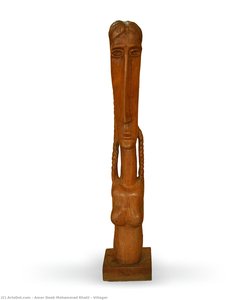
Khalil's artistic pursuits began after retiring from professional football, driven by a desire to translate the observations and emotions gained during his sporting life into visual narratives. His ‘Villager’ series—primarily focused on portraits of rural Jordanian individuals—captures the dignity and resilience of ordinary people facing challenges with grace and fortitude. Khalil utilizes a distinctive figurative painting style characterized by meticulous detail and nuanced shading, mirroring the careful consideration he brings to portraying human subjects. The series explores themes of identity, heritage, and connection to place, reflecting Khalil’s profound understanding of Jordanian society.
Style & Technique
Khalil's artistic technique is rooted in realism but infused with a subtle expressive quality. He employs oil paints on canvas, meticulously blending colors to achieve luminous textures and capturing the subtleties of facial expressions and body postures. His compositions are often framed to emphasize the subject’s gaze—a deliberate choice that invites contemplation and conveys empathy for his subjects. Khalil's artistic vision is informed by influences from Jordanian folk art traditions and a broader engagement with contemporary portraiture, resulting in works that resonate with both visual beauty and emotional depth.
Legacy & Significance
Amer Deeb Mohammad Khalil’s contribution to Jordanian culture extends beyond the realm of sport. His artistic endeavors serve as an inspiration for aspiring artists and demonstrate the transformative power of pursuing passions after achieving professional success. The ‘Villager’ series stands as a testament to his ability to distill complex human experiences into evocative images—a reflection of Jordan's rich cultural heritage and its commitment to portraying individuals with compassion and respect. Khalil’s story exemplifies how talent can flourish in diverse fields, enriching both artistic expression and national identity.