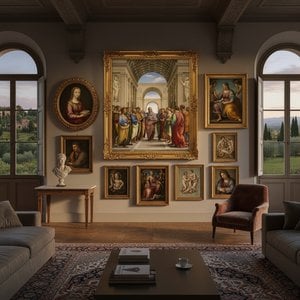
Ambrosius Benson: A Flemish Echo in Lombardy’s Renaissance
Ambrosius Benson, born Ambrogio Benzone around 1484 in Ferrera (modern Brescia), Italy, stands as a fascinating figure within the burgeoning Northern Renaissance. Despite leaving scant biographical traces—records offer little beyond his birthplace and approximate date of birth—scholars recognize him unequivocally as a painter deeply rooted in the Flemish tradition, albeit originating from Lombardy. This paradoxical blend of influences speaks volumes about the interconnected artistic landscape of the era and cemented his place as one of the most prolific and influential artists of his time.
Early Life & Apprenticeship: Little is known definitively about Benson’s formative years, but he honed his craft under the tutelage of Gerard David in Bruges circa 1515. This pivotal apprenticeship instilled within him the stylistic hallmarks of the Flemish school—a meticulous attention to detail, a masterful use of oil paint, and an embrace of naturalism—characteristics that would permeate his subsequent oeuvre. The influence of David’s serene compositions and refined draughtsmanship is palpable in Benson's early works, demonstrating the formative power of artistic mentorship during the Renaissance.
Bruges & Guild Membership: Recognizing Bruges as a hub for artistic innovation and patronage, Benson established himself there permanently. He secured citizenship and ascended through the ranks of the guild of painters and saddle makers, demonstrating not only artistic talent but also civic engagement. His roles as Dean and Governor underscored his leadership within the community and solidified his reputation as a respected figure—a testament to the importance of social standing in shaping an artist’s career during this period. These positions afforded him access to influential circles and fostered collaborations that enriched Bruges' artistic environment.
A Painter’s Journey: From Journeyman to Master
Before achieving mastery, Benson embarked on a traditional journeyman’s path—a common practice for aspiring artists during the Renaissance—allowing him to broaden his artistic horizons and absorb diverse influences. This period fostered experimentation with techniques and styles, preparing him for the responsibilities of directing his own workshop and producing works destined for international acclaim. He traveled extensively throughout Europe, immersing himself in artistic traditions ranging from Florence to Antwerp, absorbing stylistic nuances that would inform his distinctive oeuvre.
Style & Technique: Classical Influences & Flemish Mastery
Benson’s artistic style exemplifies a harmonious fusion of Lombardy’s humanist sensibilities with the refined aesthetics of Flanders. He skillfully incorporated classical motifs into his paintings, often depicting figures in contemporary domestic settings or reimagining mythological narratives within modern dress—a technique that distinguished him from many of his contemporaries. His meticulous brushwork and masterful use of chiaroscuro—the dramatic interplay of light and shadow—were hallmarks of the Flemish tradition, mirroring David’s influence and elevating his compositions to levels of artistic sophistication. This approach reflects a broader trend toward integrating classical ideals into Northern Renaissance art, signaling a significant departure from earlier Gothic styles.
Notable Works & Legacy: The Magdalene Cycle & Beyond
Benson achieved considerable renown during his lifetime thanks to commissions from wealthy patrons across Europe, particularly in Spain. However, it is perhaps his reproductions of the Magdalene—particularly variations inspired by Gerard David—that secured his enduring fame. These paintings captivated audiences and served as models for subsequent artists, establishing Benson as a cornerstone of the “Benson School.” His prolific output ensured that he would be remembered as one of the most important painters of the sixteenth century, leaving behind a legacy characterized by artistic excellence and an indelible mark on Flemish art history. The Magdalene cycle remains his most celebrated achievement, demonstrating his ability to capture emotion and psychological depth within a stylized framework—a skill that cemented his place among the foremost artists of his era.