Lo studioso parigino e il sogno algerino
Nato nel cuore di Parigi il 28 marzo 1861, Alphonse-Étienne Dinet iniziò il suo percorso tra i prestigiosi corridoi del Lycée Henry IV. Figlio di un eminente giudice francese, la sua giovinezza fu immersa nel rigore accademico e nell'atmosfera raffinata della Belle Époque. La sua formazione formale presso l'Académie Julian e l'École nationale supérieure des Beaux-Arts gli conferì la maestria tecnica della tradizione accademica francese; tuttavia, sotto questa solida base classica, pulsava una curiosità crescente che lo avrebbe condotto ben oltre i confiel della Francia. Fu l'incontro con il Maghreb a infiammare veramente il suo spirito artistico, trasformando uno studente della tradizione francese in un cronista della vita nordafricana.Un'anima trasformata dal deserto
Il rapporto di Dinet con l'Algeria fu molto più di un semplice interesse professionale; fu una profonda metamorfosi spirituale e culturale. Mentre si immergeva nei paesaggi e nelle usanze della regione, i confini tra l'osservatore e l'osservato iniziarono a dissolversi. Questa connessione profonda culminò nella sua conversione all'Islam, che lo portò ad adottare il nome di Nasreddine Dinet—un titolo che significa "difensore del Dīn". Non si trattò solo di un cambiamento nel nome, ma di uno spostamento fondamentale della prospettiva. Padroneggiando l'arabo e traducendone la letteratura, ottenne una comprensione intima e interiore della cultura che ritraeva. La sua opera smise di essere quella di un estraneo che guarda dall'esterno; divenne invece una documentazione dell'anima di una vita che aveva veramente abbracciato, caratterizzata da un livello di autenticità etnografica senza precedenti.La maestria della luce e la verità etnografica
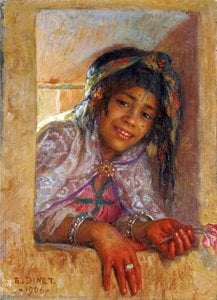
L'arte di Nasreddine Dinet è definita da una sintesi mozzafiato tra idealismo romantico e meticolosa osservazione. Traendo ispirazione dall'uso magistrale della luce e del colore visibile nelle opere di Eugène Delacrazia, Dinet possedeva un'abilità straordinaria nel catturare l'atmosfera mutevole del sole algerino. Le sue tele sono vive con il calore del deserto e le tenere sfumature dell'esistenza quotidiana. Che stesse ritraendo l'intensità drammatica di L’Oued M'sila après la pluie o la quieta e commovente innocenza di Girl Playing With Her Brother, le sue pennellate trasmettono sia precisione scientifica che profonda risonanza emotiva. Egli catturò la trama dei tessuti, la grana della sabbia e il morbido bagliore del crepuscolo con una precisione che onorava la dignità dei suoi soggetti.Un'eredità duratura nell'arte orientalista
Oltre alle sue singole tele, l'impatto di Dinet sul mondo dell'arte fu strutturale e duraturo. Come uno dei fondatori della Société des Peintres Orientalistes, contribuì a plasmare la direzione del movimento, orientandolo verso una rappresentazione più rispettosa e autentica della vita nordafricana. La sua capacità di fondere l'esotismo dell'Oriente con la sofisticatezza tecnica della pittura francese ha lasciato un segno indelebile nella storia dell'arte. Oggi, le sue opere rimangono testimonianze vitali di un periodo di intenso scambio culturale, ergendosi come finestre luminose su un mondo in cui arte, fede e paesaggio confluivano in una perfetta armonia baciata dal sole.Domande e risposte
Di dove è Alphonse-Étienne Dinet?
Alphonse-Étienne Dinet è nato/a in Francia.
Quante opere di Alphonse-Étienne Dinet sono disponibili nel catalogo?
Puoi sfogliare 58 opere d'arte opere di Alphonse-Étienne Dinet nella pagina Tutte le opere.
Dove posso visitare il museo virtuale 3D con le opere di Alphonse-Étienne Dinet?
La Galleria 3D di Alphonse-Étienne Dinet è una pagina che presenta le opere dell'artista all'interno di una galleria virtuale tridimensionale.