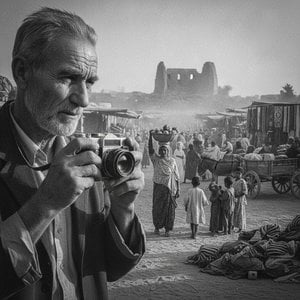
Addison N. Scurlock (1883-1964): A Pioneer of Black Washington Photography
Addison Norton Scurlock, born in Fayetteville, North Carolina, in 1883, stands as a pivotal figure in the history of American photography and, crucially, in documenting the vibrant cultural landscape of early 20th century Black Washington. His unwavering dedication to capturing the essence of African American life during this transformative era cemented his place among the most influential visual historians of his time.Early Life and Artistic Beginnings
Scurlock’s formative years instilled within him a profound appreciation for observation and meticulous craftsmanship—skills that would prove invaluable throughout his illustrious career. He pursued his education diligently, graduating from high school in Fayetteville before embarking on a journey toward artistic mastery. Recognizing the burgeoning potential of photography as a medium for social commentary and personal expression, he apprenticed under Moses P. Rice, a respected white photographer operating in Washington D.C., gaining foundational knowledge of photographic techniques and laboratory practices. This apprenticeship laid the groundwork for his future endeavors and established him within the influential circle of visual artists active during that period.Establishing Scurlock Studio: A Hub of Photographic Excellence
Driven by ambition and fueled by a desire to contribute meaningfully to his community, Scurlock founded Scurlock Photographic Studio in 1904—a venture rooted in his parents’ home at 500 Block Florida Avenue NW. This studio quickly became synonymous with quality and artistic integrity, attracting clients from across the Black Washington area. Recognizing the importance of fostering talent and disseminating knowledge, he mentored his sons, Robert and George Scurlock, who subsequently joined the business and continued to uphold his legacy as a photographer for decades. The Studio’s location in the heart of Black Broadway—a thriving cultural district—provided an unparalleled vantage point for documenting daily life and capturing pivotal moments within the African American community.Documenting Black Washington: Portraits of Dignity and Significance
Scurlock's artistic vision extended beyond mere technical proficiency; he possessed a deep empathy for his subjects and a keen understanding of their narratives. He skillfully employed lighting, posing, and retouching techniques—elements that elevated his portraits to expressions of dignity and sophistication. His photographs weren’t simply images; they were windows into the lives of prominent figures – Booker T. Washington, W.E.B. Du Bois, Mary McLeod Bethune, Archie Alexander, Billy Eckstine, Paul Laurence Dunbar, Lillian Evans Tibbs, George Washington Carver—each portrait imbued with a palpable sense of history and cultural importance. Notably, he documented events such as the 1939 Lincoln Memorial Concert featuring Marian Anderson, capturing the spirit of resilience and aspiration that defined the era.Legacy and Enduring Influence
Addison Scurlock’s contribution to visual culture transcends his individual achievements; he established a tradition of documenting Black Washington—a legacy that continues to inspire photographers today. His sons' involvement in the studio ensured that this artistic endeavor persisted for over 80 years, preserving invaluable records of African American life and fostering a commitment to artistic excellence within subsequent generations. Furthermore, Scurlock’s photographs serve as powerful reminders of the importance of representing diverse experiences—a principle that remains central to contemporary photographic practice. His work stands as testament to the transformative power of visual storytelling and its ability to illuminate history while honoring human dignity.Domande e risposte
Dove posso vedere le opere di Addison N. Scurlock in una galleria 3D?
La Museo 3D di Addison N. Scurlock è una pagina che presenta le opere dell'artista all'interno di una galleria virtuale tridimensionale.
Come posso trovare le opere di Addison N. Scurlock in una specifica palette cromatica?
La pagina Per palette raggruppa le opere di Addison N. Scurlock in base alle loro palette di colori.
In quale città e in quale paese è nato/a Addison N. Scurlock?
Addison N. Scurlock è nato a Fayetteville, in Stati Uniti d'America.