L'Eredità Radiosa di Adachi Ginkō
Nell'era vibrante e trasformativa della tarda epoca Meiji, pochi artisti sono riusciti a catturare l'anima mutevole del Giappone con la stessa vividezza di Adachi Ginkō. Nato nel 1853, in un periodo in cui le strutture tradizionali dell'epoca Edo stavano iniziando a cedere alla rapida modernizzazione dell'Occidente, Ginkō emerse come un maestro della tradizione Uki\\ki-e. La sua vita e la sua opera rappresentano un profondo ponte tra l'antica estetica della stampa xilografica e la nascente curiosità intellettuale di una nazione che stava ridefinendo se stessa. In quanto esponente di rilievo dell'illustre scuola Utagawa, Ginkō non si limitò a replicare gli stili dei suoi predecessori; egli vi infuse nuova vita, donando al mezzo classico un senso di realismo e un'urgenza contemporanea che risuonarono profondamente nel cuore del popolo del suo tempo.
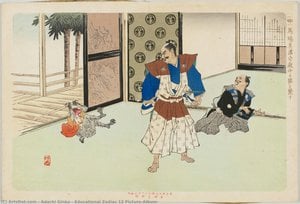
Il percorso artistico di Ginkō fu segnato da una straordinaria capacità di sintetizzare diverse influenze. Sebbene le sue radici fossero saldamente piantate nella stirpe di maestri come Hokusai, la sua formazione iniziale comportò probabilmente l'esposizione alle tecniche dell'acquerello in stile occidentale. Questa duplice natura gli permise di sviluppare uno stile distintivo, caratterizzato da contorni audaci e decisi e da una tavoluzione cromatica di una vivacità mozzafiato. Egli fu un maestro della luce, impiegando spesso la foglia d'oro per infondere alle sue stampe una luminosità celeste, trasformando un semplice foglio di carta in una finestra di grandezza. La sua opera andò oltre le rappresentazioni stilizzate e piatte comuni nelle epoche precedenti, abbracciando invece un realismo dinamico capace di catturare la trama dei tessuti, la profondità dei paesaggi e l'emozione pura dei soggetti umani.
Maestria Narrativa e Risonanza Storica
Ciò che rese davvero unico Adachi Ginkō fu la sua abilità come narratore visivo. Possedeva una capacità quasi soprannaturale di intrecciare trame complesse in singole composizioni, rendendolo un pioniere della narrazione pittorica. Il suo repertorio era vastissimo, spaziando dalle delicate bijin-ga (ritratti di belle donne) e dai drammatici ritratti di attori, fino a maestosi paesaggi e intricate illustrazioni librarie. Tuttavia, fu nei suoi trittici di grande formato che la sua capacità narrativa raggiunse l'apice. Questi capolavori multi-pannello gli permisero di raffigurare eventi contemporanei ed epiche storiche con una scala cinematografica, invitando lo spettatore a immergersi nel dramma in atto.
Forse il suo traguardo più significativo fu la serie Sintesi Pittorica della Storia Giapponese prodotta alla fine degli anni 1880. In questo ambizioso progetto, Ginkō utilizzò la potenza della stampa xilografica per educare e ispirare, cronacando le leggende e i momenti cruciali del passato giapponese. Eppure, il suo impegno verso la verità — o almeno la sua interpretazione personale di essa — non fu privo di conseguenze. Il suo approccio impavido lo condusse occasionalmente in mezzo a turbolenze politiche; nel 1889, subì celebri arresti e multe per un'opera satirica che caricaturava l'Imperatore Meiji. Questo momento di sfida sottolinea lo spirito di un artista che vedeva la propria arte non solo come decorazione, ma come un potente mezzo di commento sociale e riflessione.
Un'Impronta Indelebile sull'Arte Giapponese
L'importanza di Adachi Ginkō si estende ben oltre i confini dell'era Meiji. Egli rimane un simbolo di resilienza artistica, dimostrando come le arti tradizionali possano evolversi per affrontare le sfide di un mondo in mutamento senza perdere la propria identità essenziale. La sua opera funge da vitale documento storico, catturando le gerarchie sociali, il fascino pastorale e i cambiamenti culturali di un Giappone in transizione. Attraverso la sua meticolosa maestria e il suo potere emotivo, Ginkō ha assicurato che la tradizione Ukiyo-e non svanisse nell'oscurità, ma lasciasse invece un segno indelebile nel canone artistico globale.
Studiare le opere di Adachi Ginkō significa incontrare il battito cardiaco di una nazione. La sua eredità vive attraverso:
- Innovazione Tecnica: La magistrale integrazione della foglia d'oro e di tavolozze cromatiche di influenza occidentale all'interno della stampa xilografica tradizionale.
- Versatilità del Genere: Un'ineguagliabile capacità di muoversi tra la bellezza intima dei ritratti e la scala epica dei trittici storici.
- Documentazione Culturale: L'offerta di una finestra visiva sulle interazioni sociali, sul folklore e sulle tensioni politiche della fine del XIX secolo.
Domande e risposte
Quante opere di Adachi Ginkō sono disponibili nel catalogo?
Puoi sfogliare 9 opere d'arte opere di Adachi Ginkō nella pagina Tutte le opere.
È disponibile un tour virtuale 3D delle opere di Adachi Ginkō?
Le opere di Adachi Ginkō sono visibili in una galleria 3D nella pagina Galleria 3D dell'artista.
Come posso trovare le opere di Adachi Ginkō raggruppate per una specifica palette cromatica?
Le opere di Adachi Ginkō possono essere esplorate per palette cromatica nella pagina Per palette di colori dell'artista.