Achille Beltrame: Bridging History and Impressionism
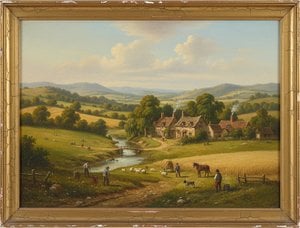
Achille Beltrame (1871-1945) stands as a pivotal figure in Italian art history, embodying the transition from academic tradition to burgeoning Impressionistic sensibilities. Born in Arzignano, near Vicenza, Italy, his artistic journey began with an innate talent for drawing nurtured by formative years at Collegio Rossi and Regia Scuola Tecnica di Vicenza—institutions that instilled him with a foundational understanding of classical art principles. However, Beltrame’s ambition extended beyond mere replication; he sought to capture the dynamism of the natural world and the emotional resonance of human experience, characteristics that would define his distinctive style. His formal artistic training at Brera Academy cemented his connection to the avant-garde movement, where he honed his skills under Giuseppe Bertini and absorbed the influence of Impressionist masters like Monet and Sisley. The prestigious Mylius Prize for Historical Landscape in 1890—a painting titled “Fracta Virtus”—marked a significant milestone, showcasing Beltrame’s ability to synthesize meticulous observation with expressive brushwork. This accomplishment propelled him into the spotlight of the inaugural Triennale di Brera alongside "Praeludium," establishing his reputation as a promising artist destined for greatness. Beltrame's prolific output spanned diverse genres, ranging from grand historical canvases depicting pivotal moments in Italian history to intimate portraits capturing the essence of familial bonds and romantic relationships. His depictions of his sisters—particularly “Mia Sorella Argia”—demonstrate a profound sensitivity to human emotion and an unwavering commitment to portraying subjects with remarkable realism. Furthermore, his portrait of Giannina Cocitto, whom he met during his formative years, exemplifies his ability to convey nuanced psychological depth through subtle tonal variations and expressive gestures. A collaborative partnership with magno magni—a wealthy Como businessman—provided Beltrame with invaluable opportunities for artistic exploration and patronage. This fruitful association resulted in commissions that allowed him to delve into ambitious projects and further refine his technique. Notably, he traveled to Cetinje, Montenegro, where he immortalized the regal countenance of Queen Elena of Montenegro, securing a commission that showcased his versatility as an artist. Simultaneously, Beltrame’s involvement with ‘La Domenica del Corriere,’ Italy's foremost illustrated newspaper, cemented his legacy as one of the era’s most celebrated illustrators—a role that demanded precision, creativity, and an unwavering grasp of visual storytelling. Beltrame’s artistic achievements extended beyond individual paintings; he established Galleria d’Arte Moderna Achille Forti in Verona, fostering a vibrant environment for contemporary art and ensuring the preservation of his own oeuvre. His enduring influence can be seen in the stylistic innovations of subsequent generations of Italian painters who embraced Impressionistic principles while retaining a respect for classical tradition—a testament to Beltrame's profound contribution to the artistic landscape of his time.- Early Life and Education: Achille Beltrame was born in Arzignano, near Vicenza, Italy, on March 19, 1871, to Giambattista Beltrame, an artisan of the leather tanning industry, and Teresa Brusarosco. From a young age, he displayed exceptional artistic aptitude, nurtured by formative years at Collegio Rossi and Regia Scuola Tecnica di Vicenza.
- Academic Training: He pursued formal artistic training at Brera Academy in Milan, where he studied under Giuseppe Bertini and absorbed the influence of Impressionist masters like Monet and Sisley. This exposure profoundly shaped his stylistic sensibilities.
- The Mylius Prize and Triennale Debut: In 1890, Beltrame achieved considerable recognition with the Mylius Prize for Historical Landscape, awarded for “Fracta Virtus,” demonstrating his mastery of meticulous observation combined with expressive brushwork. His participation in the inaugural Triennale di Brera alongside "Praeludium" solidified his position as a rising talent.
- Diverse Artistic Genres: Beltrame’s oeuvre encompassed a wide range of genres, including grand historical canvases depicting significant events in Italian history and intimate portraits capturing the essence of familial bonds and romantic relationships.
- Legacy and Influence: His enduring influence can be seen in the stylistic innovations of subsequent generations of Italian painters who embraced Impressionistic principles while retaining a respect for classical tradition—a testament to Beltrame's profound contribution to the artistic landscape of his time.