


The Illusion of Dimension: Understanding Depth Perception in Masterworks
 Depth perception
 is the ability to perceive distance to objects in the world using the visual system and visual perception. It is a major factor in perceiving the world in three dimensions. Depth sensation is the corresponding term for non-human anim...
To stand before a true masterpiece is to experience a profound paradox: the confrontation with a flat, two-dimensional surface that simultaneously reveals an infinite, three-dimensional world. This phenomenon, rooted in the complex mechanics of depth perception, is where the artist’s technical prowess meets the viewer's biological capacity for wonder. While our visual systems utilize binocular cues—such as retinal disparity and stereopsis—to navigate the physical world, the fine artist must master monocular cues to replicate this sensation on canvas. Through the strategic use of relative size, occlusion, and texture gradients, a painter can manipulate the eye, guiding it from the immediate foreground into a distant, unreachable horizon.
In the realm of high-end collecting, recognizing these subtle cues is essential for appreciating the true complexity of a work. When an artist successfully employs these optical illusions, they do more than depict a scene; they create a window. The viewer does not merely observe a subject but enters a space where distance feels tangible and form possesses weight. This mastery of dimension transforms a mere object of decoration into a living entity, capable of commanding the atmosphere of an entire gallery or private estate.
Atmospheric Nuance: The Role of Aerial Perspective and Light
 Aerial perspective
, or atmospheric perspective, is the effect of the atmosphere has on the appearance of an object as viewed from a distance. As the distance between an object and a viewer increases, the contrast between the object and its background...
Beyond the structural mechanics of depth lies the ethereal influence of light and atmosphere, often referred to as aerial or atmospheric perspective. This technique relies on the scientific reality that as objects recede into the distance, the intervening atmosphere softens their edges, reduces their contrast, and shifts their color palette toward cooler, bluer tones. A master of this craft understands that clarity is a luxury of the foreground, while mystery resides in the haze of the background. By subtly desaturating distant elements, the artist creates a sense of vastness that can make a small canvas feel as expansive as a mountain range.
Consider the way light interacts with these receding layers; it is not merely an illumination but a sculptor of space. In the works of the great Impressionists, light becomes the primary protagonist, blurring the boundaries between object and air. This delicate balance of luminosity and shadow allows for a seamless transition between the tangible and the intangible. For the discerning collector, the ability to discern these atmospheric shifts is what distinguishes a superficial viewing from a deep, emotional encounter with the sublime.
Chromatic Stratification: Layering Color to Evoke Emotional Resonance
 Untitled 51
Mark Rothko’s Untitled 51: A Deep Dive into Color and Emotion Mark Rothko's "Untitled 51" isn’t merely a painting; it’s an invitation—a plunge into the depths of human feeling. Created during a pivotal period in his career, this large-scale abstract ...
Color is rarely a singular event in fine art; rather, it is a sophisticated dialogue of layers. In the tradition of Color Field painting, most notably seen in the monumental works of Mark Rothko, depth is achieved through chromatic stratification. Rothko’s process—applying up to twenty thin, translucent washes of pigment—allows light to penetrate the surface and reflect back from deep within the canvas. This creates a luminous, vibrating effect where colors do not simply sit upon one another but appear to emanate from an internal, spiritual source.
This method of layering transcends mere aesthetics, tapping into the very essence of human emotion. When hues bleed into one another with hazy, undefined edges, the boundaries of form dissolve, leaving only the raw resonance of color. This technique demands a slow, meditative gaze, inviting the viewer to plunge into the depths of tragedy, ecstasy, or doom. Such works are not merely seen; they are felt, providing a sanctuary of stillness and a profound connection to the existential themes that define the human condition.
Structural Complexity: Geometric Form and the Architecture of Space
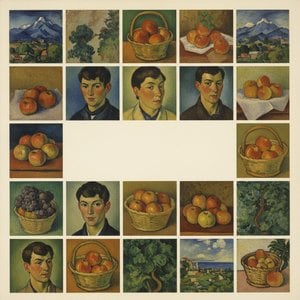 Cézanne's Masterpieces: 25 Iconic Artworks to Transform Your Space
Introduction There’s a quiet intensity that clings to Paul Cézanne's work, an almost palpable sense of searching—a relentless pursuit of capturing the essence of light and form. To assemble a ‘Top 25’ is, in itself, a somewhat reductive act; it feels...
While color and atmosphere provide the soul of a painting, structure provides its skeleton. The pursuit of depth often requires a rigorous engagement with geometry and form. Paul Cézanne, a pioneer of modern perception, revolutionized the way we view space by moving away from traditional illusionism toward a focus on the solidity of objects. He did not simply paint what he saw; he reconstructed the world through an exploration of volume and structure, treating landscapes and still lifes as complex architectural arrangements of light and shape.
By emphasizing the geometric essence of a subject—the sphere, the cone, the cylinder—artists can create a sense of permanence and weight. This structural approach creates a tension between the observed reality and the artist's memory, forcing the viewer to engage with the painting as a constructed reality. In contemporary abstract expressionism, this architectural approach continues through the use of balanced compositions that direct the eye through a carefully orchestrated visual hierarchy, ensuring that every element contributes to a cohesive and powerful whole.
Tactile Depth: The Impact of Impasto and Surface Texture on Viewer Engagement
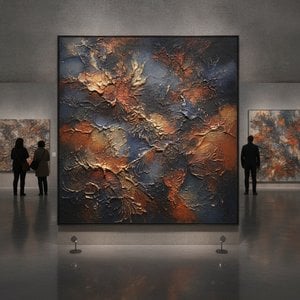 Top 25 Masterpieces by Christian Noiret: A Journey Through Abstract Texture and Light
Introduction To step into the world of Christian Noiret is to abandon the safety of recognizable forms and surrender to a profound, silent dialogue between light and matter. As one wanders through his most significant works, one does not merely obser...
The final dimension of a masterpiece is often the most visceral: the tactile quality of the paint itself. Through the technique of impasto, where thick, undiluted pigment is applied to the canvas, an artist introduces a third dimension that can be felt with the eyes. The way light catches a raised ridge of oil or disappears into a deep, velvety shadow creates a sculptural topography on the surface. This physical texture breaks the flatness of the canvas, inviting a sensory engagement that transcends the purely visual.
In the works of artists like Christian Noiret, the manipulation of texture becomes a dialogue between light and matter. The visible brushstroke serves as a testament to the artist's hand, adding a layer of authenticity and energy to the composition. This tactile depth ensures that the artwork remains a dynamic entity, changing its character as the viewer moves around it or as the ambient lighting in a room shifts. It is this interplay of light, shadow, and physical substance that provides the "soul" of a hand-painted oil reproduction, distinguishing it from the flat, lifeless nature of a mere print.
Curating the Infinite: Integrating Multi-Layered Art into Sophisticated Interiors
For the connoisseur of fine art, the ultimate challenge lies in integrating these complex, multi-layered works into a curated environment. A painting characterized by profound depth and atmospheric nuance requires a space that allows it to breathe. Whether utilizing large-scale multi-panel compositions to adorn a grand staircase or placing a singular, emotive Rothko-inspired piece as a focal point in a study, the goal is to create an architectural dialogue between the art and the room.
In high-end interior design, art serves as the anchor of the aesthetic narrative. The introduction of works with rich textures and deep color palettes can transform a space from a mere room into a curated experience. By selecting pieces that offer structural complexity and emotional resonance, one does not simply decorate a wall; one curates an atmosphere of timelessness and sophistication. At WahooArt.com, we specialize in bringing this vision to life, offering everything from bespoke oil reproductions to large-format murals that allow you to recreate the grandeur of history within your own contemporary sanctuary.


