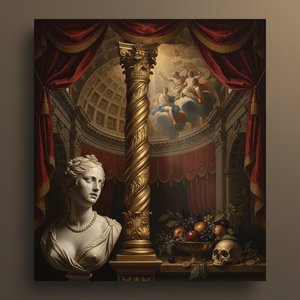
The Chiaroscuro Effect: Mastering the Tension of Light and Shadow
 Rembrandt van Rijn
. A master of chiaroscuro known for The Night Watch. Discover our collection of hand-painted reproductions today.
Architectural Grandeur: The Scale of Sacred and Secular Power
Architecture in the Baroque era was designed to overwhelm the senses and command the space it occupied. Moving away from the restrained, mathematical proportions of the previous century, Baroque design embraced curved walls, oval domes, and sweeping facades that suggested a state of constant motion. This was an architecture of persuasion, intended to make the individual feel small in the presence of the divine or the absolute authority of the state. In Rome, Gian Lorenzo Bernini transformed the urban landscape, most notably through his design of St. Peter's Square and the massive bronze and marble Baldachin within the Basilica. These structures utilize twisted columns and monumental scale to create a sense of awe. Similarly, the Palace of Versailles served as a grand stage for the centralized state, using architecture to project the power of the monarchy. Whether through the gilded stucco of a church or the vast, symmetrical gardens of a royal estate, the goal remained the same: to create an immersive environment that reflected the hierarchy of the world. The echoes of this monumentalism persist in the way we design public spaces today. The intention to use scale to evoke a sense of importance and permanence remains a fundamental principle for those seeking to create an atmosphere of authority and permanence.The Vitality of Form: Capturing Movement and Emotional Immediacy
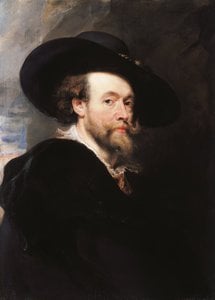 Peter Paul Rubens
A master of Flemish Baroque, Rubens is famed for his dynamic compositions. Discover his vibrant and powerful masterpieces today.
Sensuous Materiality: The Tactile Language of Texture and Surface
A defining characteristic of the Baroque style is a profound fascination with the physical world and the textures that compose it. There is a palpable sense of weight in the heavy silks, the cold sheen of polished marble, and the rough grain of wood. This focus on materiality was not just about technical virtuosity; it was about engaging the senses to evoke a visceral response. The use of impasto—the thick, textured application of paint—allowed artists to mimic the tactile qualities of the real world. In a well-executed Baroque portrait, one can almost feel the difference between the softness of lace and the stiffness of a velvet doublet. This attention to detail extends to the use of rare and precious materials in decorative arts, such as marquetry and the use of gold and lapis lazuli, which added a layer of sensory richness to the era's aesthetic. This reverence for the physical surface is mirrored in the modern appreciation for craftsmanship. In an age of digital smoothness, the visible brushstroke and the tactile quality of a hand-painted oil on cotton canvas offer a connection to the physical reality that digital reproductions cannot replicate.The Art of Persuasion: Grandeur as a Tool of Authority
The Baroque period was an era of profound religious and political upheaval, and art was frequently employed as a strategic instrument of the Counter-Reformation and absolute monarchies. The Catholic Church, in response to the austerity of the Protestant Reformation, commissioned works of immense splendor to reassert its spiritual dominance and inspire devotion through beauty and awe. This was art as propaganda, though of a highly sophisticated nature. By depicting sacred scenes with intense realism and emotional exuberance, the Church aimed to make the divine feel accessible and overwhelming. Simultaneously, monarchs used the Baroque style to project an image of divine right and absolute control. The grandeur of the art was a direct reflection of the power of the patron. It was a visual language designed to impress, to persuade, and to remind the viewer of the established order. We see this legacy in the way institutions still use visual splendor to communicate stability and importance. The use of art to define the character and authority of a space remains a cornerstone of high-end design and institutional identity.A Legacy of Dynamism: From Renaissance Order to Baroque Intensity
 Francisco de Zurbarán
. A master of Spanish Baroque tenebrism known for Agnus Dei. Discover his powerful religious paintings and still lifes today.