
CONSULENZA D'ARTE GRATUITA

x
Acquista stampa Acquista stampaOrdina la riproduzione Ordina la riproduzione InviaInvia
DetailsDetails Aggiungi ai preferiti Aggiungi ai preferiti ScaricaScarica SimiliSimili X-RayX-Ray SlideshowSlideshow

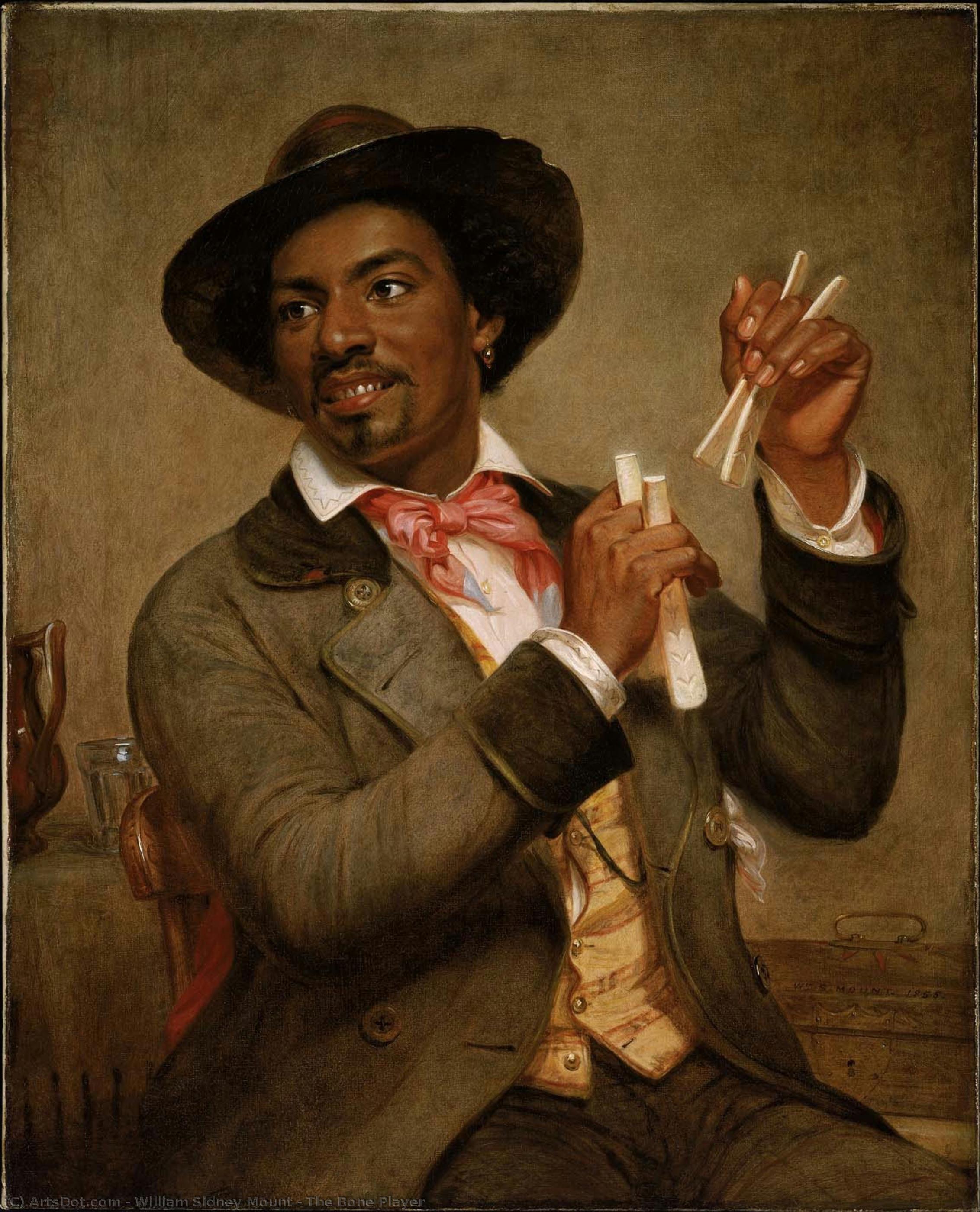
The Bone Player

William Sidney Mount’s ‘The Bone Player,’ a captivating 1856 genre painting, portrays a dignified African American musician with chopsticks – a unique detail reflecting Victorian stereotypes. Explore this remarkable piece and its historical context.

Scopri William Sidney Mount (1807-1868), pittore americano che ha immortalato la vita rurale di Long Island con realismo e affetto. Esplora le sue opere iconiche!

Acquista un'immagine digitale ad alta risoluzione e ottimizzata, di qualità nettamente superiore all'anteprima online.

Ogni file è meticolosamente preparato dai nostri specialisti interni attraverso l'uso di strumenti avanzati e un sapiente ritocco manuale. Garantiamo che ogni immagine presenti una chiarezza eccezionale, una precisione cromatica impeccabile e dettagli raffinati.

Il file finale viene consegnato via e-mail entro 72 ore, ottimizzato per un uso immediato in contesti professionali, editoriali e di stampa. Si tratta della stessa qualità affidata dai più prestigiosi studi di design, editori e gallerie d'arte.

Immagine Digitale

Scarica un file ad alta risoluzione per uso personale, per la stampa e per progetti creativi.

Prezzo totale

$9.99

Incluso in ogni ordine di immagini digitali

Consegna digitale professionale e garantita

Quando scegli WahooArt.com, non riceverai solo un'immagine: riceverai un'opera d'arte digitale professionalmente ottimizzata, realizzata con la massima precisione e accompagnata da una garanzia di soddisfazione. Ecco tutto ciò che include il tuo ordine, automaticamente:

shipping_icon
Consegna rapida via email

Riceverai il file dell'immagine digitale ad alta risoluzione via email entro 72 ore dall'ordine, pronto per un uso immediato.

canvas_icon
File digitale ottimizzato dall'IA

La tua opera d'arte viene ottimizzata professionalmente attraverso l'uso di strumenti avanzati di intelligenza artificiale e una revisione manuale, garantendo il massimo livello di dettaglio, nitidezza e accuratezza cromatica.

insurance_icon
Riconsegna gratuita a vita

Hai eliminato o perso accidentalmente il tuo file? Non preoccuparti: te lo invieremo di nuovo in qualsiasi momento, gratuitamente.

tax_icon
Nessun costo di importazione - Sempre

Goditi la tua opera d'arte istantaneamente senza costi doganali, dazi o spese di spedizione: i download digitali sono sempre esenti da tasse.

color_icon
Garanzia di fedeltà cromatica

Garantiamo che la tua immagine digitale rifletta i colori originali con la massima fedeltà, grazie all'uso di strumenti professionali e a una gestione accurata del colore.

return_icon
Garanzia di soddisfazione di 60 giorni

Se non sei soddisfatto della tua immagine digitale, la revisioneremo o ti rimborseremo il 100% entro 60 giorni, senza domande.

guarantee_icon
Garanzia di rimborso al 100%

Non sei soddisfatto? Ricevi un rimborso completo entro 60 giorni dalla ricezione del tuo file digitale, senza dover fornire spiegazioni.

discount_icon
Sconti per ordini multipli

Acquista 3 immagini, risparmia il 10% - Acquista 5, risparmia il 15% - Acquista 10+, risparmia il 20%. Ideale per progetti creativi, gallerie e agenzie.

Informazioni rapide

  • Subject or theme: African American Musicianship
  • Notable elements or techniques: Ivory, wood, bone instruments; Detailed facial features
  • Artistic style: Realistic Portraiture
  • Artist: William Sidney Mount
  • Year: 1856
  • Dimensions: 91.76 x 73.98 cm
  • Title: The Bone Player

Quiz d'arte

Per ogni domanda è presente una sola risposta corretta.

Domanda 1:
What artistic style is William Sidney Mount’s *The Bone Player* primarily associated with?
Domanda 2:
Why was *The Bone Player* commissioned by Goupil and Company?
Domanda 3:
Scholars debated whether *The Bone Player* represents a stereotypical depiction of African Americans or a sensitive portrait of an individual. What evidence supports this debate?
Domanda 4:
What was Mount’s primary motivation for creating *The Bone Player*, considering his own musical interests?
Domanda 5:
What broader historical context influenced Mount’s decision to portray an African American musician?

Descrizione del Collezionabile

The Bone Player: A Portrait of Musical Identity Amidst Victorian Stereotypes

William Sidney Mount’s *The Bone Player* stands as a fascinating testament to the artistic landscape of mid-nineteenth century America—a blend of portraiture and genre painting that simultaneously celebrates individual character and reflects prevailing societal attitudes toward African American musicians. Born in Long Island, Mount honed his craft alongside his brother, a skilled painter specializing in portraits and signage, before pursuing formal training at the National Academy of Design in New York City. By 1856, he had firmly established himself as one of the nation’s foremost artists, recognized for his ability to capture the essence of everyday life with remarkable realism. Mount embarked on this ambitious project—two depictions of African American musicians destined for lithographic reproduction in Europe—following a commission from Goupil and Company. This undertaking wasn't merely about commercial success; it was deeply intertwined with intellectual currents shaping the era, notably theories of evolution which positioned African Americans as possessing innate musical aptitude surpassing that of Caucasians. Recognizing the potential market appeal of such imagery – both to European audiences captivated by exoticism and to American sensibilities eager to define national identity – Mount skillfully navigated the complexities of artistic representation within a politically charged climate surrounding slavery. The painting itself presents a man seated comfortably, holding chopsticks with an air of quiet contemplation. He wears a scarlet bow tie and boasts a neatly groomed mustache, details meticulously rendered by Mount—a deliberate departure from stereotypical depictions prevalent in genre paintings of the time. Unlike many artists of his era who employed caricature to portray African Americans as caricatured figures, Mount treated his subject with respect and nuance, emphasizing his distinctive facial features – high cheekbones, white teeth, and a refined mustache – suggesting an individual portrait rather than a generalized type. The inclusion of instruments like ivory chopsticks—a symbol associated with African American minstrels—further reinforces the painting’s thematic focus on musical skill as opposed to broader biographical information. Adding to the intrigue is the backdrop: bottles of liquor positioned strategically, alongside two books and cups – elements that contribute to an intimate domestic scene. These props subtly underscore the sitter's social milieu and invite contemplation about his life beyond his musical talent. Scholars have debated whether *The Bone Player* embodies a genuine portrayal of an individual or merely reflects Victorian stereotypes concerning African American intellect and artistic inclination. While Mount’s title— “The Bone Player”—indicates an emphasis on musical proficiency, the careful delineation of physical characteristics argues for a more humanist approach. Ultimately, Mount's masterpiece transcends its historical context to offer a poignant meditation on identity and representation. It exemplifies his masterful technique – blending realism with psychological insight – securing its place as a landmark achievement in American genre painting and demonstrating an artist’s awareness of the cultural currents shaping his time. Its enduring appeal lies not only in its aesthetic beauty but also in its capacity to provoke thoughtful discussion about perceptions of race and artistry during the tumultuous years leading up to the Civil War.

Stylistic Considerations: Genre Painting Meets Portraiture

Mount's approach distinguishes *The Bone Player* from many contemporary artistic endeavors. Rather than adhering strictly to formal portrait conventions—characterized by idealized poses and meticulous attention to detail—he embraced the tenets of genre painting, a movement that championed depictions of everyday life with an emphasis on capturing authentic emotion and atmosphere. This stylistic choice reflects Mount’s broader artistic philosophy: to elevate the commonplace into something beautiful and meaningful. The artist skillfully combined elements of both genres, resulting in a composition that is simultaneously intimate and socially conscious. The muted color palette—dominated by earthy tones—contributes to the painting's subdued yet contemplative mood. Mount employed meticulous brushwork, layering thin glazes to achieve remarkable luminosity and textural richness. This technique—characteristic of American Realism—allowed him to convey subtle nuances of expression and capture the tactile qualities of the sitter’s clothing and surroundings. Furthermore, Mount’s compositional arrangement—centered around the figure—creates a focal point that draws the viewer's eye inward, fostering a sense of connection with the subject.

Historical Context: Victorian Stereotypes and Evolutionary Thought

*The Bone Player* emerged during a period marked by intense intellectual debate concerning racial hierarchies and evolutionary theories. The prevailing belief was that African Americans possessed inherent musical talent surpassing that of Europeans due to their perceived proximity to “primitive” instincts—a notion championed by figures like Herbert Spencer. Mount’s decision to portray his subject as an individual, rather than adhering to stereotypical representations prevalent in genre painting, speaks to this broader intellectual landscape. He deliberately avoided caricature, opting instead for a dignified depiction that acknowledged the sitter's humanity and challenged prevailing prejudices. The commission from Goupil and Company—a Parisian printing firm eager to capitalize on European fascination with exotic cultures—further underscores the painting’s significance within its historical context. Mount understood that images of African American musicians would resonate powerfully with audiences abroad, bolstering his reputation as a commercially astute artist while simultaneously engaging in a dialogue about societal perceptions of race.

Symbolism: Instruments and Domestic Tranquility

The inclusion of instruments like ivory chopsticks—a symbol associated with African American minstrels—serves as more than mere decorative element; it encapsulates the painting’s central theme – musical skill as opposed to biographical information. This deliberate choice reflects Mount's artistic sensitivity and his awareness of cultural conventions shaping Victorian society. Simultaneously, the domestic setting—characterized by bottles of liquor, books, and cups—suggests a scene of quiet contemplation and social comfort. These props invite viewers to consider the sitter’s life beyond his musical talent, prompting reflection on themes of identity, leisure, and human connection.

Emotional Impact: Dignity and Observation

Ultimately, *The Bone Player* succeeds in conveying a profound sense of dignity and observation—qualities that define Mount's artistic legacy. Unlike many artists of his time who prioritized spectacle or melodrama, he focused on capturing the quiet beauty of everyday life with remarkable empathy. The painting’s understated palette, meticulous brushwork, and carefully considered compositional arrangement contribute to its emotional resonance, inviting viewers to contemplate the complexities of human experience within a specific historical context. It remains a powerful reminder that art can illuminate both individual character and broader societal concerns—a testament to Mount's enduring artistic vision.

Opere simili


Biografia dell'artista

William Sidney Mount: Un Pioniere della Pittura di Genere Americana

  • Nato: 26 novembre 1807, Setauket, Long Island, New York
  • Morto: 19 novembre 1868, Setauket, New York
  • Nazionalità: Americano
  • Conosciuto per: Pittura di genere, paesaggi, ritratti e design del violino

Primi Anni e Formazione Artistica

  • William Sidney Mount nacque in una famiglia con inclinazioni artistiche. Suo padre, Thomas Shepard Mount, gestiva un'azienda agricola, un negozio e una taverna, mentre suo zio, Micah Hawkins, era un compositore, drammaturgo, mimo e poeta. Questo ambiente favorì il suo interesse precoce sia per l'arte che per la musica.
  • Inizialmente si formò con suo fratello maggiore, Henry Smith Mount, un pittore di insegne a New York City. Durante questo periodo, affinò le sue capacità di disegno e pittura.
  • Mount partecipò all'esposizione della American Academy of the Fine Arts nel 1825, che influenzò notevolmente la sua direzione artistica. Iniziò a concentrarsi sulla rappresentazione di scene dalla vita quotidiana, abbandonando i tradizionali ritratti e soggetti storici.
  • Nel 1829, aprì il suo studio a New York City, segnando una tappa significativa nella sua carriera come artista indipendente.

Stile Artistico e Opere Notabili

  • Mount è celebrato per essere stato uno dei primi artisti americani a specializzarsi nella pittura di genere, ovvero la rappresentazione di scene della vita quotidiana. Il suo lavoro catturò l'essenza della Long Island rurale durante il XIX secolo, ritraendo agricoltori, musicisti, ballerini e altri comuni mortali impegnati nelle loro attività quotidiane.
  • Caratteristiche Chiave: Lo stile di Mount è caratterizzato dal realismo, dall'attenzione ai dettagli e dalla focalizzazione sulla cattura di momenti autentici. Spesso raffigurava scene con un senso di calore e umorismo, celebrando i semplici piaceri della vita rurale.
  • Opere Notabili:
    • The Banjo Player (1856): Un toccante ritratto di un musicista afroamericano che suona il banjo, a testimonianza dell'impegno di Mount nel rappresentare individui diversi con dignità.
    • The Long Story (conosciuta anche come The Tough Story): Raffigura un uomo immerso in un giornale, catturando un momento di quieta contemplazione e sottolineando l'importanza della lettura e dell'informazione nella vita quotidiana.
    • Dancing on the Barn Floor (1831): Una vivace scena di allegria rurale, che mostra la capacità di Mount di catturare movimento ed emozione attraverso i suoi pennelli.
    • Right and Left: Una divertente rappresentazione di un incontro di boxe, che dimostra l'abilità di Mount nel ritrarre le interazioni umane e catturare momenti fugaci.

Influenza e Eredità

  • Il lavoro di William Sidney Mount ha influenzato significativamente lo sviluppo dell'arte americana. Concentrandosi sulla pittura di genere, ha contribuito a stabilirla come un importante genere nel panorama artistico americano.
  • Le sue realistiche rappresentazioni della vita rurale hanno aperto la strada alle generazioni future di artisti che cercavano di catturare l'essenza dell'identità e della cultura americana.
  • La raffigurazione degli afroamericani nei dipinti di Mount è stata rivoluzionaria per il suo tempo, sfidando gli stereotipi prevalenti e sostenendo l'uguaglianza e il rispetto.
  • È ricordato come un pioniere del realismo americano e un cronista della vita rurale sulla Long Island, il cui lavoro continua a risuonare con il pubblico oggi. La sua eredità si estende oltre il mondo dell'arte, riflettendo un impegno nel ritrarre le persone comuni con dignità e celebrare le semplici gioie della vita.

Ultimi Anni e Ulteriori Impegni Artistici

  • Nel 1860, Mount costruì uno studio portatile su un carro trainato da cavalli, che gli permise di viaggiare liberamente attraverso la Long Island e dipingere scene direttamente dalla vita. Questo studio mobile gli consentì di catturare momenti spontanei e interagire con le persone che ritraeva.
  • Oltre alla sua carriera pittorica, Mount era anche un musicista e inventore esperto. Suonava il violino, componeva musica e progettò diverse versioni del suo stesso violino, che chiamò "Cradle of Harmony".
  • Morì il 19 novembre 1868 a Setauket, New York, lasciando dietro di sé una ricca eredità artistica che continua a ispirare e affascinare il pubblico. La sua casa e il suo studio sono ora designati come National Historic Landmark, preservando il suo spazio creativo per le generazioni future.
William Sidney Mount

William Sidney Mount

1807 - 1868 , Stati Uniti d'America

Informazioni rapide

  • Artistic Movement Or Style: Pittura di genere americana
  • Date Of Birth: 26 novembre 1807
  • Date Of Death: 19 novembre 1868
  • Full Name: William Sidney Mount
  • Nationality: Americano
  • Notable Artworks:
    • The Banjo Player
    • The Long Story
    • Dancing on the Barn Floor
  • Place Of Birth: Setauket, USA
