Anteprima in scala realeAnteprima in scala reale Anteprima ARAnteprima AR Acquista stampa Acquista stampaAcquista immagine Acquista immagine InviaInvia
Dettagli operaDettagli opera Aggiungi ai preferiti Aggiungi ai preferiti Scarica immagineScarica immagine SimiliSimili RadiografiaRadiografia SlideshowSlideshow

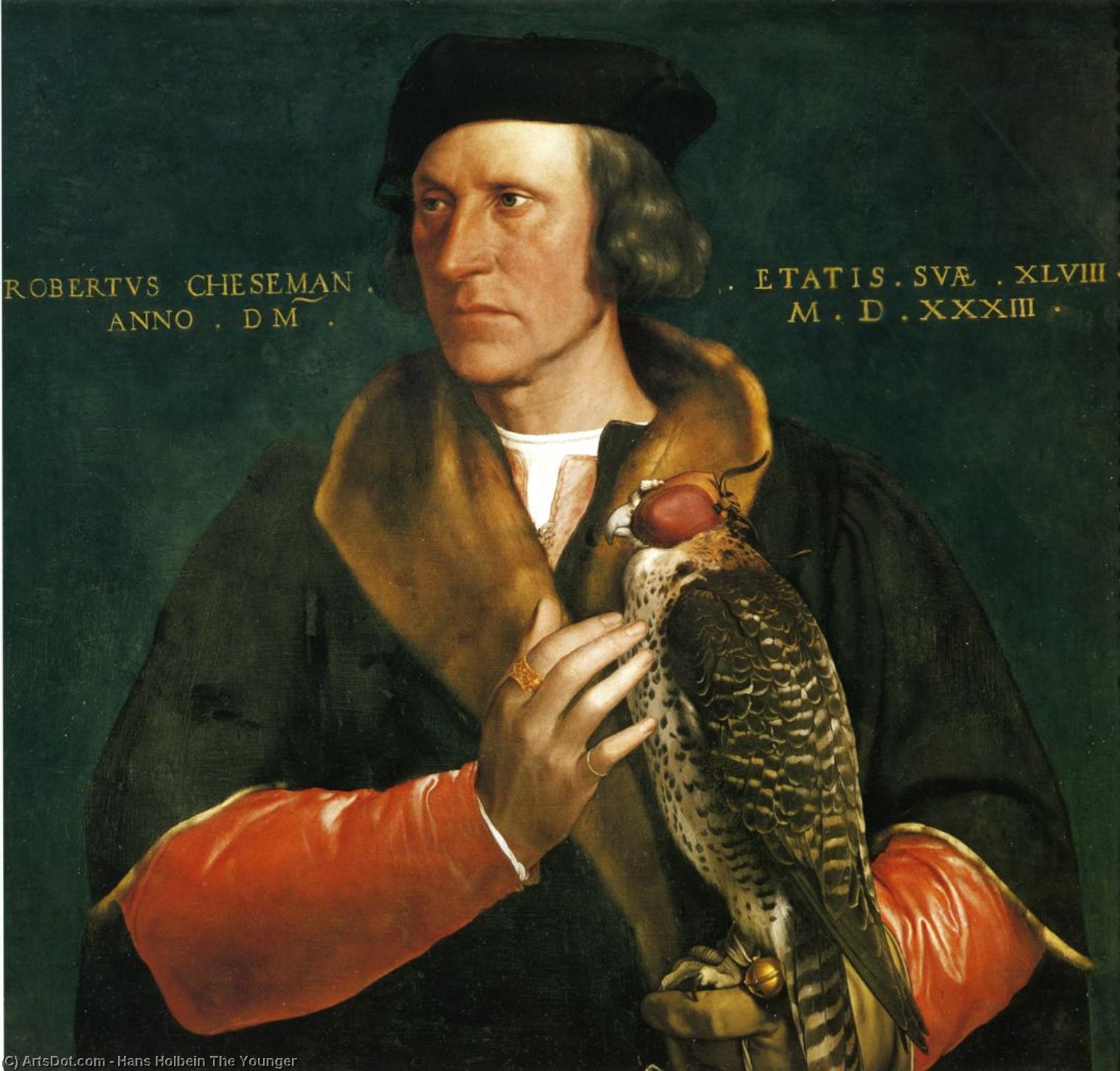
Portrait di Robert Cheseman

Il Ritratto di Robert Cheseman, opera magistrale di Hans Holbein il Giovane del 1533, cattura l'immagine impeccabile del falconiere al servizio di Enrico VIII con una tecnica innovativa e dettagli sorprendenti.

Hans Holbein il Giovane (1497-1543): Maestro del Rinascimento settentrionale, celebre per il suo realismo vivido e per la capacità di ritrarre la nobiltà Tudor come Enrico VIII. Esplora i suoi studi dettagliati, le composizioni innovative e la sua eredità duratura.

Riproduzione a olio fatta a mano

Olio su tela dipinto a mano nelle tue dimensioni e con la tua cornice, realizzato su ordinazione dai nostri artisti. (Acquista stampa Acquista stampaAcquista immagine Acquista immagine)

P118B $10
P118H $10
P118W $10
P438Z $10
P508JH $12
P508YH $12
P805H $10
P805Z $10
P919BZ $10
P919G $10
P919XJ $10
P959ZH $10
P968JZ $12
W106C $8
W218G $10
W218JH $8
W218Y $10
W307PJ $10
W316G $10
W316PJ $8
W316Y $10
W398PJ $8
W4111J $10
W500HY $15
W500JH $15
W692G $12
W849H $8
W940BG $15
W953PJ $8

Formato standard
su misura
CM
INCH

Scegli tra le nostre dimensioni predefinite, che rispettano le proporzioni originali dell'opera d'arte.

larghezza
altezza

È possibile inserire dimensioni personalizzate per adattare l'opera a una cornice o a uno spazio specifico. Se la dimensione selezionata non corrisponde alle proporzioni dell'immagine originale, provvederemo a ritagliare l'opera o a estendere il dipinto con elementi aggiuntivi dipinti a mano. Un mockup digitale ti sarà inviato per approvazione prima dell'inizio della produzione.
Si prega di notare che l'anteprima a schermo non riflette il ritaglio o l'estensione effettivi. Solo il mockup mostrerà accuratamente la composizione finale.
Sebbene siano disponibili dimensioni personalizzate, consigliamo di selezionare una dimensione dall'elenco predefinito per preservare le proporzioni originali.

Esempi di ciò che può essere modificato: sostituire il volto con una foto del cliente; aggiungere un animale domestico (ad esempio, sostituire un gatto con un cane); inserire un messaggio nascosto nello sfondo; cambiare il paesaggio o gli elementi dello sfondo.
Dopo l'ordine, il team di WahooArt.com contatterà il cliente via e-mail per le istruzioni e fornirà un'anteprima del mockup

Consegna in tutto il mondo () in 3/4 settimane anziché nelle normali 5 settimane. (6 Settembre). Nessun compromesso sulla qualità.

why_choose_icon
Spedizione espressa gratuita in tutto il mondo
why_choose_icon
Tela in lino di alta qualità
why_choose_icon
Assicurazione completa sulla spedizione
why_choose_icon
Garanzia di rimborso dei dazi doganali
why_choose_icon
Garanzia di fedeltà cromatica
why_choose_icon
Politica di reso entro 100 giorni (solo per difetti di fabbricazione)
why_choose_icon
Garanzia di rimborso al 100%
why_choose_icon
Offerta per acquisti multipli

Prezzo totale

$ 272

reproduction

Portrait di Robert Cheseman

Tecnica di riproduzione

Dimensioni riproduzione

-

Prezzo totale calcolato

$ 272

Informazioni rapide

  • Movement: Northern Renaissance
  • Year: 1533
  • Notable elements or techniques: Detailed realism; Satin sleeves; Gyrfalcon rendering
  • Location: Mauritshuis, The Hague
  • Subject or theme: Portrait of Robert Cheseman
  • Artist: Hans Holbein the Younger
  • Medium: Oil paint

Quiz d'arte

Per ogni domanda è presente una sola risposta corretta.

Domanda 1:
What is the primary subject matter of ‘Portrait of Robert Cheseman’?
Domanda 2:
In which museum is ‘Portrait of Robert Cheseman’ currently housed?
Domanda 3:
What artistic style characterizes Hans Holbein the Younger's work, as exemplified by this painting?
Domanda 4:
Robert Cheseman held what prestigious position during Henry VIII’s reign?
Domanda 5:
What technique is Holbein particularly known for employing in his portraits, contributing to their remarkable realism?

Portrait of Robert Cheseman: A Window Into Tudor England

The Portrait of Robert Cheseman by Hans Holbein the Younger, completed in 1533, stands as an undeniable triumph of Northern Renaissance artistry—a painting that transcends mere likeness to embody the spirit of its time and the profound psychological insight characteristic of Holbein’s oeuvre. Housed within the Mauritshuis museum in The Hague, this oil canvas (59 x 62 cm) offers a captivating glimpse into the opulent court of Henry VIII, capturing not just a man's appearance but also his status as King’s Falconer and reflecting the humanist ideals that permeated European intellectual life during the Reformation.

The Artist and His Style: Holbein's Precision

Hans Holbein the Younger (1497-1543) was more than simply a painter; he was an innovator who revolutionized portraiture, prioritizing anatomical accuracy and emotional nuance above all else. Born in Augsburg, Germany, Holbein’s artistic journey began with murals and religious commissions—early works demonstrating his meticulous attention to detail and mastery of perspective—before gravitating towards the vibrant artistic currents of Italy and France. However, it was his engagement with the English court that cemented his reputation as a master of psychological realism, influencing generations of artists who followed him. Holbein’s distinctive style blended Gothic influences with Renaissance humanism, resulting in images imbued with an unparalleled sense of presence and emotion.

A Portrait Steeped in Symbolism: Robert Cheseman's Significance

The subject of the portrait is Robert Cheseman (1485-1547), Henry VIII’s chief falconer—a position signifying considerable prestige and responsibility within Tudor society. Holbein skillfully portrays Cheseman wearing a black hat, symbolizing authority and piety, and holding a hawk on his arm – an emblem of nobility and hunting prowess. The meticulous rendering of Cheseman's attire—the robe, the ring finger adornment—reflects the formal conventions of aristocratic dress during the period. Crucially, the Latin inscription identifies Cheseman as 48 years old at the time of painting, emphasizing not only his age but also his maturity and experience – qualities Holbein sought to convey through careful observation and artistic technique.

Technical Mastery: Holbein's Delicate Touch

Holbein’s technical brilliance is evident in every aspect of this masterpiece. The artist’s gaze is unwavering, conveying confidence and intelligence; the satin sheen of Cheseman’s sleeves exemplifies his meticulous attention to surface texture; and the miniature brass beak of the hawk underscores his dedication to capturing minute details with astonishing precision. Holbein's masterful use of chiaroscuro—the interplay of light and shadow—creates a dramatic effect, highlighting Cheseman’s facial features and enhancing the overall sense of realism. Furthermore, the painting showcases Holbein’s ability to convey emotion through subtle gestures and expressions – a testament to his profound understanding of human psychology.

Historical Context: Tudor England Under Henry VIII

The Portrait of Robert Cheseman is inextricably linked to the tumultuous era of Henry VIII's reign—a period marked by religious upheaval, political intrigue, and dramatic transformations in English society. Holbein’s work serves as a vivid record of the grandeur and sophistication of the Tudor court, capturing its ceremonial rituals and reflecting the humanist values championed by monarchs like Henry VIII. By depicting Cheseman within this historical framework, Holbein elevates the portrait beyond mere representation to become an emblem of Elizabethan culture and intellectual curiosity.

A Legacy Enduring Through Time

Hans Holbein the Younger’s Portrait of Robert Cheseman remains one of the most celebrated achievements of Northern Renaissance art—a painting admired for its unparalleled realism, psychological depth, and artistic innovation. Its influence can be seen in subsequent portraiture traditions, where artists sought to emulate Holbein's meticulous observation and expressive technique. Today, reproductions of this iconic artwork continue to inspire collectors and interior designers alike, offering a tangible connection to the artistic brilliance of a bygone era.

Biografia dell'artista

vita e formazione

Hans Holbein il Giovane, una figura di spicco nel Rinascimento del Nord, nacque nel 1497 ad Augusta, in Germania. Sebbene spesso confuso con suo padre, Hans Holbein il Vecchio, un artista e incisore rinomato, l'opera del Giovane Holbein è distinta e notevole di per sé.

carriera artistica

La carriera artistica di Holbein il Giovane iniziò sotto la guida del padre. Successivamente viaggiò in Inghilterra, dove divenne pittore di corte per Re Enrico VIII. Questa posizione gli permise di catturare l'essenza della famiglia reale e dell'emergente aristocrazia inglese. La sua opera è caratterizzata da:

opere notevoli e eredità

L'opera di Holbein il Giovane si trova in vari musei, tra cui i Musei Statali di Berlino (Germania), dove il suo uomo ignoto con libri di musica e liuto (olio su tavola) è esposto. La sua influenza sul Rinascimento del Nord è innegabile e la sua opera continua a ispirare gli artisti di oggi. Holbein il Giovane morì nel 1543, ma la sua eredità vive attraverso i suoi affascinanti ritratti e studi dettagliati. visualizza altre opere di Hans Holbein il Giovane su WahooArt.
Hans Holbein il Giovane

Hans Holbein il Giovane

1497 - 1543 , Italia

Dati rapidi

  • Artistic Movement Or Style: Rinascimento del Nord
  • Artists Who Influenced This Artist:
    • Hans Holbein il Vecchio
    • Albrecht Dürer
  • Date Of Birth: 1497
  • Date Of Death: 1543
  • Full Name: Hans Holbein il Giovane
  • Nationality: Tedesco
  • Notable Artworks:
    • Ritratto di Enrico VIII
    • Gli ambasciatori
    • Autoritratto
    • Madonna del Borgomastro Meyer
    • Sir William Butts
  • Place Of Birth: Augusta, Italia
Esplora le opere d'arte organizzate per temi, stili e caratteristiche.