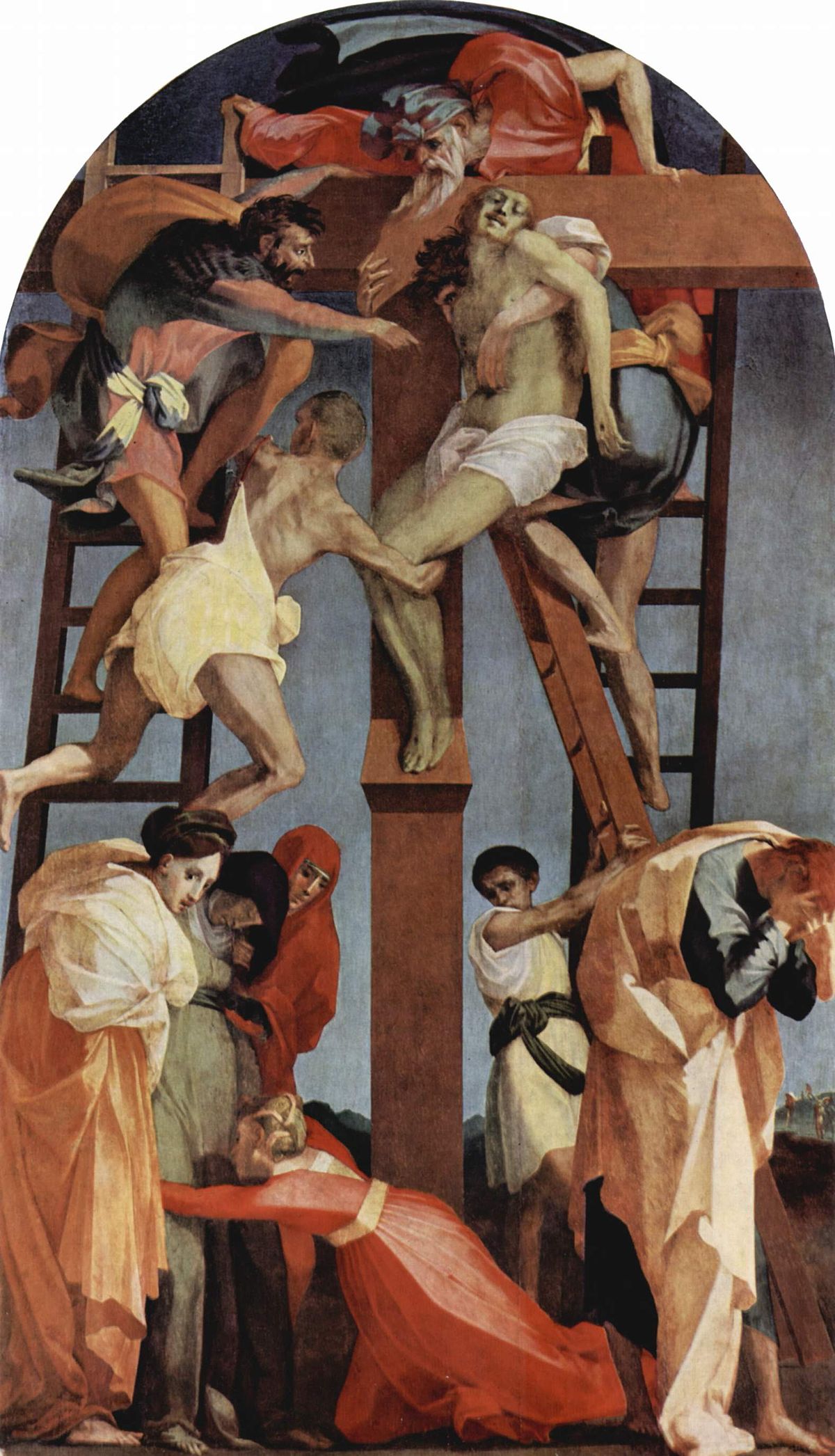
The Descent from the Cross: A Monumental Vision of Faith
The painting “Descent from the Cross” by Anton Raphael Mengs stands as an undeniable testament to the burgeoning Neoclassical movement’s embrace of classical ideals while simultaneously retaining a profound spiritual core. Executed around 1760, this monumental canvas—measuring 366 x 183 cm—holds its place prominently within St John's College, University of Cambridge’s collection, offering visitors an unparalleled glimpse into the artistic sensibilities of its time. Mengs skillfully blends meticulous observation with idealized form, reflecting a desire to elevate Christian iconography to new heights of grandeur and emotional resonance.
- Style: Neoclassical – Mengs consciously rejected the flamboyant excesses of Rococo, opting instead for a restrained elegance rooted in the principles championed by Johann Joachim Winckelmann. This stylistic choice prioritized clarity, balance, and harmonious proportions, mirroring the aesthetic ideals prevalent during the Enlightenment.
- Technique: Mengs employed oil paint on canvas with remarkable precision, utilizing glazing techniques to achieve luminous colors and subtle tonal variations—a hallmark of Neoclassical painting. The artist’s meticulous attention to detail is evident in every brushstroke, capturing the physicality of the figures and conveying a palpable sense of solemnity.
- Historical Context: Created during a period marked by intellectual ferment and philosophical debate, “Descent from the Cross” embodies the revival of classical art as a response to what Winckelmann termed “the barbarism of the Middle Ages.” Mengs’s work reflects the broader cultural preoccupation with reviving ancient Greek and Roman virtues—particularly piety and moral fortitude.
Symbolism: The composition itself is laden with symbolic significance. The central figure, Christ’s body, dominates the canvas, positioned in a cruciform arrangement – a deliberate reference to Christian iconography and representing divine sacrifice. Surrounding him are Joseph of Arimathea and Nicodemus, figures embodying compassion and humility—essential virtues within Christian theology. The weeping mourners express profound grief and sorrow, conveying the emotional impact of Christ’s suffering. Furthermore, Mengs's masterful depiction of space contributes to the painting's spiritual depth, creating an immersive experience for the viewer that transcends mere visual representation.
Emotional Impact: “Descent from the Cross” powerfully communicates the anguish and solemn reverence associated with contemplating Christ’s crucifixion. Mengs achieves this through careful consideration of gesture, expression, and color—elements skillfully deployed to evoke feelings of empathy and spiritual contemplation. The painting's enduring appeal lies in its ability to capture the essence of Christian faith—a belief in redemption and divine compassion—with breathtaking artistic skill. It remains a captivating masterpiece for anyone interested in exploring the intersection of art and spirituality.



 Oil On Canvas
 Renaissance
 366.0 x 183.0 cm
 St John's College

 Anteprima in scala reale
 Acquista stampa
 Invia
Invia Condividi


 Scarica immagine
 Simili
 Radiografia
 Slideshow