


x

 Ordina la riproduzione Acquista download
 Invia
Invia
 Details
 Aggiungi ai preferiti
 Scarica
 Simili
 X-Ray
X-Ray
 Slideshow
Stampa giclée o su tela di qualità museale, con produzione rapida e diverse opzioni di finitura.





























Scegli tra le nostre dimensioni predefinite, che rispettano le proporzioni originali dell'opera d'arte.

È possibile inserire dimensioni personalizzate per adattare l'opera a una cornice o a uno spazio specifico. Se la dimensione selezionata non corrisponde alle proporzioni dell'immagine originale, procederemo al ritaglio dell'opera o all'estensione dell'immagine con un bordo specchiato o a tinta unita. Un mockup digitale ti verrà inviato per approvazione prima dell'inizio della produzione.
Si prega di notare che l'anteprima a schermo non riflette il ritaglio o l'estensione effettivi. Solo il mockup mostrerà accuratamente la composizione finale.
Sebbene siano disponibili dimensioni personalizzate, si raccomanda di selezionare una dimensione dall'elenco predefinito per preservare le proporzioni originali.
Consegna in tutto il mondo () in 2 settimane invece delle normali 4/5 settimane. (2 Luglio)


25
Dimensioni riproduzione
Before Michelangelo and Leonardo da Vinci reshaped European art, Giotto di Bondone stood as the pivotal figure who irrevocably altered its trajectory. Born around 1267 in Florence—a city already experiencing burgeoning artistic innovation—Giotto emerged from humble origins to become arguably the most influential painter of his era, marking a decisive break from Byzantine conventions and ushering in what historians term “the great art of painting.” His legacy extends far beyond individual masterpieces; Giotto fundamentally redefined artistic principles that would dominate subsequent generations.
Contemporary accounts portray Giotto as possessing an innate talent—a remarkable ability to capture the natural world with unprecedented realism and emotional depth. Legend recounts his discovery sketching sheep on rocks, attracting the discerning eye of Cimabue, Florence’s leading painter, who recognized Giotto's extraordinary aptitude and took him on as an apprentice.
This apprenticeship proved transformative. Cimabue, steeped in Byzantine tradition—characterized by flattened perspectives and stylized figures—introduced Giotto to a new approach: observation. Giotto meticulously studied human anatomy, painstakingly recreating forms with astonishing accuracy. This dedication to realism was revolutionary for its time, rejecting the symbolic distortions favored by earlier artists.
Giotto's magnum opus—the decoration of the Scrovegni Chapel in Padua—solidifies his position as a titan among artists. Completed around 1305, this chapel houses a breathtaking cycle of frescoes depicting scenes from the Life of Christ and Mary Magdalene. The chapel’s walls are adorned with vibrant colors and intricate detail, showcasing Giotto's unparalleled skill.
The Scrovegni Chapel stands as a testament to Giotto’s revolutionary technique—particularly his masterful manipulation of light and shadow. He employed chiaroscuro—the dramatic contrast between light and dark—to sculpt figures from the stone, creating an illusion of three-dimensionality that captivated viewers.
Giotto's frescoes are not merely aesthetically pleasing; they convey profound spiritual meaning. Each scene is imbued with emotion, capturing the human experience of faith and compassion. Giotto’s meticulous attention to detail—from the folds of drapery to the expressions on faces—reflects his unwavering commitment to portraying humanity with unprecedented realism.
The chapel's interior space itself contributes to the overall impact of the artwork. The architects carefully designed the chapel to enhance the frescoes’ visual drama, creating an immersive experience for worshippers.
Giotto di Bondone irrevocably altered the course of Western art history. His innovations—particularly his embrace of naturalism and spatial depth—laid the foundation for the artistic achievements of the Renaissance masters. Giotto's influence can be seen in the works of Michelangelo, Leonardo da Vinci, Raphael, and Botticelli.
He established a new standard for artistic representation, prioritizing observation and emotional expression over stylized conventions. Giotto’s legacy continues to inspire artists today—a testament to his enduring genius and his transformative contribution to the history of art.


![Giotto di Bondone - Leggenda di San Francesco - [03] - Il Sogno del Palazzo](/media/artworks/images/thumbnails/89/45/89450def3f6a4a28a1669edcdbaf1495.jpg)


![Giotto di Bondone - Legenda di San Francesco - [06] - Il sogno di Innocenzo III](/media/artworks/images/thumbnails/42/eb/42eb7536b4cf430b8abff6a41f8c756b.jpg)


1267 - 1337 , Italia
Scopri l'arte del fresco e crea murales familiari unici! Esplora la storia, le tecniche e realizza il tuo sogno artistico con : esperti artisti e qualità garantita.

Explore the dramatic world of Baroque art! Discover masters like Zurbarán & the powerful influence of religious zeal on painting techniques. Expert insights for collectors and enthusiasts.

Explore the rich history & enduring artistry of fresco painting. Discover techniques from Giotto to Michelangelo, conservation efforts, & modern applications. Learn how WahooArt brings this timeless art form to your home.
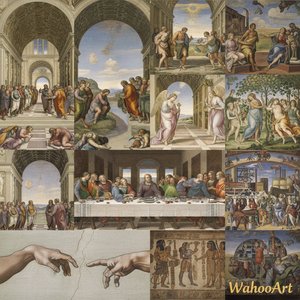
Esplora i 10 affreschi più leggendari della storia dell'arte! Da Michelangelo a Raffaello, scopri le storie e le tecniche dietro capolavori rinascimentali. Trova riproduzioni d'arte di alta qualità per la tua casa su WahooArt.com.

Explore the rich history & enduring legacy of fresco painting! Discover ancient techniques, Giotto's masterpieces, and modern applications. Expert insights for art lovers & professionals.


Rimani aggiornato sulle ultime novità dell'arte, sulle offerte esclusive e sulle idee di decorazione.
Raccontaci del tuo progetto e i nostri esperti d'arte ti proporranno 3 suggerimenti artistici personalizzati.
Lascia che ci pensiamo noi: 3 opzioni su misura per te – Gratis!

 Condividi


 Scopri di più







 L'opzione vetro è disponibile solo per dimensioni inferiori a 110 cm


