


x

 Acquista stampa Acquista download
 Invia
Invia
 Details
 Aggiungi ai preferiti
 Scarica
 Simili
 X-Ray
X-Ray
 Slideshow
Olio su tela dipinto a mano nelle tue dimensioni e con la tua cornice, realizzato su ordinazione dai nostri artisti.
Scegli tra le nostre dimensioni predefinite, che rispettano le proporzioni originali dell'opera d'arte.

È possibile inserire dimensioni personalizzate per adattare l'opera a una cornice o a uno spazio specifico. Se la dimensione selezionata non corrisponde alle proporzioni dell'immagine originale, provvederemo a ritagliare l'opera o a estendere il dipinto con elementi aggiuntivi dipinti a mano. Un mockup digitale ti sarà inviato per approvazione prima dell'inizio della produzione.
Si prega di notare che l'anteprima a schermo non riflette il ritaglio o l'estensione effettivi. Solo il mockup mostrerà accuratamente la composizione finale.
Sebbene siano disponibili dimensioni personalizzate, consigliamo di selezionare una dimensione dall'elenco predefinito per preservare le proporzioni originali.
Consegna in tutto il mondo () in 3/4 settimane anziché nelle normali 5 settimane. (1 Luglio). Nessun compromesso sulla qualità.


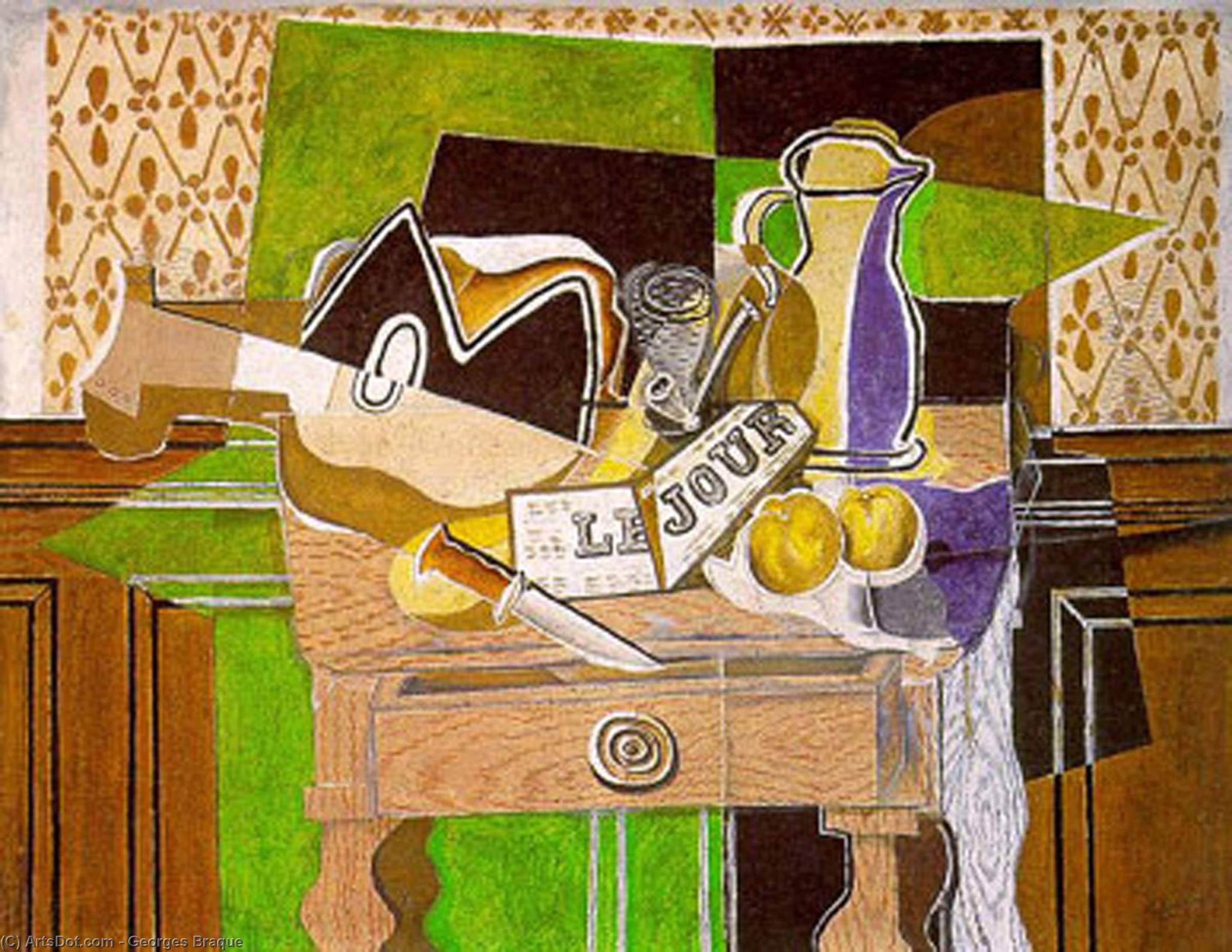
Still-Life Le Jour
Dimensioni riproduzione
Georges Braque’s “Still Life Le Jour,” painted in 1929, stands as a cornerstone of Fauvist art—a movement that irrevocably altered the course of twentieth-century painting. More than just an arrangement of objects on a tabletop; it's a deliberate challenge to traditional artistic conventions, embodying the spirit of experimentation and emotional expression championed by artists like Henri Matisse.
Born in Argenteuil, France, in 1882, Georges Braque initially pursued a path rooted in craftsmanship—following his father's profession as a house painter and decorator. However, his artistic inclinations swiftly propelled him toward formal training at the École des Beaux-Arts in Le Havre, where he encountered influential figures like Marie Laurencin and Francis Picabia.
Fauvism emerged in Paris during the early 1900s as a reaction against Impressionism’s focus on capturing fleeting moments of light. Artists sought to liberate color from its subservience to form, prioritizing emotional impact over meticulous detail. This bold aesthetic was driven by a desire to express inner feelings and sensations directly—a radical departure from the academic traditions that preceded it.
Beyond its striking visual qualities, “Still Life Le Jour” is laden with symbolic significance. The bottle, positioned centrally, serves as a focal point, drawing the viewer’s gaze and suggesting stability amidst the dynamic interplay of color and texture. The apples and oranges—often associated with fertility and abundance—are arranged in ways that create tension and movement, mirroring the artist's own exploration of artistic innovation.
The knife, resting near the middle-left area of the painting, adds a subtle element of realism, grounding the fantastical color scheme in everyday life. It’s a deliberate gesture—a reminder that even seemingly mundane objects can hold profound emotional resonance.
"Still Life Le Jour" continues to inspire artists and art enthusiasts alike. Its audacious use of color and expressive brushwork exemplifies the transformative power of Fauvist aesthetics, demonstrating how art can transcend mere representation to communicate emotion and provoke contemplation. As showcased at the Museum of the Annunciation in France—a testament to Fauvist’s enduring influence—this painting remains a captivating glimpse into the artistic fervor of its time.
A remarkable reproduction by WahooArt.com allows you to experience the brilliance of Braque's vision firsthand, bringing this seminal artwork into your home or studio.


1882 - 1963 , Francia
Explore the revolutionary world of Cubist Still Life with WahooArt. Discover Picasso & Braque's groundbreaking techniques, its philosophical roots, and lasting impact on modern art. Expert insights for collectors.

Crea una natura morta personalizzata per il tuo hotel con WahooArt! Artisti esperti realizzano riproduzioni su tela di alta qualità, trasformando le tue foto in opere d'arte uniche. Consulenza gratuita e spedizione internazionale.
Esplora i 10 capolavori del Cubismo con WahooArt. Scopri Picasso, Braque e Gris e la rivoluzione artistica delle forme geometriche e dei colori audaci. Quadri iconici per decorare casa con stile! Esplora la collezione online.

Explore the revolutionary world of Analytical Cubism with WahooArt. Discover Picasso & Braque's groundbreaking techniques, its philosophical roots, and lasting impact on modern art. Expert insights for collectors.

Explore the captivating world of Severin Roesen, a major American still life painter influenced by Dutch masters. Discover his lush compositions and the symbolism within his art – a window into 19th-century America.


Rimani aggiornato sulle ultime novità dell'arte, sulle offerte esclusive e sulle idee di decorazione.
Raccontaci del tuo progetto e i nostri esperti d'arte ti proporranno 3 suggerimenti artistici personalizzati.
Lascia che ci pensiamo noi: 3 opzioni su misura per te – Gratis!
 Condividi






































 Scopri di più
 L'opzione vetro è disponibile solo per dimensioni inferiori a 110 cm


