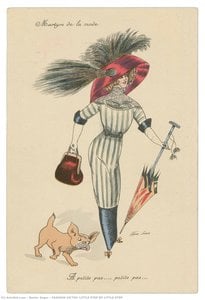
A Painter of Dreams: The Whimsical World of Xavier Sager
Xavier Sager (1881 – 1969) emerged from the vibrant, Belle Époque Parisian art scene as a singular illustrator and painter, leaving an indelible mark on both visual culture and artistic discourse. While often overshadowed by more celebrated contemporaries, Sager’s prolific output—spanning postcards, musical scores, calendars, and canvases—offers a fascinating glimpse into the anxieties and aspirations of his era. His work is underpinned by a distinctive stylistic vision that masterfully blends keen observation with a fantastical, almost dreamlike imagination.
Born in Nice, France, Sager received an early artistic education focused on the delicate disciplines of drawing and watercolor painting. Though biographical details of his youth remain scarce, he honed his skills during a period marked by profound artistic experimentation. As the Impressionists were reshaping the landscape of painting and Symbolism was gaining momentum across Europe, Sager developed a sensitivity to color and light that would become a hallmark of his later oeuvre. Notably, his early fascination with animation and theatrical presentation foreshadowed many of the developments found in Surrealist art decades later.
The Parisian Studio and the Art of Illustration
Sager's fame rests primarily on his extraordinary dedication to illustration, a medium through which he achieved widespread recognition. Between 1900 and 1914, he established a prolific studio in Paris where he produced an astonishing quantity of visual material. His output was truly monumental; he created approximately 3,000 postcards alone, primarily for commercial purposes, yet each piece retained a level of meticulous detail that elevated them above mere ephemera. These postcards served as windows to the world, showcasing:
- Meticulously rendered landscapes of the Côte d’Azur, capturing the luminous beauty of his native region.
- Animated depictions of lions, a recurring motif in his work that reflected a widespread fascination with exotic animals and the wild.
- Evocative panoramas of the Orient, transporting his audience to far-off, romanticized lands.
Beyond the realm of postcards, Sager demonstrated remarkable technical prowess by applying his illustrative talents to musical scores and calendars. This versatility allowed him to permeate various layers of daily life in Paris. Interestingly, he often signed his work with the playful anagram “Regas,” a subtle nod to the artistic conventions and hidden meanings prevalent in the era's creative circles.
Legacy and Artistic Significance
The significance of Xavier Sager lies in his ability to bridge the gap between commercial illustration and fine art. His work captures the transition from the romanticism of the 19th century to the more structured, graphic sensibilities of the early 20th century. Through his "animated" style, he brought a sense of movement and life to static images, creating a precursor to the modern fascination with motion and storytelling in visual media.
Today, Sager is remembered as an artist who could capture both the grandeur of a Parisian boulevard and the intimate charm of a whimsical character. His ability to weave together the real and the imagined ensures that his paintings remain not just historical artifacts, but enduring windows into a lost world of elegance, wonder, and enchantment.
Kérdések és válaszok
Szűrhetem Xavier Sager műveit szín alapján?
A Színindex oldalon Xavier Sager műveit szín szerint csoportosítva találhatja.
Milyen színeket használt leggyakrabban Xavier Sager?
Xavier Sager Paletta Genom egy olyan oldal, amely bemutatja a művész életművének színes profilját.
Xavier Sager műveit hangulat alapján is böngészhetem?
A művész Hangulatok szobája oldala Xavier Sager alkotásait hangulat alapján csoportosítva mutatja be.