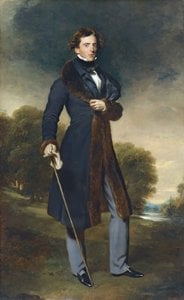
Thomas Lawrence, 1769 – 1830

Thomas Lawrence festményei: A 100 leghíresebb alkotás, rangsorolva

Thomas Lawrence leghíresebb festménye a Satan Summoning His Legions (1797). A John Philip Kemble (1757–1823), as Coriolanus (1798) és a Lord Granville Leveson Gower, later 1st Earl Granville (1809) mellett ez alkotja azt a három műet mindenki felismer. Katalógusunkban 466 mű található Thomas Lawrence alkotótól; az alábbi 100 alkotás a világ legnézettebbjei, amelyeknél megtudhatjuk a készítés évszámát, a művészét tároló múzeumot, valamint az alkotások jelentőségét.

A rangsorolásunkat a népszerűségi pontszám határozza meg, amely az egyes művek kereséseit, látogatottságát és megrendeléseit ötvözi. Frissítve: október 2026. Az ezen az oldalon található összes remekmű megrendelhető múzeumi minőségű, kézzel festett olajfestmény másolatként vagy fine art nyomtatásként, a választott méretben.

Thomas Lawrence portréja
Thomas Lawrence · 1769 – 1830
Született · meghalt
1769 – 1830, Bristol
Mozgalom
Romanticism
A katalógusban szereplő művek
466
Legnépszerűbb
Satan Summoning His Legions (1797)
A legtöbb művel a
Royal Collection

A 10 leghíresebb Thomas Lawrence festmény

Satan Summoning His Legions (1797) szerzője Thomas Lawrence
1

Satan Summoning His Legions

1797 · Oil On Canvas

In the vast, dramatic expanse of Sir Thomas Lawrence’s 1797 masterpiece, Satan Summoning His Legions, viewers are transported into the heart of a cosmic rebellion. This monumental oil on canvas, measuring an imposing 432 x 274 cm, serves as a breathtaking window into the depths of Miltonic epic. The painting captures the precise moment of transition described in John Milton’s Paradise Lost—the chilling command to "Awake, arise, or be for…

John Philip Kemble (1757–1823), as Coriolanus (1798) szerzője Thomas Lawrence
2

John Philip Kemble (1757–1823), as Coriolanus

1798 · Oil On Canvas · Guildhall Art Gallery, London

To stand before this portrait of John Philip Kemble as Coriolanus is to step directly into the tempestuous heart of the late eighteenth century. Sir Thomas Lawrence has captured not merely a likeness, but an overwhelming emotional state—a moment suspended between public grandeur and private turmoil. The composition immediately draws the viewer into its dramatic embrace, dominated by the figure shrouded in shadow. It is a masterclass in Romantic sensibility,…

Lord Granville Leveson Gower, later 1st Earl Granville (1809) szerzője Thomas Lawrence
3

Lord Granville Leveson Gower, later 1st Earl Granville

1809 · Oil On Canvas · Yale Center for British Art, New Haven

In the sweeping annals of British portraiture, few eras capture the intoxicating blend of aristocratic poise and romantic idealism quite like the Regency period. Sir Thomas Lawrence’s portrait of Lord Granville Levan Gower, completed between 1804 and 1809, serves as a breathtaking window into this gilded age. As a quintessential emblem of high society, the painting transcends a mere physical likeness; it is a meticulously crafted tableau that speaks to…

William van Mildhert (1765–1836), Durham püspöke (1826–1836) (1829) szerzője Thomas Lawrence
4

William van Mildhert (1765–1836), Durham püspöke (1826–1836)

1829 · Akril vászonon · Auckland Castle, Auckland

William van Mildhert (1765–1836), Bishop of Durham (1826–1836) – Egy Elegáns Régészeti Ünnepélyes Tábla A William van Mildhert életét és művészetét, Sir Thomas Lawrence nagy mester alkotása révén ismerjük meg. Ez nem egy egyszerű portré, hanem egy időszak ikonikus képe, amely tükrözi az angol Régész Kor széleskörű kulturális és művészi világát. A tábla 1829-ben született és őrzött közös ingatlanként Durham Egyetem területén található meg. A kép egy nagy előadású műalkotás,…

John, Count Capo d'Istria (1776-1831) (1819) szerzője Thomas Lawrence
5

John, Count Capo d'Istria (1776-1831)

1819 · Oil On Canvas · Royal Collection, London

In the sweeping landscape of early 19th-century portraiture, few works capture the intersection of political gravity and aristocratic grace as masterfully as Sir Thomas Lawrence’s 'John, Count Capo d'Istria (1776-18ABS)'. Painted in 1819, this exquisite oil on canvas serves as a profound window into an era defined by shifting borders and the rise of influential statesmen. The subject, John, Count Capo d'Istria, emerges from the frame not merely as a…

The 3rd Marquess of Hertford (1823) szerzője Thomas Lawrence
6

The 3rd Marquess of Hertford

1823 · Painting · Wallace Collection, London

To stand before this portrait of The 3rd Marquess of Hertford is to step directly into the polished drawing rooms and sophisticated salons of early nineteenth-century England. Painted in 1823, this work captures not merely a likeness, but an entire epoch—the height of Regency elegance and aristocratic confidence. Sir Thomas Lawrence, master chronicler of the British elite, has rendered the Marquess with a masterful blend of formality and undeniable vitality.…

LA COMTESSE D'INCHIQUIN szerzője Thomas Lawrence
7

LA COMTESSE D'INCHIQUIN

Oil On Canvas · Louvre Múzeum, Párizs

In this portrait, we encounter the Comtesse d'Inchiquin, captured in a moment of quiet composure. The sitter is presented in a three-quarter view, her presence defined by an air of dignity and refinement that speaks to her social standing. There is a certain stillness here; she sits facing us slightly, her hands resting upon the soft folds of a draped garment or perhaps the arm of a chair. The composition…

William Windham (1750–1810), MP, Lord Lieutenant of Ireland (1783), Secretary for War (1792–1801), Secretary for War and the Colonies (1806) (1803) szerzője Thomas Lawrence
8

William Windham (1750–1810), MP, Lord Lieutenant of Ireland (1783), Secretary for War (1792–1801), Secretary for War and the Colonies (1806)

1803 · Oil On Canvas · University College, Oxford

In the grand tapestry of British portraiture, few works capture the intersection of political gravity and artistic elegance as profoundly as Sir Thomas Lawrence’s 1803 masterpiece, William Windham. This portrait is far more than a mere recording of a statesman's features; it is a compelling visual narrative of power, intellect, and the pervasive influence of aristocratic patronage during the Napoleonic era. As the viewer encounters Windham, they are met with…

Thomas Lawrence, festmények 11 és 100 között

George IV (1822) szerzője Thomas Lawrence
#13

George IV

1822 · Wallace Collection

To stand before Sir Thomas Lawrence’s “George IV” is to be transported directly into the opulent drawing rooms of early nineteenth-century England, where every brushstroke whispers of a…

Rendelj egy reprodukciót →
Queen Charlotte (1789) szerzője Thomas Lawrence
#14

Queen Charlotte

1789 · National Gallery

In the grand tapestry of British portraiture, few works capture the delicate balance between sovereign authority and human vulnerability as exquisitely as Sir Thomas Lawrence’s 1789 masterpiece, Queen…

Rendelj egy reprodukciót →
Robert Southey (1774–1843) (1810) szerzője Thomas Lawrence
#15

Robert Southey (1774–1843)

1810 · Llyfrgell Genedlaethol Cymru / The National Library of Wales

Robert Southey és Thomas Lawrence Együtt – Egy Regency Szégyenének Megköszönhető Érzelmi Utazás A XVIII századi brit művészet egyik legkiemelkedőbb alakja, Sir Thomas Lawrence nem csak egy kiváló…

Kérjen kézzel festett másolatot →
Portrait of David Lyon (1825) szerzője Thomas Lawrence
#16

Portrait of David Lyon

1825 · Thyssen-Bornemisza Múzeum

Sir Thomas Lawrence's “Portrait of David Lyon,” completed in 1825, stands as a quintessential emblem of the English Romantic era’s preoccupation with aristocratic grandeur and psychological nuance. Currently…

Rendelj egy reprodukciót →
A Gypsy Girl (1794) szerzője Thomas Lawrence
#21

A Gypsy Girl

1794

In 1794, Thomas Lawrence painted A Gypsy Girl. This work belongs to the Romanticism movement of the 19th Century. The canvas captures a portrait of a woman with…

Rendelj egy reprodukciót →
The Countess of Darnley (1825) szerzője Thomas Lawrence
#24

The Countess of Darnley

1825

The Countess of Darnley is an oil on canvas painting by Thomas Lawrence. This work was created between 1825 and 1830. The physical dimensions of the piece are…

Vidd haza! →
Admiral John Markham (1793) szerzője Thomas Lawrence
#25

Admiral John Markham

1793 · Yale Center for British Art

This oil on canvas portrait, executed around 1793, depicts Admiral John Markham in a bust-length composition. The subject is positioned slightly off-center, facing the viewer with a steady,…

Kérjen kézzel festett másolatot →
Sir Alexander Mackenzie (1800) szerzője Thomas Lawrence
#26

Sir Alexander Mackenzie

1800 · Kanadai Nemzeti Galéria

This oil on canvas portrait presents Sir Alexander Mackenzie, a figure of significant historical weight. Painted by Thomas Lawrence in 1800, the work captures the likeness of a…

Rendelj egy reprodukciót →
John Bradburne (d.1809 ) (1800) szerzője Thomas Lawrence
#27

John Bradburne (d.1809 )

1800 · Walker Art Gallery

Sir Thomas Lawrence’s “John Bradburne,” painted in 1800, is more than just a likeness; it's a carefully constructed embodiment of Regency-era dignity and restrained power. This portrait, measuring…

Vidd haza! →
MRS ISAAC CUTHBERT szerzője Thomas Lawrence
#28

MRS ISAAC CUTHBERT

Louvre Múzeum

Sir Thomas Lawrence's "Mrs. Isaac Cuthbert" is more than just a portrait; it’s a meticulously crafted window into the opulent world of Regency England. Painted around 1795, this…

Rendelj egy reprodukciót →
Ewan Law, M.P. (1788) szerzője Thomas Lawrence
#29

Ewan Law, M.P.

1788 · Detroit Institute of Arts

The gaze of Ewan Law, M.P., meets the viewer from within a frame that captures a specific moment of political and social standing. This portrait, titled Ewan Law,…

Rendelj egy reprodukciót →
Sir Samuel Romilly (1808) szerzője Thomas Lawrence
#31

Sir Samuel Romilly

1808 · National Portrait Gallery

In this bust-length portrait of Sir Samuel Romilly, Thomas Lawrence presents an elderly gentleman with a quiet, commanding presence. The subject is positioned slightly off-center, his body turned…

Vidd haza! →
Lady Caroline Lamb (d.1828) (1827) szerzője Thomas Lawrence
#37

Lady Caroline Lamb (d.1828)

1827 · Bristol Museum - Art Gallery

Explore the life & art of Thomas Sully (1783-1872), a British-American portrait painter famed for his Romantic style. Discover portraits of Jefferson, Adams, Lafayette & 'Passage of the…

Rendelj egy reprodukciót →

Thomas Lawrence festményei időszakok szerint

A leggyakoribb témakörök, amelyeket Thomas Lawrence festett

A négy leggyakoribb téma ezek között a mesterdarabok közül, mindegyik legkivágtebb példájával.

Hol láthatja Thomas Lawrence festményeit

A 8 olyan múzeum, amely a legtöbb ezen az oldalon szereplő festményet őrzi.

Múzeumok Város Thomas Lawrence művei Ebből a listából származó festmények
Royal Collection, LondonRoyal Collection London 43 John, Count Capo d'Istria (1776-1831), Ercole, Cardinal Consalvi (1757 1824), Princess Amelia (1783-1810)
Művészeti Múzeum, Boston, BostonMűvészeti Múzeum, Boston Boston 5 Portrait of a Man in a Blue Coat, William Lock of Norbury (1732–1810), William Eden (1744–1814), Baron Auckland
Wallace Collection, LondonWallace Collection London 6 The 3rd Marquess of Hertford, George IV, Portrait of a Lady
Hermitaeus-múzeum, SzentpétervárHermitaeus-múzeum Szentpétervár 4 Portrait of Klemens Wenzel von Metternich, Portrait of Count Mikhail S. Vorontsov (1782-1856), Portrait of Emily Harriet Wellesley-Pole (Lady Raglan) (1792-1881)
Louvre Múzeum, PárizsLouvre Múzeum Párizs 10 LA COMTESSE D'INCHIQUIN, Portrait of the Children of John Angerstein, MRS ISAAC CUTHBERT
Yale Center for British Art, New HavenYale Center for British Art New Haven 5 Lord Granville Leveson Gower, later 1st Earl Granville, Admiral John Markham, Samuel Lyson
Bavári Állami Festırménygyűjtemények, MunchenBavári Állami Festırménygyűjtemények Munchen 3 Henry Phipps, 1st Earl of Mulgrave, Portrait of George Canning, Lady Orde with her Daughter Anne
Guildhall Art Gallery, LondonGuildhall Art Gallery London 5 John Philip Kemble (1757–1823), as Coriolanus, George Dance the Younger (1741–1825), Architect and Surveyor

Thomas Lawrence leghíresebb festményei évtizedenként

  1. 1780s
    Queen Charlotte (1789) szerzője Thomas Lawrence
    #14 100 közül

    Queen Charlotte

    Kor: 11 – 20 év · National Gallery

    In the grand tapestry of British portraiture, few works capture the delicate balance between sovereign authority and human vulnerability as exquisitely as Sir Thomas Lawrence’s 1789 masterpiece, Queen…

  2. 1790s
    Satan Summoning His Legions (1797) szerzője Thomas Lawrence
    #1 100 közül

    Satan Summoning His Legions

    Kor: 21 – 30 év

    In the vast, dramatic expanse of Sir Thomas Lawrence’s 1797 masterpiece, Satan Summoning His Legions, viewers are transported into the heart of a cosmic rebellion. This monumental oil…

  3. 1800s
    Lord Granville Leveson Gower, later 1st Earl Granville (1809) szerzője Thomas Lawrence
    #3 100 közül

    Lord Granville Leveson Gower, later 1st Earl Granville

    Kor: 31 – 40 év · Yale Center for British Art

    In the sweeping annals of British portraiture, few eras capture the intoxicating blend of aristocratic poise and romantic idealism quite like the Regency period. Sir Thomas Lawrence’s portrait…

  4. 1810s
    John, Count Capo d'Istria (1776-1831) (1819) szerzője Thomas Lawrence
    #5 100 közül

    John, Count Capo d'Istria (1776-1831)

    Kor: 41 – 50 év · Royal Collection

    In the sweeping landscape of early 19th-century portraiture, few works capture the intersection of political gravity and aristocratic grace as masterfully as Sir Thomas Lawrence’s 'John, Count Capo…

  5. 1820s
    William van Mildhert (1765–1836), Durham püspöke (1826–1836) (1829) szerzője Thomas Lawrence
    4. / 100

    William van Mildhert (1765–1836), Durham püspöke (1826–1836)

    Kor: 51 – 60 év · Auckland Castle

    William van Mildhert (1765–1836), Bishop of Durham (1826–1836) – Egy Elegáns Régészeti Ünnepélyes Tábla A William van Mildhert életét és művészetét, Sir Thomas Lawrence nagy mester alkotása révén…

  6. 1830s
    George IV (1762–1830) (1830) szerzője Thomas Lawrence
    35. / 100

    George IV (1762–1830)

    Kor: 61 év · Walker Art Gallery

    In this formal portrait, Sir Thomas Lawrence captures the essence of George IV through a lens of neoclassical majesty. The composition is centered on the figure of the…

Kérdések Thomas Lawrence festményeivel kapcsolatban

Mi Thomas Lawrence leghíresebb festménye?Mutasd meg a választ

Satan Summoning His Legions (1797). Ezután következik John Philip Kemble (1757–1823), as Coriolanus (1798) és Lord Granville Leveson Gower, later 1st Earl Granville (1809).

Hány éves volt Thomas Lawrence, amikor a Satan Summoning His Legions készült?Mutasd meg a választ

28 éves: Satan Summoning His Legions 1797-ből származik, Thomas Lawrence pedig 1769 évfolyamon született.

Melyek Thomas Lawrence top 10 festménye?Mutasd meg a választ

Satan Summoning His Legions, John Philip Kemble (1757–1823), as Coriolanus, Lord Granville Leveson Gower, later 1st Earl Granville, William van Mildhert (1765–1836), Durham püspöke (1826–1836), John, Count Capo d'Istria (1776-1831), The 3rd Marquess of Hertford, LA COMTESSE D'INCHIQUIN, William Windham (1750–1810), MP, Lord Lieutenant of Ireland (1783), Secretary for War (1792–1801), Secretary for War and the Colonies (1806), The Two Sons of the 1st Earl of Talbot és Portrait of the Children of John Angerstein. A fenti rangsor a művek évszámát és a múzeumát jelzi.

Hány festményt készített Thomas Lawrence?Mutasd meg a választ

Katalógusunkban 466 mű található Thomas Lawrence alkotótól, 1780 és 1830 közötti időszakból.

Hol találhatók Thomas Lawrence leghíresebb festményei?Mutasd meg a választ

A legtöbbjüket Royal Collection (London), Művészeti Múzeum, Boston (Boston) és Wallace Collection (London) találhatja meg. A fenti táblázatban a múzeumokat egymás után soroljuk fel.

Mikor festette Thomas Lawrence leghíresebb műveit?Mutasd meg a választ

1800s idején: a jelen laphonon található 100 műből 32 származik onnan, köztük Lord Granville Leveson Gower, later 1st Earl Granville.

Miküzők Thomas Lawrence legkorábbi és legkésőbbi híres festményei?Mutasd meg a választ

A legkorábbi alkotás ezen az oldalon Portrait of Georgina Lennox, later Countess Bathurst (1780), a legutóbb pedig George IV (1762–1830) (1830).

Mit festett leggyakrabban Thomas Lawrence?Mutasd meg a választ

Portraiture (13), Regency era (13) és Portrait (13), a jelen oldalon található 100 mű közül.

Melyik technikát használt leggyakrabban Thomas Lawrence?Mutasd meg a választ

Oil On Canvas: 31 a 100 ezen az oldalon található műalkotásból.

Mely művészeti irányba tartozik Thomas Lawrence?Mutasd meg a választ

Romanticism és Neoclassicism, ahogy azt ezen az oldalon látható festmények is mutatják.

Mely Thomas Lawrence festményeket láthatok a Royal Collection kiállításaiban?Mutasd meg a választ

A John, Count Capo d'Istria (1776-1831), Ercole, Cardinal Consalvi (1757 1824) és Princess Amelia (1783-1810) a 8 mű közül foglal helyet ezen az oldalon, amelyeket a Royal Collection, London tartományában őrzik.

Vásárolhatok egy Thomas Lawrence festményének reprodukcióját?Mutasd meg a választ

Igen. Az oldalon található minden festmény a festmény saját oldalán, a választott méretben rendelhető meg, hogy muzeumi minőségű, kézzel festett olajfestmény-másolatként vagy kiváló minőségű művészeti nyomtatásként.

Thomas Lawrence életútja

A Brushstroke of Regency Splendor: The Life and Art of Sir Thomas Lawrence

Sir Thomas Lawrence, a name synonymous with the elegance and sophistication of the Regency era, was more than just a portrait painter; he was a chronicler of his time. Born in Bristol in 1769 amidst the vibrant bustle of a port city, his early life was marked by movement – following his father’s innkeeping ventures across Devizes and finally settling in the fashionable spa town of Bath. It was within these convivial settings that Lawrence's artistic talent first began to shine, sketching remarkably accurate portraits for local patrons while still supporting his family. This nascent skill, honed without formal instruction but fueled by innate observation and a keen eye for detail, hinted at a prodigious gift – a gift he would soon transform into a celebrated career.

Ascension to Portraiture’s Pinnacle

The move to London in 1789 marked the true beginning of Lawrence's ascent. He quickly established himself as a portrait painter in oils, securing his first royal commission – a captivating portrait of Queen Charlotte – and instantly catapulting him into the heart of London society. This wasn’t merely about technical skill; Lawrence possessed an extraordinary ability to capture not just likeness but also *character*, imbuing his subjects with a flattering yet insightful presence. He became a master of portraying the glamour, refinement, and social dynamics of the Regency period, painting nobility, royalty, and prominent figures with a virtuoso handling of paint that drew comparisons to Sir Joshua Reynolds, whom he deeply admired. Lawrence’s election as an associate, then full member, of the Royal Academy in 1791 and 1794 solidified his position within the established art world – a testament to his growing reputation and artistic merit. His success was further underscored by his appointment as Painter-in-Ordinary to the King in 1800, a prestigious role that granted him unparalleled access to the highest echelons of power and provided a steady stream of lucrative commissions.

The Waterloo Chamber and Artistic Innovation

Lawrence’s career reached its zenith during the Napoleonic Wars, particularly with his commission to paint portraits for the Waterloo Chamber at Windsor Castle. This monumental undertaking – intended to commemorate the decisive victory over Napoleon – demanded not only technical mastery but also a profound understanding of composition and scale. The resulting series of portraits, depicting allied leaders from across Europe, showcased Lawrence’s ability to capture gravitas, authority, and the complex relationships between nations. These works were more than just paintings; they were powerful statements about British leadership and the triumph of reason over tyranny. Beyond this grand project, Lawrence continued to innovate in his portraiture style, refining his use of light and shadow, experimenting with color palettes, and developing a distinctive technique that blended classical elegance with a subtle sense of Romanticism.

Personal Life and Complexities

Despite his professional triumphs, Lawrence’s personal life was marked by both passion and sorrow. He became deeply involved with the Siddons family – Sarah Siddons, a celebrated actress, and her daughters, Maria and Sally. These relationships provided him with inspiration and companionship but also brought heartache and scandal to his reputation. Lawrence struggled financially throughout much of his career, often burdened by debt despite earning substantial sums from his commissions. He was known for his meticulous attention to detail, sometimes spending weeks perfecting a single portrait, which contributed to the delays and financial pressures he faced. Furthermore, Lawrence’s sitters reflected the social landscape of his time – including both slave owners and abolitionists – a stark reminder of the moral ambiguities inherent in Regency society.

A Lasting Legacy

Sir Thomas Lawrence died in London in 1830 at the age of 61, leaving behind a remarkable body of work that continues to captivate audiences today. His portraits are celebrated for their elegance, technical brilliance, and ability to capture the essence of his subjects – offering a vivid glimpse into the world of Regency England. While his reputation experienced a decline during the Victorian era, largely due to shifting artistic tastes, Lawrence’s legacy has been partially restored in recent decades, recognizing him as one of Britain's most accomplished and enduring portraitists. His influence can be seen in the works of later painters who sought to emulate his style and capture the spirit of an era, solidifying his place as a pivotal figure in British art history. His work remains a testament to his talent, charm, and enduring contribution to the world of art.

Minden 466 műmű Thomas Lawrence alkotása →