John Constable, 1776 – 1837

The 100 Most Famous Paintings by John Constable

The painting that made John Constable famous is A Hay Wain (1821); it hangs in the National Gallery, London. View of Salisbury Cathedral from the Bishop's Grounds (1823) and Salisbury katedráli északi tájképe follow it in the hearts of collectors and museum visitors. Of the 497 works by John Constable in our catalogue, these 100 are the most admired, each presented with its date, its museum and what sets it apart.

Ranked by our popularity score, which combines the searches, visits and orders for each work. Updated október 2026. Every masterpiece on this page can be ordered as a museum-quality, hand-painted oil reproduction or a fine art print, at the size you choose.

Portrait of John Constable
John Constable · 1776 – 1837
Born · died
1776 – 1837, East Bergholt
Movement
Romantika
Works in our catalogue
497
Most famous
A Hay Wain (1821)
Most works at
Yale Center for British Art

John Constable: the ten masterpieces

A Hay Wain (1821) by John Constable
1

A Hay Wain

1821 · Olajfestmény vászonon · National Gallery, London

John Constable’s 1821 masterpiece, "The Hay Wain," isn't merely a depiction of a river scene; it’s a profound evocation of a way of life – a harmonious blend of human activity and the enduring beauty of the English countryside. More than two centuries after its creation, this painting continues to resonate deeply with audiences, offering a timeless glimpse into a pastoral world that feels both familiar and profoundly distant. Constable,…

View of Salisbury Cathedral from the Bishop's Grounds (1823) by John Constable
2

View of Salisbury Cathedral from the Bishop's Grounds

1823 · Acrylic On Canvas · Victoria and Albert Museum, London

John Constable, one of the most renowned English landscape painters, created a breathtaking piece titled View of Salisbury Cathedral from the Bishop's Grounds. This oil on canvas painting, measuring 88 x 112 cm, is a quintessential example of Romanticism and showcases Constable's unique ability to capture the essence of nature. The Painting's Composition The painting depicts Salisbury Cathedral in all its grandeur, set against a serene backdrop of trees and…

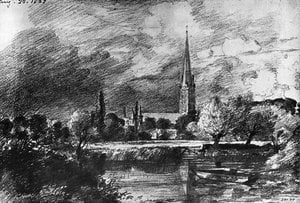
Salisbury katedráli északi tájképe by John Constable
3

Salisbury katedráli északi tájképe

Grafit ceruza

Tárgy és kompozíció Ez az kifogástalan monokrom rajz megörökíti a Salisbury katedrális fenséges jelenlétét, amely a középkori architektúra és a spirituális jelentőség mesterműve. A részletgazdag ábrázolás kiemeli a katedrális magasba törő tornyait és bonyolult gótikus vonásait, melyeket egy nyugodt, természeti táj ölel körül. A kompozíció egyensúlyt teremt az építmény monumentális díszletessége és a szerves elemek között, arra invitva a nézőt, hogy csodálja meg az emberi kézműves tudás és a természet…

A szénárc (részlet) (1821) by John Constable
4

A szénárc (részlet)

1821 · Akril festmény vászonon · National Gallery, London

John Constable 1821-ben befejezett The Hay-Wain (A szénvagon) című alkotása túlmutat az angol vidéki táj egyszerű ábrázolásán; ez egy érzelmi tanúságtétel egy mélyen szeretett és apránkodó részletességgel megfigyelt tájról. Ez az ikonikus festmény, amely ma már London National Galleryjában kap helyet, felemelkedik témáján – a mezőgazdasági élet egyszerű vidéki jelenete – felett, hogy a nemzeti identitás és a művészeti innováció hatalmas szimbólumává váljon. Az AllPaintingsStore.com gibi platformokon elérhető reprodukciók részletessége…

Flatford Mill (Scene on a Navigable River) (1817) by John Constable
5

Flatford Mill (Scene on a Navigable River)

1817 · Oil On Canvas

In the quiet corners of the English countryside, where the River Stour winds through the verdant heart of Suffolk, lies a scene captured forever in John Constable’s 1817 masterpiece, Flatford Mill (Scene on a Navigable River). This is not merely a depiction of a watermill; it is an evocative window into the Romantic soul. To gaze upon this canvas is to step into a world where the boundaries between nature…

A ugró ló (1825) by John Constable
6

A ugró ló

1825 · Olajfestmény vászonon · Roy Miles Gallery, London

John Constable's "The Leaping Horse," painted in 1825, isn’t merely a depiction of a riverside scene; it’s a vibrant distillation of the English countryside and a profound exploration of light, movement, and human interaction with nature. This iconic work, now residing within the Royal Academy’s collection, captures a fleeting moment along the River Stour in Suffolk – a region deeply ingrained in Constable's artistic sensibility and personal history. The painting…

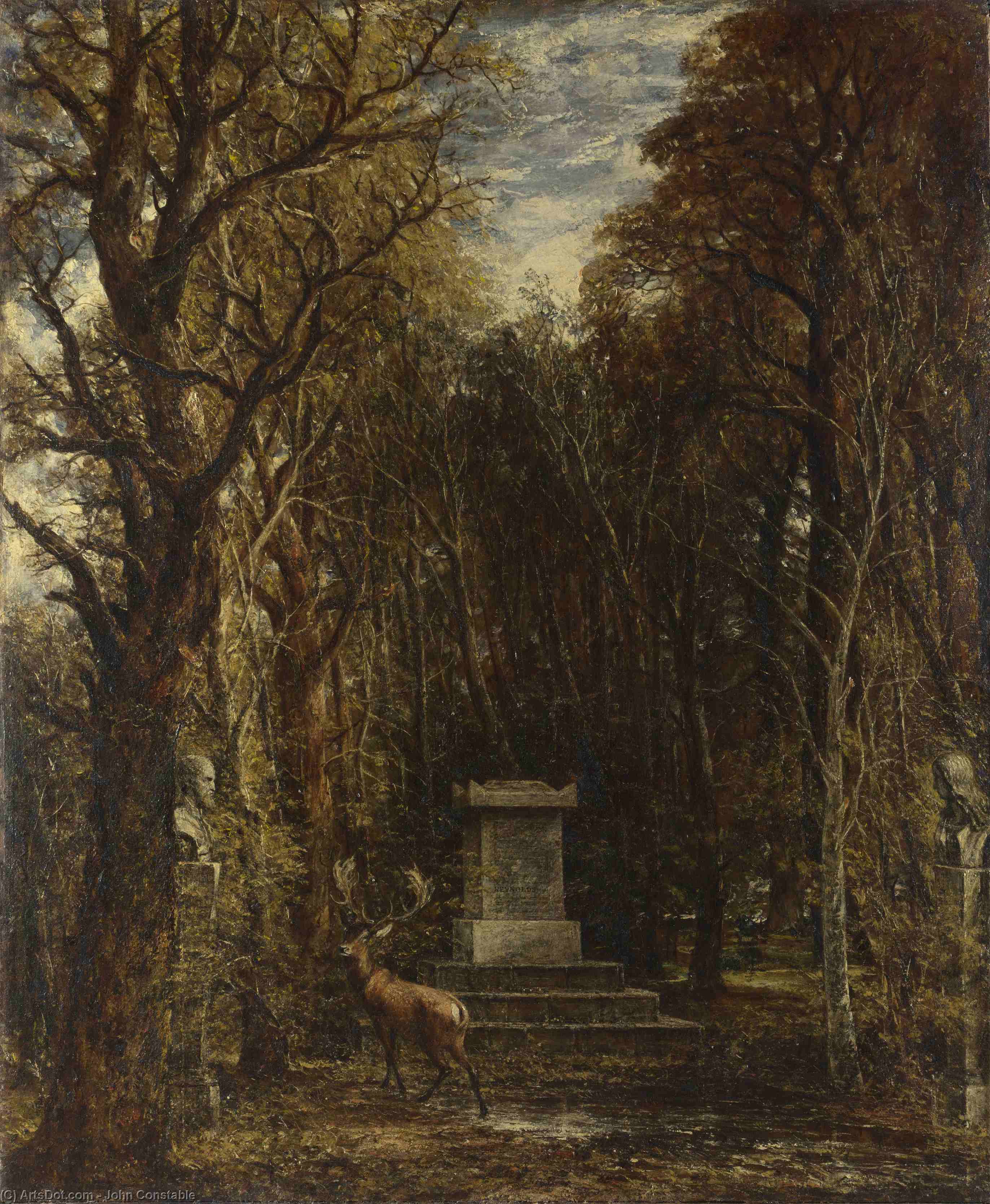
Emlékmű Sir Joshua Reynolds tiszteletére by John Constable
7

Emlékmű Sir Joshua Reynolds tiszteletére

Olajfestmény vászonon

Emlékmű Sir Joshua Reynolds tiszteletére – Tájkép-álmodat John Constable Emlékmű Sir Joshua Reynolds tiszteletére című műve, amely 1836-ban készült el, a romantikus idealizmus és az angol vidék szublimis szépségének megörökítése iránti tartós elhévülés ékes bizonyítéka. A festmény nem csupán egy emlékkert ábrázolása, hanem Constable mély természetszeretetét is testesíti meg – egy olyan kötődést, amely meghatározta művészeti örökségét és számos generáció tájképfestőjét befolyásolta. A alkotás a leicestershirei Coleorton Hall parkját ábrázolja,…

A Stour-i kilátás Dedham mellett (1822) by John Constable
8

A Stour-i kilátás Dedham mellett

1822 · Olajfesték

John Constable, 1776-ban született East Bergholt kis faluban, Suffolk megyében, nem csupán egy tájképfestő volt; hanem a vidéki élet poetája is, aki a természet finom árnyait és örök széleit festette meg a vászonra rendkívüli érzékenységgel. Apja, Golding Constable, gazdag gabonakereskedő volt, akinek birtokában volt Dedham Vale és a Stour folyó menti malmai is, ami közvetlenül meghatározta Constable művészi életét. A fiatal Constable gyermekkorától kezdve szinte a természet lábaival járta az…

Flatford Lock (1811) by John Constable
9

Flatford Lock

1811 · Olajfesték · Yale Center for British Art, New Haven

A Dedham Vale csendjében, ahol a Stour folyó Suffolk szívén keresztül kanyarog, John Constable valaminegt többet örökített meg, mint egy tájat; egy érzést fogott le. A Flatford Lock, amely 1811-ben készült, mély meditációként áll a szépség, a magány és a vidéki élet tartós ritmusának témájában. Ez a remekmű nem csupán egy működő malom topográfiai feljegyzése; a romantikus idealizmus megtestesülése. Ecsetjének segítségével az alázatos fa híd és a nyugodt vizek a…

Salisbury Cathedral från biskopens gård (1825) by John Constable
10

Salisbury Cathedral från biskopens gård

1825 · Olajfestmény vászonon · Metropolitan Művészeti Múzeum, New York

A Pastoral Vision: Unveiling Constable’s Salisbury Cathedral from the Bishop’s Grounds John Constable’s *Salisbury Cathedral from the Bishop’s Grounds* (1825) is more than just a depiction of an architectural marvel; it’s a poignant expression of his deep connection to the English countryside and a masterful example of Romantic landscape painting. This iconic work, currently residing at the Metropolitan Museum of Art in New York, invites viewers into a serene world…

More John Constable masterpieces, 11 to 100

Helmingham Dell by John Constable
#11

Helmingham Dell

Louvre Múzeum

John Constable’s “Helmingham Dell,” completed in 1830, stands as a cornerstone of Romantic landscape painting—a testament to the artist's profound connection with the English countryside and his masterful…

Bring it home →
A szénáj (1821) by John Constable
#12

A szénáj

1821 · National Gallery

John Constable és Az Éri Szék Az Éri Szék (A Hay Wain) John Constable ikonikus alkotása, mely egy igazán különleges művészeti darabot mutat meg az angol tájfestészet története…

Bring it home →
Wivenhoe Park, Essex by John Constable
#13

Wivenhoe Park, Essex

Introduction to John Constable and the Landscape Painting Art Movement John Constable (1776-1837) was a renowned English Romantic painter known for his breathtaking landscape paintings. As an artist,…

Bring it home →
Reggeli táj eső után (1821) by John Constable
#15

Reggeli táj eső után

1821 · Yale Center for British Art

A Symphony of Dusk: Exploring Constable’s ‘Evening Landscape After Rain’ John Constable's “Evening Landscape after Rain,” painted in 1821, transcends mere depiction; it embodies the very spirit of…

Commission a hand-painted copy →
Út Dedham közelében (1802) by John Constable
#16

Út Dedham közelében

1802 · Yale Center for British Art

Captivating Rural Serenity in a Timeless Landscape Experience the tranquil beauty of the English countryside captured through the masterful brushwork of John Constable. This exquisite painting depicts a…

Bring it home →
The Old Mill (1820) by John Constable
#17

The Old Mill

1820 · Walters Art Museum

The watermill sits heavy on the right, its weathered wood and jagged roofline anchored against a leaning tree. A single figure moves near the waterwheel in the lower…

Bring it home →
Willy Lot háza (1810) by John Constable
#19

Willy Lot háza

1810 · Victoria and Albert Museum

A vidéki nyugalom víziója: John Constable „Willy Lot háza” John Constable 1810-ben készült „Willy Lot háza” túlmutat a puszta ábrázoláson; testbedül a romantikus szellemben – a természet iránti…

Order a reproduction →
Old Sarum (1834) by John Constable
#20

Old Sarum

1834 · Victoria and Albert Museum

In the vast, sweeping expanse of John Constable’s "Old Sarum," we are invited into a moment where time seems to hold its breath. Completed in 1834, this monumental…

Commission a hand-painted copy →
East Bergholt Rectory (1810) by John Constable
#21

East Bergholt Rectory

1810 · Philadelphia Művészeti Múzeum

John Constable, a 18. század végének és a 19. század elejének egyik legjelentősebb angol festője, nem csupán tájakat örökített meg vásznain, hanem a természet lélegzetelállító szépségét, valamint az…

Bring it home →
Boat-building near Flatford Mill (1815) by John Constable
#22

Boat-building near Flatford Mill

1815 · Victoria and Albert Museum

A Window into Rural Tranquility: Exploring Constable’s “Boat Building Near Flatford Mill” John Constable's "Boat Building Near Flatford Mill" isn’t simply a depiction of a picturesque English landscape;…

Order a reproduction →
Flatford Mill (részlet) (1817) by John Constable
#23

Flatford Mill (részlet)

1817 · Tate Gallery

John Constable Flatford Mill (részlet) című alkotása sokkal több, mint egy egyszerű folyóparti jelenet ábrázolása; ez a romantikus idealizmus megtestesülése, amely az ipari forradalom küszöbén álló vidéki Anglia…

Order a reproduction →
A kukoricza tábla (1826) by John Constable
#24

A kukoricza tábla

1826 · National Gallery

John Constable 1826-os alkotása, a „The Cornfield”, túlmutat az egyszerű tájképén; ez a vidéki élet lenyűgöző ábrázolása és az emberiség és a természet közötti mély kapcsolat felidéző portréja.…

Bring it home →
wivenhoe park (1816) by John Constable
#26

wivenhoe park

1816

In the annals of English Romanticism, few works capture the ephemeral magic of the countryside as profoundly as John Constable’s Wivenhoe Park. Completed in 1816, this masterpiece serves…

Commission a hand-painted copy →
Study of the Trunk of an Elm Tree (1821) by John Constable
#27

Study of the Trunk of an Elm Tree

1821 · Birmingham Museum and Art Gallery

In the quietude of 1821, John Constable captured more than just a botanical specimen; he distilled the very essence of Romanticism into a singular, breathtaking study. Study of…

Order a reproduction →
Hollyhök vizsgálata (1826) by John Constable
#28

Hollyhök vizsgálata

1826 · Yale Center for British Art

John Constable 1826-ban készült Hollyhock vizsgálata nem csupán virágok ábrázolása; ez a természet szépségének és átmenetességének mély meditációja, amelyet olyan közvetlenséggel alkotott meg, amely szinte érezhetően hadir. Ez…

Bring it home →
A Stour by John Constable
#30

A Stour

Philadelphia Művészeti Múzeum

Egy folyóvölgy terül el ebben a négyzet alakú kompozícióban, ahol a napfelkelés vagy a naplemente az időszak megidézője. A víz felszínén a nehéz, felhőkkel teli égbolt tükröződik vissza,…

Order a reproduction →
Stratford Mill (1820) by John Constable
#33

Stratford Mill

1820

John Constable's "Stratford Mill," painted in 1820, isn’t merely a depiction of a rural scene; it’s a profound meditation on light, labor, and the enduring spirit of the…

Bring it home →
Study of a Cloudy Sky (1825) by John Constable
#34

Study of a Cloudy Sky

1825 · Yale Center for British Art

A Symphony of Atmosphere: John Constable’s ‘Study of a Cloudy Sky’ John Constable's *Study of a Cloudy Sky*, painted in 1825, is more than just a depiction of…

Order a reproduction →
The Glebe Farm (1830) by John Constable
#38

The Glebe Farm

1830

A Landscape of Memory The sky over Langham is heavy with the weight of an approaching storm. Grey clouds press down upon the trees, their edges catching a…

Bring it home →
Egy csónak a zárnál (vázlat) by John Constable
#42

Egy csónak a zárnál (vázlat)

National Gallery of Victoria

John Constable „Egy csónak a zárnál (vázlat)” című műve nem csupán egy folyóparti jelenet ábrázolása; az a fényről, a légkörről és az angliai vidék csendes drámájáról szóló, gondosan…

Bring it home →
Salisbury (1829) by John Constable
#43

Salisbury

1829 · Fitzwilliam Museum

The heavy, damp air of an overcast day clings to the thick layers of oil on canvas. In this 1829 scene, deep greens and olive tones define the…

Bring it home →
Captain Richard Gubbins (1805) by John Constable
#45

Captain Richard Gubbins

1805 · Yale Center for British Art

John Constable’s “Captain Richard Gubbins,” painted in 1805 and now residing within the esteemed Yale Center for British Art, is more than a simple likeness; it's a carefully…

Bring it home →
Dedham Vale (1802) by John Constable
#52

Dedham Vale

1802 · Yale Center for British Art

The air feels heavy with moisture, a soft and overcast light settling over the rolling hills of the Essex and Suffolk border. In this corner of the landscape,…

Commission a hand-painted copy →
Rainstorm over the Sea (1828) by John Constable
#53

Rainstorm over the Sea

1828 · Royal Academy of Arts

John Constable's "Rainstorm over the Sea," painted in 1824-28, isn’t merely a depiction of a seascape; it’s a visceral embodiment of Romanticism’s fascination with nature’s power and the…

Bring it home →
Hilly Landscape (1808) by John Constable
#54

Hilly Landscape

1808 · Nationalmuseum

In this 1808 watercolor, we find ourselves looking into a tranquil valley, far from the noise of industry. The scene is defined by gently sloping hills that roll…

Bring it home →
The White Horse (1818) by John Constable
#55

The White Horse

1818 · National Gallery of Art

Step closer to observe the quiet industry captured here along the banks of the River Stour in Suffolk. The scene centers upon a tow-horse, tethered near the water's…

Bring it home →
Dedham Vale (1810) by John Constable
#56

Dedham Vale

1810 · Dayton Art Institute

To stand before this canvas is to enter a moment of profound stillness along the border of Suffolk and Essex. The scene captures a wide, expansive view of…

Commission a hand-painted copy →
Yarmouth Jetty (1822) by John Constable
#58

Yarmouth Jetty

1822 · National Gallery of Art

The sky occupies two-thirds of the canvas, a heavy expanse of white and grey cumulus clouds that swirl with a restless energy. These vapors press down upon the…

Bring it home →
a water mill by John Constable
#59

a water mill

A Window into English Pastoralism John Constable’s A Water Mill is far more than a mere landscape; it is a profound meditation on the enduring peace of the…

Bring it home →
Hadleigh Castle (1828) by John Constable
#60

Hadleigh Castle

1828 · Yale Center for British Art

Hadleigh Castle tájképe A millboardra vászonra applikált olajfestmény Hadleigh Castle romjaiyla emlékeztet minket, mely egy domb tetején magasodik a táj felett. A kompozíció középpontját kissé a bal oldalra…

Order a reproduction →
The Opening of Waterloo Bridge by John Constable
#62

The Opening of Waterloo Bridge

Yale Center for British Art

In the grand tapestry of English Romanticism, few works capture the pulse of a nation quite like John Constable’s The Opening of Waterloo Bridge. Completed in 1832, this…

Bring it home →
A Cserejely vagy Admirális háza (1822) by John Constable
#63

A Cserejely vagy Admirális háza

1822 · Alte Nationalgalerie

John Constable 1822-es alkotása, „A Cserejely vagy Admirális háza”, nem csupán egy vidéki jelenet ábrázolása; ez egy mély elmerülés az angliai vidék lelkében. East Bergholtban, Suffolk megyében született…

Order a reproduction →
Flatford Mill from the Lock (1811) by John Constable
#64

Flatford Mill from the Lock

1811 · Henry E. Huntington Könyvtár és Múzeum

A turbulent sky dominates the upper register of this 1811 oil painting, where swirling whites and cool greys suggest a heavy, shifting cloud cover. Below, the River Stour…

Bring it home →
Flatford Mill (1817) by John Constable
#66

Flatford Mill

1817

John Constable's Flatford Mill is a captivating oil painting that showcases the artist's skill in capturing serene and idyllic scenes. Created in 1817, this piece measures 50 x…

Bring it home →
Szentháromság nyugodt esti tájképe (1836) by John Constable
#67

Szentháromság nyugodt esti tájképe

1836 · Yale Center for British Art

John Constable és Stonehenge nyugodt szépsége – Egy Évzaddal Megújult Képművészeti Közlemény John Constable, született 1776-ban az angliai Suffolk megyében található East Bergholt kisvárosában nem csak tájképző művészt…

Commission a hand-painted copy →
A Cornfield (1817) by John Constable
#68

A Cornfield

1817

The Composition of the Landscape A central view of a sunlit meadow and distant hills occupies the middle ground of this oil on canvas. On the left and…

Bring it home →
Sketch for "The Haywain" (1820) by John Constable
#70

Sketch for "The Haywain"

1820 · Yale Center for British Art

Ez az olajskicc, amelyet körülbelül 1820 körül készítettek, egy aszimmetrikus tájkép-tanulmányt mutat be. A kép bal oldalán és középső-bal részén hatalmas, sötét fák domosolják a keretet. Ezeket a…

Commission a hand-painted copy →
The Mill Stream (1815) by John Constable
#72

The Mill Stream

1815

Captivating Subject and Tranquil Atmosphere This exquisite painting captures a serene rural riverside scene at sunset, where the gentle flow of the mill stream reflects the warm hues…

Commission a hand-painted copy →
Willy Lott's House (1802) by John Constable
#73

Willy Lott's House

1802

The River Stour moves slowly through the landscape, its surface a dark mirror for the heavy, grey clouds above. A cluster of dense, leafy trees occupies the middle…

Order a reproduction →
Széncsapók a Brighton-i strandon by John Constable
#74

Széncsapók a Brighton-i strandon

John Constable, az 1776-ban született és 1837-ben elhunyt angol tájképfestő, a romantika virágzásának egyik legkiemelkedőbb alakja. Művei nem pusztán a természet szépségének ábrázolását szolgálják, hanem a művész mély…

Bring it home →
Malvern Hall from the South West (1809) by John Constable
#79

Malvern Hall from the South West

1809 · Bristol Museum And Art Gallery

John Constable’s “Malvern Hall from the South West,” painted in 1809, isn't merely a landscape; it’s a distillation of the English countryside at its most serene and evocative.…

Order a reproduction →
East Bergholt temploma (1809) by John Constable
#80

East Bergholt temploma

1809 · Yale Center for British Art

A festmény az East Bergholtban, Suffolk megyében található Szent Mária templomot ábrázolja, amely egy vidéki táj közepén fekszik. A függőleges orientáció lehetővé teszi, hogy az égbolt körülbelül kétharmadát…

Order a reproduction →
View of Dedham Vale (1800) by John Constable
#81

View of Dedham Vale

1800

In the quietude of the English countryside, where the River Stour winds through the borderlands of Suffolk and Essex, lies the heart of John Constable’s artistic universe. His…

Bring it home →
Flatford Mill (1810) by John Constable
#82

Flatford Mill

1810 · Yale Center for British Art

A large, leafy tree occupies the right side of the composition, its branches extending toward the center of the frame. On the far left, a structure sits near…

Bring it home →
Hampstead Heath with Bathers (1822) by John Constable
#83

Hampstead Heath with Bathers

1822

In the heart of John Constable’s Hampstead Heath with Bathers, one finds more than a mere landscape; one encounters a profound meditation on the harmony between humanity and…

Bring it home →
Dedham Vale: Morning (1811) by John Constable
#87

Dedham Vale: Morning

1811

A Symphony of Morning Light In the quietude of the Stour Valley, where the borders of Suffolk and Essex meet in a gentle embrace, John Constable captures a…

Bring it home →
Egy erdősi ösvény by John Constable
#88

Egy erdősi ösvény

John Constable, a kiemelkedő brit művész, akit tájképfestészetének mesteri alkotásairól ismernek, a 19. század elején alkotta meg ezt a remekművet, melynek címe „Egy erdősi ösvény”. Ez a festmény…

Order a reproduction →
View of Salisbury (1820) by John Constable
#92

View of Salisbury

1820 · Louvre Múzeum

John Constable’s “View of Salisbury,” painted in 1820, transcends mere depiction; it embodies the very spirit of Romantic landscape painting and captures a moment frozen in time—a serene…

Order a reproduction →
View on the Stour by John Constable
#96

View on the Stour

John Constable's “View on the Stour” is more than just a landscape; it’s an intimate portrait of a cherished place and a pivotal moment in the evolution of…

Bring it home →
SelfPortrait by John Constable
#98

SelfPortrait

John Constable’s “SelfPortrait,” executed in 1806, transcends mere likeness; it embodies the artist's profound engagement with his surroundings and a contemplative spirit that characterizes Romantic art. This graphite…

Order a reproduction →
Osmington Bay by John Constable
#99

Osmington Bay

Philadelphia Művészeti Múzeum

There is a particular stillness to this scene, even amidst the movement of the clouds. When you look at Osmington Bay, you are looking at a fragment of…

Order a reproduction →
Dell at Helmingham Park (Philadelphia) by John Constable
#100

Dell at Helmingham Park (Philadelphia)

Philadelphia Művészeti Múzeum

Lépjünk be egy erdői mélyedet szellőzésének árnyékába, ahol a levegő nedvességtől nehezedik meg, és a fenyőtalaj csendje kitölti a teret. A Helmingham Parkból származó ez a jelenet egy…

Bring it home →

John Constable's paintings by period

The subjects John Constable painted most

The four subjects that return most often among these masterpieces, with the finest example of each.

Where to see John Constable's paintings

The 8 museums that hold the most of the paintings on this page.

Museum City Works by John Constable Paintings from this list
Yale Center for British Art, New HavenYale Center for British Art New Haven 66 Flatford Lock, Reggeli táj eső után, Út Dedham közelében
Victoria and Albert Museum, LondonVictoria and Albert Museum London 11 View of Salisbury Cathedral from the Bishop's Grounds, Willy Lot háza, Old Sarum
National Gallery, LondonNational Gallery London 9 A Hay Wain, A szénárc (részlet), A szénáj
Philadelphia Művészeti Múzeum, PhiladelphiaPhiladelphia Művészeti Múzeum Philadelphia 24 East Bergholt Rectory, A Stour, Osmington Bay
National Gallery of Art, WashingtonNational Gallery of Art Washington 5 The White Horse, Yarmouth Jetty
Tate Gallery, LondonTate Gallery London 4 Egy ösvény Flatford közelében, Flatford Mill (részlet)
Louvre Múzeum, PárizsLouvre Múzeum Párizs 2 Helmingham Dell, View of Salisbury
Fitzwilliam MuseumFitzwilliam Museum 12 Salisbury

John Constable, decade by decade: the defining painting of each

  1. 1800s
    Út Dedham közelében (1802) by John Constable
    Rank 16 / 100

    Út Dedham közelében

    Age 24 – 33 · Yale Center for British Art

    Captivating Rural Serenity in a Timeless Landscape Experience the tranquil beauty of the English countryside captured through the masterful brushwork of John Constable. This exquisite painting depicts a…

  2. 1810s
    Flatford Mill (Scene on a Navigable River) (1817) by John Constable
    Rank 5 / 100

    Flatford Mill (Scene on a Navigable River)

    Age 34 – 43

    In the quiet corners of the English countryside, where the River Stour winds through the verdant heart of Suffolk, lies a scene captured forever in John Constable’s 1817…

  3. 1820s
    A Hay Wain (1821) by John Constable
    No. 1 of 100

    A Hay Wain

    Age 44 – 53 · National Gallery

    John Constable’s 1821 masterpiece, "The Hay Wain," isn't merely a depiction of a river scene; it’s a profound evocation of a way of life – a harmonious blend…

  4. 1830s
    Old Sarum (1834) by John Constable
    No. 20 of 100

    Old Sarum

    Age 54 – 61 · Victoria and Albert Museum

    In the vast, sweeping expanse of John Constable’s "Old Sarum," we are invited into a moment where time seems to hold its breath. Completed in 1834, this monumental…

John Constable's masterpieces: questions and answers

Which painting is John Constable best known for?Show the answer

A Hay Wain (1821), National Gallery, London. Next come View of Salisbury Cathedral from the Bishop's Grounds (1823) and Salisbury katedráli északi tájképe.

How old was John Constable when painting A Hay Wain?Show the answer

45 years old: A Hay Wain dates from 1821 and John Constable was born in 1776.

What are John Constable's ten greatest paintings?Show the answer

A Hay Wain, View of Salisbury Cathedral from the Bishop's Grounds, Salisbury katedráli északi tájképe, A szénárc (részlet), Flatford Mill (Scene on a Navigable River), A ugró ló, Emlékmű Sir Joshua Reynolds tiszteletére, A Stour-i kilátás Dedham mellett, Flatford Lock and Salisbury Cathedral från biskopens gård. The ranking above gives the year and the museum of each.

How many works did John Constable paint?Show the answer

Our catalogue lists 497 works by John Constable, dated from 1800 to 1836.

In which museums can I see John Constable's masterpieces?Show the answer

Most of them are in Yale Center for British Art (New Haven), Victoria and Albert Museum (London) and National Gallery (London). The table above lists the museums one by one.

When did John Constable paint the masterpieces?Show the answer

In 1820s: 34 of the 100 works on this page date from then, among them A Hay Wain.

What are the first and last famous paintings of John Constable?Show the answer

The earliest on this page is View of Dedham Vale (1800), the latest Szentháromság nyugodt esti tájképe (1836).

What were John Constable's favourite subjects?Show the answer

Landscape (29), Trees (27) and Clouds (23), among the 100 works on this page.

Which technique did John Constable favour?Show the answer

Oil On Canvas: 45 of the 100 works on this page.

What art movement is John Constable part of?Show the answer

Romantika, as the paintings on this page show.

Which masterpieces by John Constable hang at the Yale Center for British Art?Show the answer

Flatford Lock, Reggeli táj eső után and Út Dedham közelében are among the 16 works on this page held by the Yale Center for British Art, New Haven.

Can I own a reproduction of a John Constable masterpiece?Show the answer

Yes. Every painting on this page can be ordered as a museum-quality, hand-painted oil reproduction or a fine art print, in the size you choose, from the painting's own page.

The life of John Constable

A Life Rooted in the English Landscape

John Constable (East Bergholt, Suffolk, 1776. június 11. – London, 1837. április 1.) angol tájképfestő. Jelentős szerepe volt az angol romantikus tájképfestészet történetében és alkotói stílusa meghatározó befolyást gyakorolt a francia romantikus festőkre, a barbizoni iskolára és az impresszionistákra. A Királyi Művészeti Akadémia (Royal Academy of Arts, London) tagja volt.

Élete és munkássága

Suffolkban született, édesapja molnár volt. Vidéki környezetben nőtt fel, akárcsak Rembrandt. Korán elkezdett rajzolni, 21 éves korától azonban atyja munkáját kellett segítenie, majd csak 1800-ban ment el Londonba tanulni. Romantikus házasságot kötött, azaz szerelmi házasságot. A fiatal leány Maria Bicknell – evangélikus lelkész nagyapja ellenkezésére nem hallgatva – feleségül ment a festőhöz. Házasságukból született néhány gyermek, de 1828-ban a feleség tüdőbajban meghalt. Constable kiváló arcképfestő is lehetett volna, erről tanúskodik felesége képe 1816-ből. Constable sokkal fontosabbnak tartotta a tájképfestést, mint a portréfestést. Művészeti hitvallása szerint a természet közvetlen és beható tanulmányozása a legfontosabb. Próbálkozott történelmi és vallási témák feldolgozásával is pályája kezdetén, de mindig visszatért a tájképfestéshez. Pályájának kezdetén több 17. századi holland festő (Ruisdael, Koninck, Claude Lorrain (1600–1682), Rubens) és egy 18. század]i angol tájképfestő (Thomas Girtin (1775–1802) volt rá hatással. Azonban e hatások nem voltak tartósak, Constable saját megérzései és meglátásai alapján festett. Constable két jeles kortárs tájképfestővel Turnerrel és Boningtonnal indította el a 19. századi modern tájképfestészetet.

Breaking with Convention: A New Vision of Nature

Constable’s artistic development was marked by a deliberate rejection of prevailing academic conventions. Dissatisfied with the idealized and often theatrical landscapes favored by the Royal Academy, he sought instead a truthful representation of nature, imbued with personal feeling. He wasn't interested in grand historical narratives or mythological scenes; his focus remained steadfastly on the familiar countryside surrounding him. This commitment to depicting ordinary subjects – hay wains, farm buildings, village life – was initially met with resistance from critics who deemed his work too commonplace and lacking in ambition. However, Constable persevered, driven by a conviction that beauty resided in the everyday. He pioneered a technique of *plein air* painting, venturing outdoors to directly observe and capture the fleeting effects of light and weather. This direct engagement with nature allowed him to infuse his canvases with an immediacy and vitality previously unseen in British landscape art. His brushwork became increasingly loose and expressive, employing impasto – thick layers of paint – to create texture and convey a sense of movement and atmosphere. He wasn’t simply recording what he saw; he was translating his emotional response to the land into visual form.

Iconic Works and Lasting Influence

Constable's most celebrated works stand as testaments to his unique vision. The Hay Wain (1821), perhaps his most recognizable painting, depicts a quintessential rural scene on the River Stour, capturing the tranquility and harmony of agricultural life. Hadleigh Castle (1829) showcases his dramatic use of light and atmospheric effects, transforming a crumbling ruin into a powerful symbol of time’s passage. The series of paintings depicting Salisbury Cathedral from the Meadows (1831) demonstrates his ability to evoke different moods and times of day, revealing the cathedral as an integral part of the natural landscape. Netley Abbey (1824), with its evocative depiction of architectural grandeur amidst encroaching nature, exemplifies his skill in blending human creation with the wild beauty of the countryside. Despite facing initial struggles for recognition in England, Constable achieved considerable acclaim in France, where his innovative techniques and emotional depth resonated deeply with artists seeking a more naturalistic approach to landscape painting. He profoundly influenced the Barbizon School, a group of French painters who shared his commitment to *plein air* painting and direct observation of nature.

Personal Life & Final Years

Constable’s personal life was marked by both joy and sorrow. He married Maria Bicknell in 1816, and they had seven children, though sadly several did not survive infancy. His marriage provided him with emotional support but also financial strain. Elected a Royal Academician in 1829, he continued to face criticism from some quarters, particularly regarding his unconventional techniques. His later years were shadowed by Maria’s declining health and eventual death in 1828, an event that deeply affected him. Despite these hardships, Constable remained dedicated to his art, continuing to paint until his own passing on March 31, 1837. He left behind a rich artistic legacy—a testament to his unwavering commitment to capturing the beauty and emotional resonance of the English countryside. His paintings remain powerful evocations of a bygone era, inviting viewers to experience the landscape through his uniquely sensitive eyes.

All 497 works by John Constable →