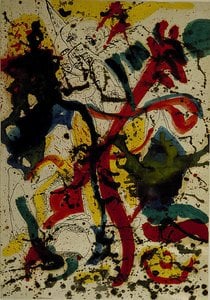
Jackson Pollock, 1912 – 1956

Jackson Pollock: The 100 Most Famous Paintings

Őszi Ritmus Nr. 30 is the most famous painting by Jackson Pollock. 1. számú mű, 1949 (1950) and Összhatás are the next two works the world knows best. From the 186 works of Jackson Pollock in our catalogue, here are the 100 that collectors and museum visitors look at most, with the year, the museum and the story of each.

Ranked by our popularity score, which combines the searches, visits and orders for each work. Updated október 2026. Every masterpiece on this page can be ordered as a museum-quality, hand-painted oil reproduction or a fine art print, at the size you choose.

Portrait of Jackson Pollock
Jackson Pollock · 1912 – 1956
Born · died
1912 – 1956, Cody
Movement
Abstract expressionism
Works in our catalogue
186
Most famous
Őszi Ritmus Nr. 30
Most works at
MoMA - Museum of Modern Art

Top 10: Jackson Pollock's best-known paintings

Őszi Ritmus Nr. 30 by Jackson Pollock
1

Őszi Ritmus Nr. 30

Olajfestmény vászonon

A „Autumn Rhythm. Number 30, 1950” Jackson Pollock úttörő alkotás中最 egyik legfontosabb műve, amely meghatározta az absztrakt kifejezésművészet (Abstract Expressionism) történetét. Ez a hatalmas méretű vászon nem csupán egy festmény; egy magával ragadó élmény – az energia, a gesztus és a művész kreatív folyamatával való mélyen személyes kapcsolódásának vizuális feljegyzése.

1. számú mű, 1949 (1950) by Jackson Pollock
2

1. számú mű, 1949

1950 · Olajfestmény vászonon · Magángyűjtemény New Yorkban, New York City

Az 1950-ben született ez a lenyűgöző alkotás az Absztrakt Expresszionizmus forradalmi szellemének megtestesítője, és Jackson Pollock ikonikus “csepp” technikájának kiemelkedő példája. A figyelemre méltó 240 x 120 cm-es mérete nem csupán a méretével vonja magára a figyelmet, hanem azzal az energiaáramlással is, amely a komplex felületéről sugárzik. Pollock festményei nem egyszerűen képek; azok egy új látásmódot képviselnek a művészetről és annak létrehozásáról.

Összhatás by Jackson Pollock
3

Összhatás

Olajfestmény vászonon

Jackson Pollock’s “Convergence”: A Revolution in Paint Jackson Pollock’s *Convergence* isn't merely a painting; it’s an immersive journey into the heart of abstract expressionism, a visceral testament to the power of spontaneous creation and a pivotal work that fundamentally altered the course of 20th-century art. Created during a period of immense social and artistic upheaval following World War II, this monumental canvas embodies innovation, daringly rejecting traditional notions of representation…

Szám 1A by Jackson Pollock
4

Szám 1A

Olajfestmény vászonon

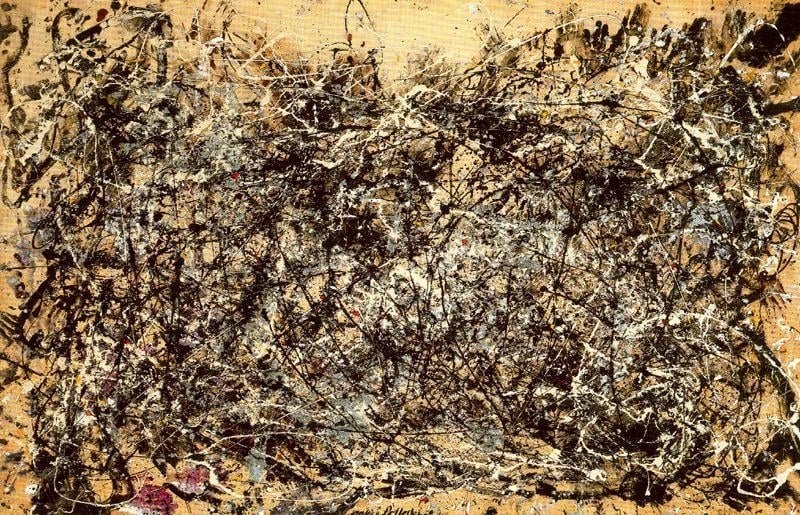
Az absztrakt kifejezésmód esszenciája Jackson Pollock „Number 1A” című műve az absztrakt kifejezésmód (Abstract Expressionism) tökéletes példája, egy olyan irányzat, amely a 20. század közepén újradefiniálta az amerikai művészetet. Ez a lenyűgöző alkotás testbedősíti azt a nyers energiát és spontaneitást, amely miatt Pollock világhírűvé vált, így minden kortárs műgyűjtemény vagy modern belső tér számára elengedhetetlen kincssem trở 되어. A káosz és az kontroll tánca A műalkotás egy absztrakt kompozíciót mutat…

Fehér fény (1954) by Jackson Pollock
5

Fehér fény

1954 · Olajfestmény vászonon · MoMA - Museum of Modern Art, New York

Paul Jackson Pollock 1954-es "Fehér Világ" című alkotása egy olyan energiabombát áraszt, mely azonnal elvarázsolja a szemét és magára hagyja a nézőt a saját gondolataival. Ez a darab nem csupán festmény, hanem egy dinamikus tér, egy feltűnő, szinte fizikai élmény, mely a boldogulat és a zavar érzését egy időben kelti fel.

One. Number 31, 1950 by Jackson Pollock
6

One. Number 31, 1950

Painting

In the pantheon of modern art, few works command the room with such raw, unbridled intensity as Paul Jackson Pollock’s “One: Number 31, 1950.” To stand before this canvas is to witness a moment of pure, unfiltered creation captured in time. As a cornerstone of the Abstract Expressionist movement, this painting transcends the boundaries of traditional composition, offering instead a dense, rhythmic web of energy that seems to pulse with…

Number 5 (1948) by Jackson Pollock
7

Number 5

1948 · Oil On Canvas

A Universe Unfurled: Decoding Jackson Pollock’s No. 5, 1948 Jackson Pollock’s *No. 5, 1948* isn't simply a painting; it is an event frozen in time – a visual record of energy, gesture, and the very act of creation. This monumental work stands as perhaps the most iconic example of Abstract Expressionism, captivating viewers for decades with its complex layering and seemingly chaotic beauty. It’s a piece that demands attention, sparking…

Mural (1943) by Jackson Pollock
8

Mural

1943 · Acrylic On Canvas

Jackson Pollock's "Mural," completed in 1943, isn't merely a painting; it’s an immersive experience, a visceral embodiment of the burgeoning abstract expressionist movement. Commissioned by Peggy Guggenheim as a centerpiece for her Manhattan townhouse, this monumental work – measuring a commanding 247 x 605 cm – immediately announces Pollock’s arrival as a revolutionary force in the art world. The sheer scale invites contemplation, drawing the viewer into a swirling vortex…

Number 5 (1948) by Jackson Pollock
9

Number 5

1948 · Oil On Canvas

Jackson Pollock’s *No. 5*, created in 1948, stands as an emblem of Abstract Expressionism—a movement that irrevocably altered the landscape of modern art. More than just a painting; it's a visceral embodiment of emotion, intellect, and revolutionary technique, captivating viewers with its mesmerizing complexity and enduring legacy. This monumental canvas, measuring eight by four feet on fiberboard, transcends mere visual representation, inviting contemplation about the very nature of artistic expression…

Alchemy (1947) by Jackson Pollock
10

Alchemy

1947 · Acrylic On Canvas

A Dance of Chaos and Transformation: Exploring Jackson Pollock’s Alchemy The Genesis of Spontaneity Decoding the Drip Technique Historical Resonance and Symbolic Weight A Legacy of Innovation Jackson Pollock’s *Alchemy*, a monumental work from 1947, isn't merely a painting; it’s an immersive experience, a visceral embodiment of the burgeoning Abstract Expressionist movement. Created during a pivotal moment in American art history, this piece captures the raw energy and revolutionary spirit…

The rest of the Jackson Pollock ranking, 11 to 100

Number 6 (1949) by Jackson Pollock
#12

Number 6

1949

Number 6 stands as a pivotal work within Jackson Pollock's oeuvre and the broader movement of Abstract Expressionism. Emerging in post-World War II America, this style rejected traditional…

Commission a hand-painted copy →
Number 23, 1951 by Jackson Pollock
#13

Number 23, 1951

Chrysler Museum of Art

Paul Jackson Pollock's "Number 23, 1951" isn’t merely a painting; it’s an immersion. Created during a pivotal period of his artistic evolution – the “black pourings” – this…

Bring it home →
Number 1 (1948) by Jackson Pollock
#14

Number 1

1948 · MoMA - Museum of Modern Art

Jackson Pollock's "Number 1, 1948," housed within the hallowed halls of the Museum of Modern Art in New York, isn’t merely a painting; it’s an immersion. It’s a…

Bring it home →
There Were Seven in Eight (1945) by Jackson Pollock
#15

There Were Seven in Eight

1945 · MoMA - Museum of Modern Art

A Descent Into Chaotic Beauty The canvas of Jackson Pollock’s 1945 masterpiece, "There Were Seven in Eight," serves as a visceral gateway into the turbulent heart of Abstract…

Bring it home →
Saint by Jackson Pollock
#16

Saint

Jackson Pollock is widely regarded as one of the most influential artists of the 20th century, and his painting Saint is a quintessential example of his unique style.…

Order a reproduction →
The She Wolf (1943) by Jackson Pollock
#17

The She Wolf

1943

Jackson Pollock's “The She Wolf,” completed in 1943, is more than just an abstract canvas; it’s a visceral plunge into the heart of early Abstract Expressionism and a…

Bring it home →
Composition with Pouring II (1943) by Jackson Pollock
#18

Composition with Pouring II

1943

Created in 1943, "Composition with Pouring II" stands as a pivotal work in Jackson Pollock's career and the broader development of Abstract Expressionism. While often considered an early…

Bring it home →
Blue poles (Number 11) (1952) by Jackson Pollock
#19

Blue poles (Number 11)

1952

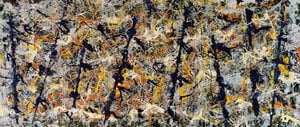
Jackson Pollock’s “Blue Poles (Number 11),” completed in 1952, isn’t merely a painting; it’s an explosion of controlled chaos, a visceral embodiment of the abstract expressionist movement. Measuring…

Commission a hand-painted copy →
Yellow Islands by Jackson Pollock
#21

Yellow Islands

A Symphony of Chaos: Exploring Jackson Pollock’s ‘Yellow Islands’ Jackson Pollock's ‘Yellow Islands’, painted in 1952, stands as a pivotal work within the Abstract Expressionist movement – a…

Bring it home →
The Flame (1938) by Jackson Pollock
#23

The Flame

1938

The painting The Flame consists of oil on fiberboard, measuring 51 x 76 cm. The surface features a central motif of an incandescent blaze that moves through an…

Commission a hand-painted copy →
Portrait and a Dream by Jackson Pollock
#24

Portrait and a Dream

Jackson Pollock’s Portrait and a Dream (1953) isn’t merely a painting; it’s an immersion into the very heart of Abstract Expressionism, a visceral embodiment of the artist’s process…

Order a reproduction →
Number 3 (1948) by Jackson Pollock
#25

Number 3

1948

Jackson Pollock: A Revolutionary in Abstract Expressionism Jackson Pollock (1912-1956) stands as a monumental figure within the abstract expressionist movement, forever altering the trajectory of modern art. His…

Commission a hand-painted copy →
Ocean Greyness by Jackson Pollock
#26

Ocean Greyness

Ocean Greyness is an oil painting created by Jackson Pollock in 1953. This work measures 229 x 146.7 cm and is currently held in the Solomon R. Guggenheim…

Bring it home →
Lucifer (1947) by Jackson Pollock
#28

Lucifer

1947

Jackson Pollock’s “Lucifer,” painted in 1947, isn’t merely a painting; it’s an immersion. Measuring a substantial 268 x 104 cm, this work embodies the raw energy and profound…

Commission a hand-painted copy →
Woman by Jackson Pollock
#29

Woman

Jackson Pollock's “Woman,” completed in 1945 and currently residing within the hallowed halls of the Museum of Modern Art in New York City, isn’t merely a painting; it’s…

Commission a hand-painted copy →
Untitled (Naked Man) by Jackson Pollock
#30

Untitled (Naked Man)

A Figure Forged in Turmoil: Exploring Pollock’s ‘Untitled (Naked Man)’ This powerful painting by Jackson Pollock plunges the viewer into a vortex of emotion and raw energy. Depicting…

Order a reproduction →
Lavender Mist_Number 1 by Jackson Pollock
#31

Lavender Mist_Number 1

Jackson Pollock’s “Lavender Mist_Number 1” isn't merely a painting; it’s an immersion, a visceral experience captured on canvas. This seminal work from the late 1940s embodies the revolutionary…

Order a reproduction →
Birth by Jackson Pollock
#32

Birth

A Tempestuous Birth: Decoding Pollock’s Abstract Vision Jackson Pollock's *Birth* (1948-51) is a pivotal work within his mature “drip” period and a cornerstone of Abstract Expressionism. More than…

Bring it home →
Blue (Moby Dick) by Jackson Pollock
#33

Blue (Moby Dick)

Jackson Pollock's “Blue (Moby Dick),” painted in 1943, isn’t merely a canvas splashed with color; it’s an immersive experience, a visual embodiment of the anxieties and primal forces…

Bring it home →
The key (1946) by Jackson Pollock
#34

The key

1946 · Art Institute of Chicago

A Dance Across Canvas: Exploring Jackson Pollock’s ‘The Key’ Subject Matter & Composition The artwork depicts a group of individuals engaged in various postures—seated on chairs, standing upright,…

Commission a hand-painted copy →
Untitled II by Jackson Pollock
#35

Untitled II

To stand before an Untitled II by Paul Jackson Pollock is not merely to observe paint on canvas; it is to witness an event. It is a raw,…

Order a reproduction →
Cathedral by Jackson Pollock
#36

Cathedral

Introduction to Jackson Pollock and Abstract Expressionism Paul Jackson Pollock, known professionally as Jackson Pollock, was an American painter and a major figure in the abstract expressionist movement.…

Bring it home →
Number 27, 1950 by Jackson Pollock
#38

Number 27, 1950

Jackson Pollock’s ‘Number 27, 1950’: A Symphony of Controlled Chaos Number 27, 1950 is a landmark achievement in the history of Abstract Expressionism, embodying the movement's radical departure…

Commission a hand-painted copy →
Circumcision January (1946) by Jackson Pollock
#40

Circumcision January

1946

Jackson Pollock, a titan of 20th-century art, remains synonymous with abstract expressionism. His painting, Circumcision January, exemplifies his groundbreaking approach and continues to captivate viewers with its dynamic…

Bring it home →
Sheet of Studies (1941) by Jackson Pollock
#41

Sheet of Studies

1941

A Window into Pollock’s Subconscious: “Sheet of Studies” (1941) This intensely energetic work on paper, created in 1941, offers a fascinating glimpse into the formative period of Jackson…

Bring it home →
Number 12, 1949 by Jackson Pollock
#42

Number 12, 1949

A Universe Within: Decoding Jackson Pollock’s “Number 12, 1949” Jackson Pollock's "Number 12, 1949" isn't simply a painting; it’s an event frozen in time – a visual record…

Order a reproduction →
War by Jackson Pollock
#43

War

War: A Descent into Chaos – Jackson Pollock’s Post-Traumatic Masterpiece Jackson Pollock's *War*, painted in 1947, isn’t merely a canvas splashed with color; it’s a visceral embodiment of…

Bring it home →
Marrón y plata by Jackson Pollock
#44

Marrón y plata

A Symphony of Shadow and Silver: Exploring Jackson Pollock’s “Marrón y plata” Jackson Pollock's "Marrón y plata" ("Brown and Silver") stands as a pivotal work within his celebrated…

Bring it home →
Number 10 (1949) by Jackson Pollock
#46

Number 10

1949

A Tempestuous Vision: Exploring Jackson Pollock’s ‘Number 10’ Number 10, created in 1949, stands as a monumental example of Jackson Pollock's revolutionary drip painting technique and the apex…

Commission a hand-painted copy →
Untitled 28 by Jackson Pollock
#47

Untitled 28

A Visceral Encounter: Decoding Jackson Pollock’s “Untitled 28” This intensely compelling work by Jackson Pollock, known simply as “Untitled 28,” offers a raw and unsettling glimpse into the…

Order a reproduction →
Number 25 (1950) by Jackson Pollock
#48

Number 25

1950

To stand before Number 25 is to confront pure, unmediated action. This canvas does not merely depict an image; it records an event—a moment of intense physical and…

Untitled (1939) by Jackson Pollock
#49

Untitled

1939 · Art Institute of Chicago

The canvas known as Untitled emerges from 1939, a moment when Jackson Pollock begins to navigate the turbulent currents of his own creative impulses. This abstract expressionist work…

Commission a hand-painted copy →
Untitled 6 by Jackson Pollock
#50

Untitled 6

A Tempest of Emotion: Exploring Jackson Pollock’s Untitled 6 This captivating work by Jackson Pollock plunges viewers into a dynamic world of abstract expressionism. *Untitled 6* is not…

Order a reproduction →
Full Fathom Five by Jackson Pollock
#51

Full Fathom Five

In the annals of American art history, few works capture the raw, unbridled energy of a movement quite like Paul Jackson Pollock’s Full Fathom Five. Painted in 1947,…

Bring it home →
Figures in a Landscape (1937) by Jackson Pollock
#52

Figures in a Landscape

1937

To encounter Jackson Pollock’s "Figures in a Landscape" is to step into a realm where the boundaries between reality and the subconscious begin to dissolve. Created in 1937,…

Bring it home →
Cut out by Jackson Pollock
#54

Cut out

Jackson Pollock, born on January 28, 1912, was an American painter who played a significant role in the abstract expressionist movement. He is renowned for his unique style…

Commission a hand-painted copy →
Masked Image by Jackson Pollock
#55

Masked Image

The canvas breathes with a restless energy, presenting a singular, stylized visage that seems to emerge from a thicket of overlapping shapes. This is not a portrait in…

Order a reproduction →
Untitled by Jackson Pollock
#56

Untitled

A Glimpse into Pollock’s Preparatory Process: An Early Study in Motion This captivating work on paper offers a rare look into Jackson Pollock's artistic development *before* his iconic…

Order a reproduction →
Portrait of H.M by Jackson Pollock
#57

Portrait of H.M

Paul Jackson Pollock's “Portrait of H.M.”, a work shrouded in mystery and brimming with raw energy, isn’t merely a painting; it’s an immersive experience. Created during a turbulent…

Commission a hand-painted copy →
Summertime: Number 9A (1948) by Jackson Pollock
#58

Summertime: Number 9A

1948 · Tate Modern

Jackson Pollock’s “Summertime: Number 9A,” painted in 1948, isn't merely a canvas splashed with color; it’s an immersive experience, a visceral representation of the artist’s state of mind…

Order a reproduction →
Untitled (1941) by Jackson Pollock
#59

Untitled

1941

A Moment Suspended: Exploring Jackson Pollock’s 1941 Untitled Work This striking work by Jackson Pollock, created in 1941, offers a fascinating glimpse into the artist's formative years –…

Order a reproduction →
Untitled (Silkscreen I) by Jackson Pollock
#60

Untitled (Silkscreen I)

In the realm of Abstract Expressionism, few works capture the raw, unbridled tension of human struggle as poignantly as Paul Jackson Pollock’s “Untitled (Silkscreen I).” This striking black…

Bring it home →
Grayed Rainbow by Jackson Pollock
#61

Grayed Rainbow

Art Institute of Chicago

Jackson Pollock was a revolutionary figure in the abstract expressionist movement, reshaping artistic perception and challenging conventional notions of painting. His groundbreaking drip technique—characterized by pouring and splattering…

Commission a hand-painted copy →
The Water Bull (1946) by Jackson Pollock
#62

The Water Bull

1946 · Stedelijk Múzeum

Subject and Composition This captivating abstract masterpiece immerses viewers in a whirlwind of vibrant colors and dynamic forms. While its subject remains open to interpretation, the energetic interplay…

Bring it home →
Totem Lesson 2 (1945) by Jackson Pollock
#63

Totem Lesson 2

1945

Totem Lesson 2: An Exploration of Abstract Expressionism’s Chaotic Harmony Paul Jackson Pollock's "Totem Lesson 2," painted in 1945, stands as a cornerstone of Abstract Expressionism—a movement that…

Bring it home →
Figure by Jackson Pollock
#64

Figure

Jackson Pollock, a name synonymous with Abstract Expressionism and the revolutionary ‘drip’ technique, also harbored a period of intensely focused figuration that often goes unacknowledged. The work simply…

Bring it home →
Untitled 9 by Jackson Pollock
#65

Untitled 9

A Tempest of Emotion: Decoding Jackson Pollock’s “Untitled 9” This intensely evocative work by Jackson Pollock, designated “Untitled 9,” plunges the viewer into a swirling vortex of color…

Commission a hand-painted copy →
Stenographic Figure (1942) by Jackson Pollock
#66

Stenographic Figure

1942

Jackson Pollock's 'Stenographic Figure,' painted in 1942, isn’t merely a depiction of a horse and rider; it’s a visceral embodiment of the anxieties and burgeoning freedom defining Abstract…

Order a reproduction →
Number 3 (1949) by Jackson Pollock
#67

Number 3

1949

A Revolution in Paint: Exploring Jackson Pollock’s ‘Number 3’ Jackson Pollock's 'Number 3', created in 1949, stands as a monumental achievement within the Abstract Expressionist movement. Measuring 157…

Bring it home →
Untitled 8 by Jackson Pollock
#68

Untitled 8

The air feels heavy with the restless energy of Jackson Pollock as he confronts the vastness of "Untitled 8." This monumental painting emerges from a period of profound…

Order a reproduction →
Number 8 by Jackson Pollock
#69

Number 8

Jackson Pollock's "Number 8," created in 1949, stands as a pivotal work within the Abstract Expressionist movement. This piece exemplifies Pollock’s revolutionary “drip technique,” where paint was poured…

Bring it home →
Head by Jackson Pollock
#70

Head

A Visceral Exploration of the Human Condition Jackson Pollock’s *Head*, a work shrouded in some mystery due to its lack of definitive dating and detailed documentation, presents a…

Commission a hand-painted copy →
Circle (1941) by Jackson Pollock
#72

Circle

1941

Jackson Pollock’s Circle: A Dance of Color and Chaos Jackson Pollock's “Circle,” painted in 1941, isn’t merely a depiction of a circle; it’s an embodiment of the burgeoning…

Order a reproduction →
Untitled 23 by Jackson Pollock
#73

Untitled 23

A Chaotic Symphony in Black and White: Deconstructing Pollock’s “Untitled 23” Jackson Pollock's "Untitled 23" isn’t merely an ink drawing; it’s a visceral exploration of energy, anxiety, and…

Commission a hand-painted copy →
Easter and the Totem (1953) by Jackson Pollock
#74

Easter and the Totem

1953

Unveiling Jackson Pollock’s “Easter and the Totem” A Masterpiece of Abstract Expressionism: Jackson Pollock's 1953 painting, Easter and the Totem, stands as a pivotal work within the Abstract…

Bring it home →
Untitled (Composition with Pouring I) by Jackson Pollock
#75

Untitled (Composition with Pouring I)

A Revolution in Paint: Exploring Jackson Pollock’s “Untitled (Composition with Pouring I)” This captivating work embodies the raw energy and groundbreaking innovation that defined Jackson Pollock's contribution to…

Bring it home →
Untitled 13 by Jackson Pollock
#76

Untitled 13

In the pantheon of twentieth-century art, few names command as much visceral respect and intrigue as Jackson Pollock. His work Untitled 13 serves as a profound testament to…

Order a reproduction →
Male and Female (1942) by Jackson Pollock
#78

Male and Female

1942

Jackson Pollock: A Pioneer of Abstract Expressionism Jackson Pollock (1912–1956) stands as one of the most transformative figures in 20th-century art, irrevocably altering perceptions of painting and establishing…

Commission a hand-painted copy →
Miners by Jackson Pollock
#79

Miners

Paul Jackson Pollock: A Pioneer of Abstract Expressionism Paul Jackson Pollock (1912-1956) stands as one of the most influential figures in 20th-century art, irrevocably shaping the trajectory of…

Bring it home →
GREETINGS by Jackson Pollock
#80

GREETINGS

Paul Jackson Pollock's “Greetings” stands as a testament to the radical spirit of Abstract Expressionism, encapsulating the movement’s core tenets within a deceptively simple composition. This artwork, created…

Bring it home →
Troubled Queen by Jackson Pollock
#81

Troubled Queen

A Realm of Inner Turmoil: Exploring Jackson Pollock’s Abstract Vision Jackson Pollock's "Troubled Queen" stands as a monumental testament to the turbulent spirit of postwar American art, encapsulating…

Commission a hand-painted copy →
Number 23 (1948) by Jackson Pollock
#82

Number 23

1948

Jackson Pollock’s “Number 23,” completed in 1948, stands as an undeniable cornerstone of Abstract Expressionism—a movement that fundamentally challenged artistic conventions and prioritized emotional expression over representational accuracy.…

Bring it home →
Untitled (Silkcreen no. VI) by Jackson Pollock
#83

Untitled (Silkcreen no. VI)

A Dance of Chaos and Connection: Exploring Jackson Pollock’s “Untitled (Silkcreen no. VI)” Paul Jackson Pollock's "Untitled (Silkcreen no. VI)" stands as an emblem of Abstract Expressionism, a…

Order a reproduction →
Untitled 27 by Jackson Pollock
#84

Untitled 27

Jackson Pollock's “Untitled 27,” a monumental drip painting from 1950, stands as an emblem of Abstract Expressionism—a movement that irrevocably altered the course of twentieth-century art. More than…

Order a reproduction →
Silver and Black I by Jackson Pollock
#85

Silver and Black I

A Symphony of Chaos: Exploring Jackson Pollock’s “Silver and Black I” “Silver and Black I” is a powerful example of Jackson Pollock's revolutionary contribution to Abstract Expressionism, created…

Commission a hand-painted copy →
Untitled 4 by Jackson Pollock
#86

Untitled 4

In the realm of Abstract Expressionism, few works capture the raw, unbridled energy of the human psyche quite like Paul Jackson Pollock’s Untitled 4. This mesmerizing monochrome composition…

Bring it home →
Shimmering Substance (1946) by Jackson Pollock
#87

Shimmering Substance

1946

Shimmering Substance: A Dance of Chaos and Control Jackson Pollock’s “Shimmering Substance,” completed in 1946, stands as a cornerstone of Abstract Expressionism—a movement that irrevocably altered the landscape…

Order a reproduction →
Composition by Jackson Pollock
#88

Composition

Jackson Pollock executed the painting titled Composition in 1949. This work emerged during a period when the artist was developing a specific approach to the canvas, moving away…

Order a reproduction →
Gothic by Jackson Pollock
#89

Gothic

The canvas known as Gothic emerges from the creative mind of Paul Jackson Pollock. Created in 1944, this work exists within the permanent collection of The Museum of…

Order a reproduction →
Untitled (Cut-out) by Jackson Pollock
#91

Untitled (Cut-out)

In the pantheon of Abstract Expressionism, few works capture the raw, visceral energy of the mid-century avant-garde quite like Paul Jackson Pollock’s "Untitled (Cut-out)." Created in 1954, a…

Bring it home →
Going West (1935) by Jackson Pollock
#92

Going West

1935

Jackson Pollock's "Going West," painted in 1935, isn’t merely a depiction of a winter landscape; it’s a deeply personal narrative woven into the fabric of American pioneering spirit.…

Order a reproduction →
Number 2 (1951) by Jackson Pollock
#93

Number 2

1951

A Symphony of Chaos and Color: Decoding Jackson Pollock’s “Number 2” Jackson Pollock's "Number 2," completed in 1951, stands as a cornerstone of Abstract Expressionism—a movement that irrevocably…

Commission a hand-painted copy →
Number 3, 1950 by Jackson Pollock
#94

Number 3, 1950

A Universe of Color: Exploring Jackson Pollock’s Number 3, 1950 Jackson Pollock's *Number 3, 1950* is arguably one of the most iconic and significant works of Abstract Expressionism.…

Bring it home →
Untitled 1 by Jackson Pollock
#95

Untitled 1

Paul Jackson Pollock (1912-1956), a titan of Abstract Expressionism, remains one of the most enigmatic figures in twentieth-century art. His monumental canvases—like “Untitled 1”—are not merely splashes of…

Commission a hand-painted copy →
Echo by Jackson Pollock
#96

Echo

Jackson Pollock’s “Echo,” Number 25, 1951, stands as a testament to the fervor of Abstract Expressionism—a movement that sought to liberate art from representational constraints and delve into…

Order a reproduction →
Composition with Woman by Jackson Pollock
#97

Composition with Woman

A Vortex of Emotion: Decoding Jackson Pollock’s Abstract Expressionism This captivating painting embodies the raw energy and emotional intensity that define Jackson Pollock's revolutionary contribution to 20th-century art.…

Commission a hand-painted copy →
Untitled (1941) by Jackson Pollock
#98

Untitled

1941

Jackson Pollock's "Untitled," painted in 1941, stands as a cornerstone of Abstract Expressionism—a movement that fundamentally challenged artistic conventions and prioritized spontaneous gesture over meticulous representation. This monumental…

Order a reproduction →
Narancssárú fej by Jackson Pollock
#99

Narancssárú fej

Jackson Pollock, a 20. század egyik legjelentősebb festője, a szubjektív expresszionizmus élvonalát jelképezte. A "Orange Head" (Vörös Fej) című alkotása, melyet most egy kézzel festett olajfestmény formájában kínálunk,…

Bring it home →
Untitled (13) (1943) by Jackson Pollock
#100

Untitled (13)

1943

Jackson Pollock: A Pioneer of Abstract Expressionism Jackson Pollock (1912-1956) stands as one of the most influential figures in 20th-century art, irrevocably altering the landscape of painting and…

Bring it home →

Jackson Pollock's paintings by period

Drip Period

1948 · 3 works in this list

The subjects Jackson Pollock painted most

The four subjects that return most often among these masterpieces, with the finest example of each.

Where to see Jackson Pollock's paintings

The 6 museums that hold the most of the paintings on this page.

Museum City Works by Jackson Pollock Paintings from this list
MoMA - Museum of Modern Art, New YorkMoMA - Museum of Modern Art New York 4 Fehér fény, Number 1, There Were Seven in Eight
Art Institute of Chicago, ChicagoArt Institute of Chicago Chicago 3 The key, Untitled, Grayed Rainbow
Magángyűjtemény New Yorkban, New York CityMagángyűjtemény New Yorkban New York City 1 1. számú mű, 1949
Chrysler Museum of Art, NorfolkChrysler Museum of Art Norfolk 1 Number 23, 1951
Tate Modern, LondonTate Modern London 1 Summertime: Number 9A
Stedelijk Múzeum, AmszterdamStedelijk Múzeum Amszterdam 1 The Water Bull

Jackson Pollock through the decades: one masterpiece for each

  1. 1930s
    The Flame (1938) by Jackson Pollock
    No. 23 of 100

    The Flame

    Age 18 – 27

    The painting The Flame consists of oil on fiberboard, measuring 51 x 76 cm. The surface features a central motif of an incandescent blaze that moves through an…

  2. 1940s
    Number 5 (1948) by Jackson Pollock
    No. 7 of 100

    Number 5

    Age 28 – 37

    A Universe Unfurled: Decoding Jackson Pollock’s No. 5, 1948 Jackson Pollock’s *No. 5, 1948* isn't simply a painting; it is an event frozen in time – a visual…

  3. 1950s
    1. számú mű, 1949 (1950) by Jackson Pollock
    No. 2 of 100

    1. számú mű, 1949

    Age 38 – 44 · Magángyűjtemény New Yorkban

    Az 1950-ben született ez a lenyűgöző alkotás az Absztrakt Expresszionizmus forradalmi szellemének megtestesítője, és Jackson Pollock ikonikus “csepp” technikájának kiemelkedő példája. A figyelemre méltó 240 x 120 cm-es…

Jackson Pollock's paintings: frequently asked questions

What is the most famous Jackson Pollock painting?Show the answer

Őszi Ritmus Nr. 30. Next come 1. számú mű, 1949 (1950) and Összhatás.

Which are the 10 most famous Jackson Pollock paintings?Show the answer

Őszi Ritmus Nr. 30, 1. számú mű, 1949, Összhatás, Szám 1A, Fehér fény, One. Number 31, 1950, Number 5, Mural, Number 5 and Alchemy. The ranking above gives the year and the museum of each.

How many paintings by Jackson Pollock are there?Show the answer

Our catalogue lists 186 works by Jackson Pollock, dated from 1935 to 1954.

Where can I see the most famous Jackson Pollock paintings?Show the answer

Most of them are in MoMA - Museum of Modern Art (New York), Art Institute of Chicago (Chicago) and Magángyűjtemény New Yorkban (New York City). The table above lists the museums one by one.

In which period did Jackson Pollock paint the best-known works?Show the answer

In 1940s: 29 of the 100 works on this page date from then, among them Number 5.

What is the earliest famous Jackson Pollock painting, and the latest?Show the answer

The earliest on this page is Going West (1935), the latest Fehér fény (1954).

What subjects did Jackson Pollock paint?Show the answer

Drip painting (44), Color field (32) and Chaos (26), among the 100 works on this page.

What did Jackson Pollock paint on, and with what?Show the answer

Acrylic On Canvas: 39 of the 100 works on this page.

Which movement does Jackson Pollock's art belong to?Show the answer

Abstract expressionism, as the paintings on this page show.

What Jackson Pollock paintings does the MoMA - Museum of Modern Art hold?Show the answer

Fehér fény, Number 1 and There Were Seven in Eight are among the 3 works on this page held by the MoMA - Museum of Modern Art, New York.

Where can I buy a Jackson Pollock reproduction?Show the answer

Yes. Every painting on this page can be ordered as a museum-quality, hand-painted oil reproduction or a fine art print, in the size you choose, from the painting's own page.

Jackson Pollock: biography

Korai élet, család és képzés

Paul Jackson Pollock története Cody, Wyoming terepének zord tájain kezdődött, ahol 1912. január 28-án született. Stella May McClure és LeRoy Pollock öküre született, a öt testvér legfiatalabbja. Apja földmérnök volt, egy olyan hivatás, amely a hatalmas amerikai Nyugat mentén folyamatos mozgást igényelt. Ez a nomád életmód azt jelentette, hogy a kisfiú korai éveit a gyakori költözések határozták meg; egy olyan nyugtalanság, amely úgy tűnt, tükörözte apja munkájának változó horizontjait. Ezek a korai utazások az Amerikai Nyugat mentén közvetlen, közvetetlen találkozást biztosítottak számára a természettel és a bảni amerikai művészet spirituális rezonanciájával – olyan benyomásokkel, amelyek sokkalta még nem tartott ecsetet a kezében, csendben eltelepedtek tudatalattában.

Álmodozásai és fejlődése során a hely feeling iránti keresgélese a tengerparti városi energia felé terelte el. A Manual Arts High School-ra iratkozott Los Angelesben, hogy formális keretrendszert találjon növekvő ösztönei számára. Azonban a művészeti stílusának valódi kialakulása sokkal később következett be, amikor New Yorkba költözött. Ott, az Art Students League-ben kezdődött meg hosszú és átalakító tanulmányi időszaka. 1929 és 1942 között Thomas Hart Benton irányítása alatt dolgozott. Miközben Benton a ritmikus kompozíciókat és az amerikai élet narratív súlyát emelte ki, a fiatal diák már akkor is elindult a saját, absztraktabb, belső igazságai felé.

Egy egyedülálló technika kialakítása

1947-re egy alapvető megváltozottság támadt a vászonhoz való viszonyulásában. Elszakadt a hagyományos festőeasztól, és helyette úgy döntött, hogy a vásznalamat közvetlenül a földre helyezi. Ez a váltás lehetővé tette számára, hogy a műve felett álljon, miközben magja is részévé váljon a kreatív folyamatnak. Nem csupán festékeket aplikált; csepegtette, fröccskentette és a magasból ontozta a színeket, hagyva, hogy a folyadék kiszámíthatatlan mintaképekben hulljon le. Ez a módszer a festés aktusa fizikai performansssá alakult, ahol a gravitáció és a gesztus határozta meg a végső formát.

Eszközei ugyanolyan szokatlanok voltak, mint módszerei. Botokat, késeket, sőt injekciókat is használt a folyékony médium manipulálásához. Néha spatulát vagy csöpögő festékrétegeket alkalmazott specifikus textúrák elérése érdekében. Gyakran karcolta a felületet vagy különös tárgyakat használt a festék vastag, kéregszerű rétegeinek kialakításához, ezzel taktilális, szoborszerű minőséget kölcsönözve a művészetnek. Ez a folyamat nem a kontrollált ecsetvezetésről szólt, hanem inkább a felületre irányuló ritmikus, szinte ősi energiakibővülésről.

Kulcsfontosságú művek és művészeti megnyilvánulások

Ahogy távolodott a festőeasztal korlātozásaitól, vásznalai egyre inkább a médiummal való mélyebb, viszeralitásban gazdag kapcsolatot tükröztek. 1943-ban olyan monumentális alkotást hozott létre, mint a Mural, amely 2,4 de 6,1 méteres hatalmas felülete mutatta meg képesét a tágas vászon uralmára. Ezen időszak alatt a tudatalatti felkutatása és a festés folyamatának dinamikája olyan művekhez vezetett, mint a 1946 körül készült Eyes in the Heat. Ezek a darabok nem csupán képek voltak, hanem egy fizikai jelenlét feljegyzései, ahol egész testének mozgása határozta meg minden egyes csapott és színfolt pontos helyét.

A következő évek során tökéletesítette azt a ritmikus, „all-over” kompozíciót, amely meghatározotta a hírnevét. Olyan végtelen térérzetet akart megteremteni, ahol egyetlen pont sem dominálhat a többi felett. Ez a megközelítés látható a Number 1, 1949 című művében, amely az energia nyers kiömlését ragadja meg, valamint a Lavender Mist, Number 1, 1950-ben, amely az életműve egyik legjelentősebb darabja. Ezekben a művekben a kontroll és a véletlen közötti kölcsönhatás finom egyensúlyt teremt, mintha a festék nem csupán fel vite, hanem szabadon wypontatott volna.

Későbbi kísérletei tovább lőtték át a határokat arról, hogyan manipulálható a festék egy vízszintes felületen. Gyakran használt botokat, késeket vagy akár magát a festékboltot is a pigment felcsapni, ami vonalak összetett hálózatát eredményezte. Ez a módszer egyértelmősen látható a Blue Poles, Number 11, 1952 című alkotásban és az energikus Convergence-ben. Ezeken keresztül olyan állapotot érintett el, amelyben a festmény úgy tűnt, mintha saját élete lenne, a saját fantáziájába való mély elmerülésből születve.

Mecenások, műhely és megbízások

Karrierútját egyszerre formálta a közszolgálati szükségletek és néhány kulcsfontosságú támogató nagycömökös jósága. 1938 és 1942 között a WPA Federal Art Project keretében talált állandó munkát, mint festő, egy olyan időszak, amely szükséges ritmust adott fejlődő művészeti gyakorlatának. Ez a stabilitás azonban helyet adott egy személyesebb és átalakító erejű szövetségnek, amikor Peggy Guggenheim 1943 júliusában galéria-szerződést kínált neki. Támogatása messze túlmutatott a professzionális kereteken: 1945-ben egy 2000 dolláros összeggel segítette őt egy otthon megszerzésében, egy olyan gesztus, amely mélyen összefonódott a művész magánéletével és művészi túlélésével.

Életműve végül East Hampton, New York tájában találta meg központját. Ott, a Pollock-Krasner Ház és Műhely falai között élt és alkotott felesőjével, Lee Krasner mellett. A műhely az intenzív fizikai mozgás tere, ahol az művész és a vászon közötti határok feloldultak. Gyakran elhagyta a hagyományos festőeaszt, és a padlóra helyezte vásznalait, hogy a festékkel minden oldalról, közvetlenül interakcióba léphessen. Ez a munkaterület nem csupán a termelés helyszíne volt, hanem a mély, nyugtalanító energia színtere, ahol legradikálisabb kísérletei zajlkanak.

Késő évek és halála

A művész magánélete szorosan összefonódott kreatív küzdelmeivel. 1945-ben összeházasodott a művész, Lee Krasnerrel, egy olyan unión, amely meghatározó jelenlétet jelentett életében a legátalakolóbb évei alatt. Mégis, a szakmai felemelkedésének felszín alatt egy állandó árnyék merengt, amely sosem hagyta el őt. Egész életében az alkoholfüggőséggel küzdött, egy olyan harccal, amely gyakran bonyolította a létezését, és akadályozta a képességét, hogy kezelje növekvő hírneve nyomán rárakott nyomást.

Ez a belső és külső turbulencia tragikus véget ért az amerikai East Hampton, New York államban. 1956. augusztus 11-én, a 44 éves korában, életét egy hirtelen, erőszakos baleset vetette meg. Vezetés közben egy alkoholos hatású, egyautós ütközésbe akadt. A baleset végzetes lett, olyan örökséget hagyva hátra, amely ugyanolyan viharos volt, mint a festék, amelyet vászonai alá szórott.

Örökség és hatás a modern művészetre

Radikális módszereinek hullámai messze túlra hatoltak, az East Hampton stúdiói falai mögé is. A hagyományos kapcsolat megszakításával a ecset és a vászon között, ő vált az absztrakt expresszionizmus meghatározó alakjává, egy olyan íve, amely alapjaiban változtatta meg az amerikai kreativitás irányvonalát. Létezése segített megszilárdítani New York világkapitányságát a modern művészet központjaként, elmozdítva az avantgárd szívét az európai dominanciától. Az egyik első amerikai festő volt, akit a 20. század grandes európai mestereivel egyrangúként ismertek el, bizonyítva, hogy egy új, vizgalmas nyelv születhet meg az Egyesült Államok földjéről.

Hatása katalizátorként szolgált számos, a nyomai utáni művészeti mozgalom számára. Ahogyan a vászonnal kapcsolatba lépett – a reprezentáció egyszerű felülete helyett egy fizikai akció arenaként kezelve azt –, új kapukat nyitva a sorsuk felé, akik a gesztusokon keresztül próbálták kifejezni az inconscient, a tudatalatti folyamatait. A folyamat, maga a teremtés akciójának hangsúlyozása maradandó nyomot hagyott a modern művészet történetében, biztosítva, hogy a spontanitás és a tervezhetetlenség örökké megkapja helyét a művész eszköztárában.

Hol láthatjuk műveit ma?

Művész mozgásának fizikai nyomaiyla való találkozáshoz azokra a nagy intézményekre kell utaznunk, amelyek megőriztekék radikális energiáját. New Yorkban a Museum of Modern Art több vászonát is őrzi, lehetővé téve a nézők számára, hogy megálljanak az az évszakát meghatározó, kiterjedt és középpont nélküli kompozíciók előtt. Washington D.C.-ben a National Gallery of Art is őrzi alkotásait, olyan teret biztosítva, ahol megfigyelhetjük azokat a bonyolult színrendszereket, amelyeket egyedülálló módszereivel teremtett. Az Atlanti óceán túl, Londonban a Tate Gallery collectionsében élénken tartja jelenlétét, biztosítva, hogy hatása messze túlmutasson az amerikai partoktól.

Azok számára, akik intimebb kapcsolatot keresnének a folyamatával, az East Hamptonban található Pollock-Krasner Ház és Stúdió mélyebb helyszínt kínál. Ez a terület, amely nemzeti történelmi emlékmারক, az a tér volt, ahol ő és felesége, Lee Krasner éltek és dolgoztak. Az ingatlan továbbra is létfontosságú láncszálként szolgál életéhez, megőrizve azt a környezetet, amely segítette átalakulását a hagyományos formáktól a spontanus, a padlóra helyezett vásznon alapuló módszerek felé – azok, amelyek megváltoztatták a modern festészet irányát. Ezeken a tereken való sétálás a kreatív küzdelem méretét és fizikai valóságát idézi fel a látogató számára.

  • Number 1, 1949
  • Blue Poles: Number 11, 1952
  • Mural (1943)
  • Convergence

All 186 works by Jackson Pollock →