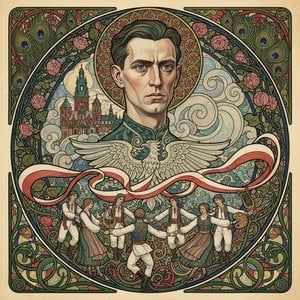
A Life of Sovereignty and Diplomacy
Stanisław Leszczyński was not a visual artist, but a political figure who served twice as the King of Poland and Grand Duke of Lithuania. Born in Lwów in 1677, his life was defined by the shifting tides of the Great Northern War and the War of the Polish Succession. Supported by Sweden, he was installed on the throne in 1704, though he later lost power following the Battle of Poltava. He eventually returned to the Polish throne in 1733 with French support, before abdicating in 1736.
Beyond his royal titles, he held positions as the Prince of Deux-Ponts and the Duke of Bar and Lorraine. His daughter, Marie Leszczyńska, became the Queen of France through her marriage to Louis XV. In his later years, residing in Lunéville, he engaged in political philosophy and public works, leaving a legacy that includes the Place Stanislas in Nancy.
Kérdések és válaszok
Melyik városban és melyik országban született Stanisław Leszczyński?
Stanisław Leszczyński Lviv, Ukraine városában született.
Mely történelmi korszakban alkotott Stanisław Leszczyński?
Stanisław Leszczyński a Early Modern korszakban alkotott. Ez az időszak a művész tevékenységét a történelembe helyezi.
Hogyan fejlődött Stanisław Leszczyński művészete az idő múlásával?
Stanisław Leszczyński pályafutása időszakosan nyílik meg a művész Krónika oldalán: egy horizontális időrendi vonal a műalkotásokról, amelyek a karrier szakaszaira oszlanak.