Rex Phillips: A Chronicle of Naval Dreams and Aviation’s Vivid Echoes
Rex Phillips, a name perhaps less familiar to the general public than some of his contemporaries in aviation art, nevertheless occupies a significant niche within the genre. His work isn't merely depictions of aircraft; it’s a meticulously rendered tapestry of maritime history, military engagements, and the raw drama of human endeavor against the backdrop of vast oceans and turbulent skies. Born in 1931 and passing away in 2015, Phillips dedicated his life to capturing fleeting moments of power, courage, and strategic brilliance within the context of naval warfare and early aviation.
Phillips’s artistic journey began with a fascination for both the sea and the air. Growing up in England, he developed a deep appreciation for the intricacies of sailing vessels and the burgeoning world of flight. This dual interest ultimately coalesced into his unique style – a blend of realistic detail, dramatic lighting, and an almost obsessive attention to historical accuracy. Unlike many aviation artists who focused solely on sleek, modern machines, Phillips consistently chose scenes from earlier eras, particularly World War I and II, imbuing them with a sense of timelessness and emphasizing the human element within these complex conflicts.
Early influences are difficult to pinpoint definitively, but it’s clear that Phillips was deeply impacted by the romanticism of historical painting. The grand scale and emotional intensity of artists like William Turner and J.M.W. Turner undoubtedly informed his approach to composition and color. Simultaneously, he absorbed the technical precision of military illustrators, evident in the meticulous rendering of ships, uniforms, and weaponry. The influence of marine painters such as Albert Bierstadt is also apparent in his use of light and atmosphere to convey the power and majesty of the sea.
The Canvas of Conflict: Key Themes and Subjects
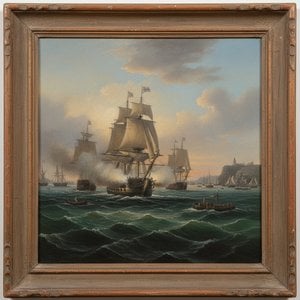
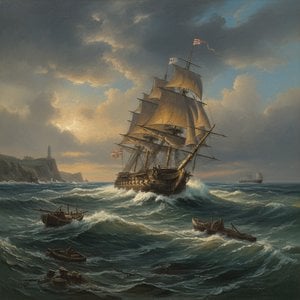
Phillips’s oeuvre is dominated by scenes from naval battles and military operations. He wasn't interested in glorifying war, however; rather, he sought to document it with a sense of solemnity and respect for the sacrifices made by those involved. His most celebrated works often depict pivotal moments – the crossing of the T at Jutland, the desperate defense of Dunkirk, and the chaotic gunnery action at San Carlos Anchorage. These scenes are rarely celebratory; they’re fraught with tension, smoke, and the palpable sense of danger.
- Naval Battles: Phillips's depictions of naval engagements are particularly striking for their dynamism and realism. He masterfully captured the movement of ships, the spray of water, and the flashes of gunfire, creating a visceral experience for the viewer.
- Military Operations: Beyond naval battles, Phillips also depicted various military operations, including air raids and ground assaults. These works often explored themes of strategy, leadership, and the psychological impact of war on soldiers.
- Historical Accuracy: A defining characteristic of Phillips’s work is his commitment to historical accuracy. He meticulously researched each scene, consulting naval records, photographs, and eyewitness accounts to ensure that his paintings faithfully reflected the events they depicted.
Technique and Style – The Language of Detail
Phillips's technique was characterized by a remarkable level of detail and realism. He employed a layered approach to painting, building up colors gradually through multiple glazes to achieve a rich, luminous effect. His use of light was particularly masterful, often employing dramatic contrasts to heighten the sense of drama and create a powerful emotional impact. He frequently used oil paints on canvas, allowing for a wide range of tonal values and textures.
While he adhered to traditional artistic conventions, Phillips also incorporated elements of impressionism into his work. He wasn’t interested in creating photographic reproductions; instead, he sought to capture the *feeling* of a scene – the atmosphere, the mood, and the emotional intensity. His brushstrokes were often loose and expressive, particularly in depicting the movement of water and smoke.
Legacy and Recognition
Despite not achieving widespread fame during his lifetime, Rex Phillips’s work has gained increasing recognition in recent years. His paintings are now exhibited in museums and private collections around the world, and they continue to be sought after by collectors and enthusiasts of aviation art. His meticulous research and dedication to historical accuracy have earned him a reputation as one of the most respected and accomplished artists in this genre.
Phillips’s legacy extends beyond his individual paintings. He demonstrated that aviation art could be more than just pretty pictures of airplanes; it could be a powerful medium for exploring complex themes, preserving history, and honoring the courage and sacrifice of those who served. His work serves as a poignant reminder of the human cost of conflict and the enduring fascination with flight and the sea.