Megtekintés Műalkotás AR előnézete Kézzel festett másolat rendelése Áttérés digitális képre Küldés
Részletek Kedvencekhez ad Letöltés Hasonló darabok X-ray felvétel Diavetítés Statisztika

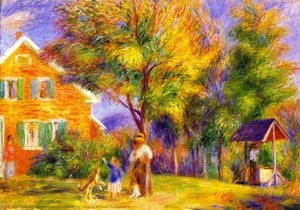
The Promenade

Explore 'The Promenade' by William James Glackens – an evocative Impressionist painting depicting a young girl riding a donkey, capturing serene beauty and vibrant color at the Detroit Institute of Arts.

William Glackens egy amerikai festő és illusztrátor volt, aki az Ashcan Szkólnak köszönhetően ismertté vált. Kézzel festett műalkotásaival foglalkozott és főként új york város életének részleteit ábrázolta nagy hangsúlyt fektetve a realista stílusra és a közösségi élet tükrözésére. Nézze meg az ő alkotásait és ismerje meg életrajzát!

Giclée / Műnyomat

Múzeumi minőségű giclée vagy vászonnyomat, gyors gyártással és rugalmas finomítási lehetőségekkel. ( Kézzel festett másolat rendelése Áttérés digitális képre)

P118B $10
P118H $10
P118W $10
P438Z $10
P508JH $12
P508YH $12
P805H $10
P805Z $10
P919BZ $10
P919G $10
P919XJ $10
P959ZH $10
P968JZ $12
W106C $8
W218G $10
W218JH $8
W218Y $10
W307PJ $10
W316G $10
W316PJ $8
W316Y $10
W398PJ $8
W4111J $10
W500HY $15
W500JH $15
W692G $12
W849H $8
W940BG $15
W953PJ $8

Standard méret
egyedi méretű
CM
INCH

Válasszon előre meghatározott méreteink közül, amelyek megfelelnek a műalkotás eredeti arányainak.

szélesség
magasság

Megadhat saját méreteket is egy konkrét kerethez vagy helyszínhez igazítva. Amennyiben a kiválasztott méret nem egyezik az eredeti kép arányokkal, a műalkotást le fogjuk vágni, vagy kiegészítjük a képet tükrözött vagy egyszínű szélekkel. A gyártás megkezdése előtt egy digitális tervezetet küldünk jóváhagyásra.
Kérjük, vegye figyelembe, hogy a képernyőn látható előnézet nem tükrözi a tényleges levágást vagy kiegészítést. Csak a tervezet mutatja pontosan a végső kompozíciót.
Bár az egyedi méretek is elérhetőek, az eredeti arányok megőrzése érdekében azt javasoljuk, hogy válasszon a előre meghatározott listából származó méretet.

Világszerte történő kiszállítás területére mindössze 2 hét alatt, a szokásos 4-5 hét helyett. (18 szeptember)

why_choose_icon
Ingyenes globális expressz szállítás
why_choose_icon
Prémium minőségű len vászon
why_choose_icon
Teljes körű szállítási biztosítás
why_choose_icon
Vámvisszatérítési Garancia
why_choose_icon
Hiteles színpontosság garancia
why_choose_icon
100 napos visszaküldési lehetőség (csak hibás termékek esetén)
why_choose_icon
100% pénzvisszatérítési garancia
why_choose_icon
Több darab vásárlása esetén kedvezmény

Összesített ár

$ 68

reproduction

The Promenade

Giclée / Műnyomat

Reprodukció mérete

-

Összesített ár

$ 68

Gyors információk

  • Movement: Ashcan School
  • Title: The Promenade
  • Artistic style: Impressionist
  • Location: Detroit Institute of Arts
  • Artist: William James Glackens
  • Notable elements or techniques: Bold brushstrokes, vivid colors
  • Subject or theme: Urban Life

Művészeti kvíz

Minden kérdésre csak egy helyes válasz létezik.

Kérdés 1:
What artistic movement is William James Glackens associated with?
Kérdés 2:
Where was The Promenade originally housed?
Kérdés 3:
What is a prominent technique Glackens employed in The Promenade?
Kérdés 4:
Who influenced Glackens' artistic vision during his formative years?
Kérdés 5:
What subject matter did Glackens frequently depict in his paintings?

A Glimpse into Urban Innocence

In the vibrant tapestry of early twentieth-century American art, few works capture the fleeting magic of a moment quite like William James Glackens’ “The Promenade.” Completed in 1925, this masterpiece serves as a poignant window into a bygone era, offering much more than a mere street scene. At its heart, the painting presents a tender portrait of a young girl, her hair tied in playful pigtails and dressed in a striking red garment, perched atop a donkey. This central figure acts as an emotional anchor, drawing the viewer into a world where the simplicity of childhood joy meets the rhythmic pulse of the city. As she holds the reins with a sense of quiet determination, the composition invites us to pause and reflect on the small, beautiful intersections of life that often go unnoticed in the rush of modern existence.

The painting is a quintessential expression of the Ashcan School, a movement that revolutionized American painting by turning its gaze away from polished academic subjects toward the raw, unvarnished reality of metropolitan life. Glackens, a founding member of this influential group, masterfully blends the gritty realism of his peers with a luminous, Impressionistic touch. His technique is characterized by bold, energetic brushstrokes that breathe life into the canvas, capturing the way light dances across surfaces and creates a sense of perpetual motion. Rather than relying on muted tones to depict urbanity, Glackens employs a vivid palette that heightens the emotional resonance of the scene, ensuring that the atmosphere feels as alive and dynamic as the New York streets themselves.

Symbolism and the Spirit of the City

Beyond its technical brilliance, “The Promenade” is rich with symbolic depth. The juxtaposition of the young girl—a symbol of purity and vulnerability—against the backdrop of an indifferent, bustling urban environment creates a profound narrative tension. While the background hints at the movement of crowds and the presence of others, the focus remains steadfastly on this singular, serene connection between child and animal. This contrast serves as a meditation on how moments of peace and innocence can be preserved even amidst the encroaching complexity of industrial society. For the collector or interior designer, this piece offers a sophisticated balance; it possesses the strength of historical significance while maintaining an inviting, soulful warmth.

For those looking to adorn a space with art that tells a story, “The Promenade” provides an unparalleled opportunity. It is a work that commands attention through its color and composition yet settles into a room with a sense of nostalgic grace. Whether placed in a contemporary gallery setting or a classic study, the painting’s ability to evoke both the energy of the Ashcan School and the soft light of Impressionism makes it a timeless addition. It is not merely a reproduction of a historical moment, but an invitation to experience the enduring beauty of human connection and the vibrant spirit of American realism.


A művész életrajza

William James Glackens: A Pioneer of the Ashcan School

William James Glackens, a name synonymous with gritty realism and vibrant urban life in early 20th-century America, was more than just an artist; he was a documentarian of his time. Born in Philadelphia in 1870, his artistic journey began not within the hallowed halls of formal academies, but amidst the bustling streets and working-class neighborhoods that would become the very subject of his paintings. Glackens’ early years were marked by an innate talent for drawing, nurtured through self-study and a keen observation of the world around him – a foundation that would prove crucial to his later success as a leading figure in the Ashcan School movement.

Early Influences and Artistic Training

Glackens' artistic development was profoundly shaped by several key influences. He initially attended the Pennsylvania Academy of the Fine Arts, where he studied under Thomas Anshutz, a renowned realist painter known for his meticulous depictions of everyday life. However, Glackens’ approach diverged from the more traditional academic style favored at the academy. Simultaneously, he found himself immersed in the world of newspaper illustration, working for publications like *The Philadelphia Record* and *The Philadelphia Press*. This experience proved invaluable, honing his skills in capturing fleeting moments and conveying a sense of immediacy – qualities that would later define his artistic vision. It was during this period that Glackens began to develop his distinctive style, characterized by bold brushstrokes, dark palettes, and an unflinching portrayal of the realities of urban existence.

The Ashcan School and Urban Realism

Glackens’ most significant contribution to American art lies in his association with the Ashcan School. This movement, emerging around the turn of the 20th century, rejected the idealized subjects and polished techniques of academic painting, instead focusing on depicting contemporary life – often the less glamorous aspects – in a raw and honest manner. Artists like Robert Henri championed this approach, encouraging their followers to paint what they saw, where they saw it: the crowded streets, the bustling markets, the smoky bars, and the diverse faces of New York City and Philadelphia. Glackens embraced this ethos wholeheartedly, producing a prolific body of work that captured the energy, vitality, and sometimes-rough edges of urban America. His paintings weren’t romanticized fantasies; they were snapshots of real life, imbued with a sense of immediacy and authenticity.

Notable Works and Artistic Evolution

Glackens' oeuvre is rich in memorable images, each reflecting his unique artistic vision. *Hammerstein’s Roof Garden* (1901) stands as a particularly significant work, capturing the vibrant atmosphere of a popular rooftop entertainment venue – a microcosm of urban life during a period of rapid social and technological change. His series depicting Coney Island, such as “Papa, Carry Me—Take Me Up in Your Arms,” offers glimpses into the leisure activities and social dynamics of working-class communities. Later in his career, Glackens’ style evolved, influenced by the Impressionist painter Pierre Auguste Renoir. He shifted towards brighter colors and softer brushstrokes, while continuing to explore themes of urban life and everyday experiences. His masterpiece, “The Shoppers,” exemplifies this transition, retaining a sense of realism while embracing a more luminous palette.

Legacy and Historical Significance

William James Glackens’ legacy extends far beyond his individual paintings. He played a crucial role in shaping the course of American art by challenging conventional artistic norms and paving the way for future generations of realist painters. His work helped to elevate the status of urban life as a subject worthy of serious artistic attention, contributing significantly to the development of modern American painting. Furthermore, Glackens’ collaboration with Albert C. Barnes in acquiring European paintings for the Barnes Foundation enriched the collection and solidified its place as a cornerstone of American art history. Glackens' work continues to resonate today, offering a valuable window into the social and cultural landscape of early 20th-century America – a testament to his enduring artistic vision and his profound impact on the development of modern American painting.
William James Glackens

William James Glackens

1870 - 1938 , Egyesült Államok

A művészről röviden

  • Artistic Movement Or Style: Ashcan School
  • Artists Or Movements Influenced By This Artist: ['Pierre Auguste Renoir']
  • Artists Who Influenced This Artist: ['Thomas Anshutz']
  • Date Of Birth: Philadelphia, ÜSÁ (1870)
  • Date Of Death: Westport, CT (1938)
  • Full Name: William James Glackens
  • Nationality: Amerikai
  • Notable Artworks:
    • A Nagy Ördög és Az Éjszaka Ruhával Megölt Nő
    • Az Égi Üdvözítő
  • Place Of Birth: Philadelphia
Fedezze fel a műalkotásokat témák, stílusok és jellemzők szerint csoportosítva.