Kézzel festett olajvastú vászon, az Ön által választott méretben és keretben, művészeink készítik meglévőre. ( Nyomat rendelése Kép letöltése)





























Válasszon előre meghatározott méreteink közül, amelyek megfelelnek a műalkotás eredeti arányainak.

Ön megadhat saját méreteket egy adott kerethez vagy térhez igazításhoz. Ha a kiválasztott méret nem egyezik az eredeti kép arányával, akkor a műalkotást levágjuk, vagy további kézzel festett elemekkel meghosszabbítjuk a festményt. A gyártás megkezdése előtt küldünk Önnek egy digitális előnézetet jóváhagyásra.
Kérjük, vegye figyelembe, hogy a képernyőn megjelenő előnézet nem tükrözi a tényleges vágást vagy kiterjesztést. Csak az előnézet fog pontosan mutatni a végső kompozíciót.
Bár egyedi méretek állnak rendelkezésre, javasoljuk, hogy válasszon egy méretet az előre meghatározott listából az eredeti arányok megőrzése érdekében.
Világszerte elérhető szállítás () 3-4 hét alatt a szokásos 5 hét helyett. (6 szeptember). A minőség nem kérdőjelezhető.


Kettes
Reprodukció mérete
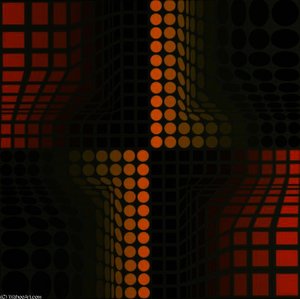
Victor Vasarely’s “Kettes,” a deceptively simple hexagonal composition, transcends mere visual representation; it embodies the core principles of Op Art—Optical Art—a movement that revolutionized artistic perception in the mid-20th century. Created sometime between 1963 and 1964, this artwork isn't about depicting a recognizable scene but rather manipulating our senses to generate an experience akin to movement and depth where none exists.
The visual impact is immediate: two interlocking hexagonal structures dominate the canvas, arranged in a dynamic interplay that defies conventional perspective. Each hexagon is meticulously crafted from repeating squares and diamonds—a technique characteristic of Vasarely’s approach—resulting in an illusionistic effect that draws the eye inwards. The color palette leans towards cool tones – predominantly blues and greens – accented by warmer hues like yellows and reds, creating a harmonious balance that contributes to the artwork's overall vibrancy.
Vasarely’s method wasn’t simply about applying paint; it was about harnessing mathematical precision. He meticulously calculated the angles and proportions of his shapes to maximize their perceptual impact. This deliberate control over visual stimuli aligns perfectly with the Bauhaus ethos—functional design underpinned by geometric abstraction—which profoundly influenced Vasarely's artistic development. The hexagonal form itself carries symbolic significance, representing stability and harmony alongside its inherent dynamism.
“Kettes” is executed on canvas using acrylic paint – a material favored by Vasarely for its durability and ability to achieve brilliant colors. The artist’s meticulous brushwork ensures smooth surfaces while maintaining the sharp delineation of geometric shapes. Careful attention was paid to layering pigments, creating subtle variations in tone that enhance the illusion of depth without resorting to traditional shading methods. This technique exemplifies Vasarely's commitment to exploring the boundaries of visual perception.
Born in Pécs, Croatia (then Austria-Hungary), Victor Vasarely emerged as a pivotal figure in Op Art during a period marked by significant advancements in psychology and neuroscience. Artists like Vasarely sought to challenge viewers’ assumptions about reality, demonstrating that perception is subjective and susceptible to manipulation. “Kettes” stands as a testament to this intellectual curiosity—a bold experiment in visual illusion that cemented Vasarely's place among the most influential artists of his time. Its enduring appeal continues to inspire contemporary designers and collectors alike.

1906 - 1997 , Kroatia

Explore the mesmerizing world of Victor Vasarely. Discover how his Bauhaus-inspired Op Art masters the science of perception through geometric abstraction and vibrant color. A sophisticated guide for discerning art collectors seeking to understand the legacy of optical illusion.

Embark on a visual journey through the mesmerizing world of Op Art. Discover the masters of optical illusion, explore geometric abstraction, and learn how to curate high-impact kinetic works for your private collection with expert guidance from art professionals.

Explore the profound world of optical art and masterpieces that redefine perception. From Vasarely’s geometric illusions to Farndon’s sensory reality, discover how legendary works challenge the eye and transform the viewer's experience through sophisticated abstraction.

Explore the profound spiritual depth of geometric abstraction. From Malevich's Suprematism to modern masters, our expert guide reveals how pure form and color command presence in fine art collections.

 Megtekintés
 Küldés
 Megosztás
 Részletek

 Letöltés
 Hasonló darabok
 X-ray felvétel
 Diavetítés
 Összes részlet megjelenítése







 Az üvegkeretes opció csak 110 cm alatti méretben érhető el