Az ezen az oldalon megjelenített műalkotások szerzői jogi védelem alatt állnak, ami azt jelenti, hogy törvényileg nem készíthetünk és nem adhatunk el belőlük pontos másolatokat. Ez a védelem olyan nemzetközi megállapodások alapján érvényesül, mint például a Berni Egyezmény és a nemzeti jogszabályok által, beleértve azokat is, amelyeket meghatározott Az USA szerzői jogi törvénye – 17. cím.
Ez a módszer teljes mértékben megfelel a szerzői jogi szabályozásnak, mivel nem tartalmazza a védett műalkotás másolását vagy duplikálását. Ehelyett ez egy kreatív újinterpretáció – egy új festmény, amely az eredetivel való összefüggései miatt hatással van rá, de nem az az.
Múzeumi minőségű giclée vagy vászonnyomat, gyors gyártással és rugalmas finomítási lehetőségekkel. ( Kézzel festett másolat rendelése Áttérés digitális képre)





























Válasszon előre meghatározott méreteink közül, amelyek megfelelnek a műalkotás eredeti arányainak.

Írja be a keretének vagy a falának megfelelő szélességet és magasságot. A nyomatot csak le lehet vágni, soha nem tehető nagyobbá, mint az eredeti kép, így egy eltérő alakú méretnél a kép egy része elveszik. Mielőtt bármit kinyatintanánk, küldünk egy digitális próbamodellt jóváhagyásra. Az oldalon látható kép nem tartalmazza a valós levágást — ezt csak a próbamodell mutatja meg.
Világszerte történő kiszállítás területére mindössze 2 hét alatt, a szokásos 4-5 hét helyett. (8 november)
Hetta
Reprodukció mérete
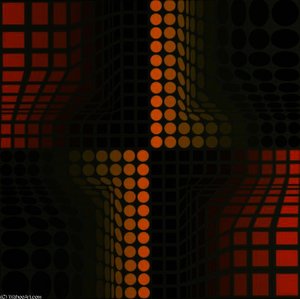
Victor Vasarely's "Hetta," a deceptively simple composition of four vibrant circles – red, orange, green, and blue – is far more than just an abstract arrangement. It’s a meticulously crafted exploration of perception, movement, and the very nature of visual experience, firmly rooted in the groundbreaking principles of Op Art and reflecting the artist's deep engagement with geometric abstraction. Born Károly Vaszary in 1906 in Pécs, Croatia, Vasarely’s artistic trajectory began unexpectedly, initially driven by a medical education before he was captivated by the expressive potential of painting. This shift, catalyzed by his studies at the Podolini-Volkmann Academy and crucially, Sándor Bortnyik's “Műhely” workshop – a breeding ground for Bauhaus ideals – established him as a key figure in challenging traditional artistic conventions. "Hetta" embodies this legacy, showcasing Vasarely’s mastery of creating illusions through precise geometric forms, anticipating the viewer’s eye and manipulating their perception with remarkable skill.
“Hetta” is a quintessential example of Op Art, a movement that emerged in the 1960s – though Vasarely's explorations began decades earlier – to deliberately stimulate visual responses through optical illusions. The painting’s seemingly static arrangement generates a dynamic sense of movement and vibration within the viewer’s eye. This effect is achieved through carefully calibrated patterns and contrasting colors, creating areas of light and dark that shift with the slightest change in viewing angle. Vasarely wasn't simply depicting circles; he was manipulating the way the brain processes visual information, demonstrating a profound understanding of how our perception is constructed.
Vasarely’s artistic vocabulary is profoundly shaped by his immersion in geometric abstraction and the principles championed by the Bauhaus movement. The precise, interlocking circles within “Hetta” reflect the Bauhaus emphasis on functional design and the reduction of form to its essential elements – line, shape, and color. This approach sought to create art that was both aesthetically pleasing and intellectually stimulating, rejecting representational imagery in favor of exploring the underlying structure of visual reality. The square arrangement of the circles further reinforces this geometric rigor, echoing the Bauhaus’s commitment to order and clarity.
While ostensibly abstract, “Hetta” possesses a subtle symbolic resonance. The four colors – red, orange, green, and blue – are often associated with fundamental human emotions: passion (red), enthusiasm (orange), growth (green), and tranquility (blue). Their arrangement within the circles suggests a harmonious balance or perhaps a dynamic interplay between these forces. More than just an aesthetic object, “Hetta” invites contemplation on perception itself, prompting viewers to question their own assumptions about reality and the nature of visual experience. The painting’s impact is one of controlled excitement – a quiet dynamism that draws the eye in and holds it captive.
A "Hetta" útmutatója a mű Útmutató oldala – egy kinyomtatható adatlap, amely bemutatja a művet a leírással, a szerzői megjegyzéssel és az azonosító táblázattal (művész, dátumok, technika, eredeti méret, gyűjtemény) együtt.
„Hetta”, Vasarely alkotása a következőket ábrázolja: circles, geometry, op art, abstraction, color field, vasarely, visual perception.
A "Hetta" alkotásban a Dark színek Reflective érzetet kölcsönöznek.

1906 - 1997 , Kroatia
Explore the mesmerizing world of Victor Vasarely. Discover how his Bauhaus-inspired Op Art masters the science of perception through geometric abstraction and vibrant color. A sophisticated guide for discerning art collectors seeking to understand the legacy of optical illusion.

Explore the profound spiritual depth of geometric abstraction. From Malevich's Suprematism to modern masters, our expert guide reveals how pure form and color command presence in fine art collections.
 Megtekintés
 Küldés
 Megosztás
 Részletek
 Útmutató

 Letöltés
 Hasonló darabok
 X-ray felvétel
 Diavetítés
 Kérdések és válaszok
 Statisztika

 Összes részlet megjelenítése









 Az üvegkeretes opció csak 110 cm alatti méretben érhető el