


Múzeumi minőségű giclée vagy vászonnyomat, gyors gyártással és rugalmas finomítási lehetőségekkel. ( Kézzel festett másolat rendelése Áttérés digitális képre)





























Válasszon előre meghatározott méreteink közül, amelyek megfelelnek a műalkotás eredeti arányainak.

Írja be a keretének vagy a falának megfelelő szélességet és magasságot. A nyomatot csak le lehet vágni, soha nem tehető nagyobbá, mint az eredeti kép, így egy eltérő alakú méretnél a kép egy része elveszik. Mielőtt bármit kinyatintanánk, küldünk egy digitális próbamodellt jóváhagyásra. Az oldalon látható kép nem tartalmazza a valós levágást — ezt csak a próbamodell mutatja meg.
Világszerte történő kiszállítás területére mindössze 2 hét alatt, a szokásos 4-5 hét helyett. (15 november)
Two Boys before an Easel
Reprodukció mérete
The composition presents two young boys positioned before an easel, captured in a medium close-up. In the foreground, one boy is seen in profile, his face illuminated by a concentrated light source that defines the contours of his features. He wears a garment with a sleeve made of saturated purple satin, which reflects light with a distinct sheen. Behind him, a second boy is partially visible, his presence more obscured by the shadows. The background remains dark and indistinct, lacking specific architectural or environmental details. This use of chiaroscuro creates a sharp contrast between the illuminated skin tones and the deep blacks and browns that dominate the surrounding space. The brushwork is precise, particularly where light hits the folds of the purple fabric and the soft curls of the hair.
The color palette relies on muted golds and heavy, dark tones to establish a somber atmosphere. The texture of the clothing, specifically the silk-like quality of the sleeve, is rendered with careful attention to how light interacts with different surfaces. Lines are used to define the edges of the figures against the darkness, though they remain soft in areas of transition. The focus remains fixed on the interaction between the subjects and the object of their attention: a sketch or painting resting upon the easel.
This work is characteristic of the 17th-century Utrecht Caravaggism style, a movement that integrated Italian Baroque principles into Northern European painting. The technique emphasizes realism through the dramatic application of light and shadow to sculpt forms out of darkness. Such methods were common among artists who had studied in Rome and brought back an interest in intense, realistic representation and the use of sudden, directional light. The subject matter—an artist or student observing a work on an easel—suggests themes of observation and the process of learning.
The painting reflects a period of artistic experimentation where painters moved between intense, dark compositions and more classical, lighter styles. In this specific piece, the heavy shadows and the focus on a single, brightly lit subject point to the influence of Caravaggio's approach to composition. The way the light catches the edge of the boy's profile and the texture of his clothing demonstrates a commitment to capturing the physical reality of light hitting varied materials, from skin to satin.
A 1645 évszám alapján a "Two Boys before an Easel" Jacob van Oost Caravaggesque Period korszakába tartozik.
A "Two Boys before an Easel" eredeti műve a Nemzeti Képtár (London) gyűjteményében található, az alkotás pedig közösségi tulajdon – a szerzői jog lejártt státuszú.
A "Two Boys before an Easel" alkotással hasonló művek a festmény Hasonló alkotások oldalán találhatók.

Jacob van Oost was a prolific Flemish painter of history paintings and portraits. Born in Bruges, he became a master of the Bruges Guild of St. Luke in 1621. Following this, he traveled to Italy, where he spent five years in Rome. Upon his return to Bruges in 1628, he served as a stedehouder (director) of the local Guild of St. Luke. Throughout his career, he held various positions within the Guild, including several terms as dean, and from 1651 until his death, he served as the official city painter of Bruges.
His artistic output was diverse, ranging from altarpieces created in the spirit of the Counter-Reformation to portraits of the local bourgeois. He also produced genre paintings, such as interiors featuring musicians and card players, which were likely intended for the open market or private individuals. His family was deeply connected to the arts; his sons, Jacob the Younger and Willem, both became notable painters, and his grandson, Dominique Joseph van Oost, was also a portrait and history painter.
The work of Jacob van Oost is characterized by a stylistic evolution. His early paintings showed influence from Caravaggio and Bartolomeo Manfredi, visible in his use of chiaroscuro effects and non-idealized figures. As his career progressed, his style moved toward a more classicist treatment of monumental figures, reflecting the influence of Annibale Carracci and Domenichino. In his later years, his work displayed greater emotionality, dramatic spatial effects, and a palette closer to Venetian art, influenced by artists such as Federico Barocci, Correggio, and Anthony van Dyck.
His religious works remain significant, with many pieces still located in the churches of Bruges, including thirteen paintings in St. Salvator's Cathedral. His portraits, while often following a formulaic approach, include notable works such as the Portrait of a Bruges Family. His paintings are held in various international collections, including:

1603 - 1671

Step into the elegance of the Baroque era with our curated guide to Sir Anthony van Dyck's top 25 masterpieces. Explore royal portraits and Flemish brilliance through museum-quality art reproductions and timeless decor inspiration. Discover all masterpieces on WahooArt.com.

Immerse yourself in the profound emotion of Rogier van der Weyden. Explore 25 iconic Early Netherlandish masterpieces, from intricate textures to divine pathos. Find inspiration for museum-quality art reproductions and decor. Discover all masterpieces on WahooArt.com.
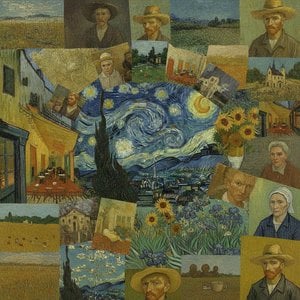
Explore 25 iconic Van Gogh masterpieces and their stories. Discover museum-quality art at WahooArt.com.

Explore 25 iconic Van Gogh and modern masterpieces from the Kröller-Müller Museum. Discover the full collection online at WahooArt.com.
 Megtekintés
 Küldés
 Megosztás
 Részletek
 Útmutató

 Letöltés
 Hasonló darabok
 X-ray felvétel
 Diavetítés
 Kérdések és válaszok
 Statisztika


 Összes részlet megjelenítése









 Az üvegkeretes opció csak 110 cm alatti méretben érhető el


