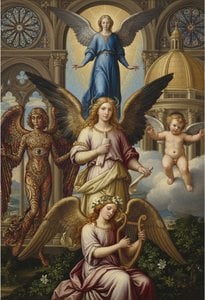
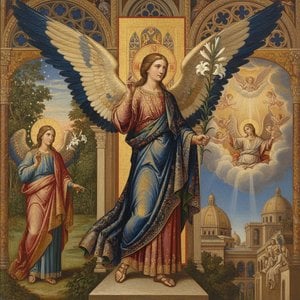
The Annunciation (1557) by Titian Ramsay Peale II, hand-painted oil painting reproduction by a master artist
Megtekintés AR előnézet Váltás nyomtatványra Áttérés digitális képre Küldés
Részletek Útmutató Kedvencekhez ad Letöltés Hasonló darabok X-ray felvétel Diavetítés Q&A Statisztika

The Annunciation Hand-painted oil painting reproduction

Méretek
280.0 x 21.0 cm

Discover Titian’s "The Annunciation" (1557), a Baroque masterpiece! Explore its dramatic lighting, dynamic composition & rich colors of this Venetian painting.

Fedezze fel Titian Ramsay Peale II (1799-1885) művészetét! Reneszánsz ihletésű tájképfestő, aki ötvözi a klasszikus stílust az amerikai természettel. Lenyűgöző vadon élő állat festményei és öröksége.

Kézzel készített olajfestmény reprodukció

Kézzel festett olajvastú vászon, az Ön által választott méretben és keretben, művészeink készítik meglévőre. ( Váltás nyomtatványra Áttérés digitális képre)

Corner sample of the P118B picture frame: formázott polisztirol, 5 cm wide and 3 cm thick
P118B Ft10
Corner sample of the P118H picture frame: formázott polisztirol, 5 cm wide and 3 cm thick
P118H Ft10
Corner sample of the P118W picture frame: formázott polisztirol, 5 cm wide and 3 cm thick
P118W Ft10
Corner sample of the P438Z picture frame: formázott polisztirol, 5.5 cm wide and 3.5 cm thick
P438Z Ft10
Corner sample of the P508JH picture frame: formázott polisztirol, 7 cm wide and 3.5 cm thick
P508JH Ft12
Corner sample of the P508YH picture frame: formázott polisztirol, 7 cm wide and 3.5 cm thick
P508YH Ft12
Corner sample of the P805H picture frame: formázott polisztirol, 5 cm wide and 3.5 cm thick
P805H Ft10
Corner sample of the P805Z picture frame: formázott polisztirol, 5 cm wide and 3.5 cm thick
P805Z Ft10
Corner sample of the P919BZ picture frame: formázott polisztirol, 7 cm wide and 3.5 cm thick
P919BZ Ft10
Corner sample of the P919G picture frame: formázott polisztirol, 7 cm wide and 3.5 cm thick
P919G Ft10
Corner sample of the P919XJ picture frame: formázott polisztirol, 7 cm wide and 3.5 cm thick
P919XJ Ft10
Corner sample of the P959ZH picture frame: formázott polisztirol, 5 cm wide and 3 cm thick
P959ZH Ft10
Corner sample of the P968JZ picture frame: formázott polisztirol, 6 cm wide and 4 cm thick
P968JZ Ft12
Corner sample of the W106C picture frame: tömörfa, 5 cm wide and 3 cm thick
W106C Ft8
Corner sample of the W218G picture frame: tömörfa, 5 cm wide and 3 cm thick
W218G Ft10
Corner sample of the W218JH picture frame: tömörfa, 5 cm wide and 3 cm thick
W218JH Ft8
Corner sample of the W218Y picture frame: tömörfa, 5 cm wide and 3 cm thick
W218Y Ft10
Corner sample of the W307PJ picture frame: tömörfa, 6 cm wide and 3 cm thick
W307PJ Ft10
Corner sample of the W316G picture frame: tömörfa, 6 cm wide and 3 cm thick
W316G Ft10
Corner sample of the W316PJ picture frame: tömörfa, 6 cm wide and 3 cm thick
W316PJ Ft8
Corner sample of the W316Y picture frame: tömörfa, 6 cm wide and 3 cm thick
W316Y Ft10
Corner sample of the W398PJ picture frame: tömörfa, 5 cm wide and 3 cm thick
W398PJ Ft8
Corner sample of the W4111J picture frame: tömörfa, 6.5 cm wide and 3.5 cm thick
W4111J Ft10
Corner sample of the W500HY picture frame: tömörfa, 7 cm wide and 5 cm thick
W500HY Ft15
Corner sample of the W500JH picture frame: tömörfa, 7 cm wide and 5 cm thick
W500JH Ft15
Corner sample of the W692G picture frame: tömörfa, 8 cm wide and 4 cm thick
W692G Ft12
Corner sample of the W849H picture frame: tömörfa, 5 cm wide and 3 cm thick
W849H Ft8
Corner sample of the W940BG picture frame: tömörfa, 7.5 cm wide and 4.5 cm thick
W940BG Ft15
Corner sample of the W953PJ picture frame: tömörfa, 6 cm wide and 3.5 cm thick
W953PJ Ft8

Standard méret
egyedi méretű
CM
INCH

Válasszon előre meghatározott méreteink közül, amelyek megfelelnek a műalkotás eredeti arányainak.

szélesség
magasság

Írja be a kívánt szélességet és magasságot, hogy illeszkedjen a keretéhez vagy a falához. Mivel ez kézzel festett alkotás, egy eltérő formájú méret esetén a művész akár festhet is valamivel többet a kép körül, vagy korolathat is belőle — az Ön döntésének megfelelően. A festés megkezdése előtt küldünk egy digitális tervezetet jóváhagyásra. Az oldalon látható kép nem tartalmazza a végeredményt — csak a tervezet mutatja meg a valódi eredményt.

Példák arra, mit lehet módosítani: az arc kicserélése az ügyfél fotójára; háziállat hozzáadása (pl. macska helyett kutya); rejtett üzenet elhelyezése a háttérben; a háttér tájának vagy elemeinek megváltoztatása.
A rendelést követően a WahooArt.com csapata e-mailt küld az ügyfélnek az instrukciókért, és biztosít egy előnézeti képet (mockup).

Világszerte elérhető szállítás () 3-4 hét alatt a szokásos 5 hét helyett. (31 október). A minőség nem kérdőjelezhető.

Ingyenes globális expressz szállítás
Prémium minőségű len vászon
Teljes körű szállítási biztosítás
Vámvisszatérítési Garancia
Hiteles színarányosság garancia
100 napos visszaküldési lehetőség (csak hibás termékek esetén)
100% pénzvisszatérítési garancia
Több darab vásárlásakor kedvezmény

Összesített ár

Ft 97259

The Annunciation

Reprodukciós technika

Reprodukció mérete

-

Összesített ár

Ft 97259

Gyors információk

  • Title: The Annunciation
  • Artist: Titian Ramsay Peale II
  • Location: Palace of Capodimonte
  • Year: 1557
  • Dimensions: 280 x 21 cm
  • Movement: Baroque

Művészeti kvíz

Minden kérdésre csak egy helyes válasz létezik.

Kérdés 1:
What artistic movement is most closely associated with ‘The Annunciation’?
Kérdés 2:
The composition of 'The Annunciation' primarily utilizes which structural element?
Kérdés 3:
What is the dominant color palette used in ‘The Annunciation’?
Kérdés 4:
Which of the following best describes the lighting technique employed in ‘The Annunciation’?
Kérdés 5:
Considering Titian Ramsay Peale II’s background and artistic influences, what is a key characteristic of his work evident in ‘The Annunciation’?

The Annunciation: A Baroque Dialogue of Grace and Revelation

Titian Ramsay Peale II’s “The Annunciation,” painted in 1557, is more than just a depiction of a pivotal biblical moment; it's a carefully constructed tableau brimming with the emotional intensity and dramatic lighting characteristic of late Renaissance – specifically, Baroque – art. This masterful work transports us to a space both sacred and subtly unsettling, inviting contemplation on themes of divine grace, human humility, and the profound mystery at the heart of faith. Peale’s interpretation diverges from purely literal representation, opting instead for a heightened emotionalism that resonates powerfully with viewers centuries later.

The scene unfolds within an undefined, almost dreamlike space – a dark void punctuated by subtle architectural elements suggesting a modest dwelling. The focus immediately draws the eye to the kneeling woman, Mary, rendered in exquisite detail. Her posture conveys both vulnerability and profound absorption; her hands clasped together, her gaze fixed upward with an expression of awe and gentle surprise. This isn’t merely a passive recipient of divine news but a figure actively engaged in a momentous encounter. The artist skillfully uses light to sculpt her form, highlighting the delicate contours of her face and emphasizing the weight of this revelation.

A Symphony of Color and Movement

Peale's palette is dominated by rich browns, deep golds, and muted reds – colors that evoke a sense of solemnity and reverence. These warm tones are juxtaposed with cooler blues and purples in the swirling clouds above, creating a dynamic interplay between earthly humility and celestial splendor. The drapery, particularly the voluminous robes of the angel, is rendered with meticulous attention to detail, utilizing layered impasto – thick applications of paint that create a tactile, almost sculptural effect. This technique not only adds depth and texture but also contributes to the overall sense of drama and movement within the composition.

The use of curved lines—particularly in the flowing drapery and the wings of the angel—is paramount to the painting’s dynamic feel. These lines guide the viewer's eye through the scene, creating a sense of continuous motion and upward aspiration. The positioning of the ascending cherubs further reinforces this feeling of ascension, symbolizing the divine presence reaching down to earth. The pyramidal composition, anchored by Mary’s kneeling form and culminating in the angel and celestial elements, provides stability while simultaneously directing the eye upwards towards the heavens.

Symbolism and Artistic Echoes

“The Annunciation” is rich in symbolic meaning. The angel, rendered with powerful wings and a commanding presence, represents divine grace and the messenger of God’s will. Mary's posture embodies humility and receptivity – she is not demanding answers but humbly accepting the extraordinary news. The architectural details, though subtly suggested, hint at the familiar setting of Nazareth, grounding the miraculous event in a tangible reality. The painting draws heavily on the artistic traditions of the High Renaissance, particularly the works of Raphael and Leonardo da Vinci, yet Peale imbues it with a distinctly Baroque sensibility – a heightened emotionalism, dramatic lighting, and an emphasis on movement and dynamism.

Furthermore, it’s important to consider Peale's lineage. As the son of Charles Willson Peale, a pivotal figure in early American art and founder of the first museum, Titian Ramsay Peale II inherited a legacy of scientific observation and artistic exploration. This influence is evident in his meticulous detail and his commitment to capturing both the beauty and the complexity of the natural world – as seen in his extensive wildlife paintings. “The Annunciation” thus represents a fascinating synthesis of High Renaissance ideals with New World sensibilities, creating an artwork that is both timelessly beautiful and deeply rooted in its historical context. It’s a powerful testament to the enduring appeal of religious iconography and the artist's ability to translate profound spiritual themes into visually arresting form.

Kérdések és válaszok

Milyen témák jelennek meg a(z) „The Annunciation”, Titian Ramsay Peale II alkotása alkotásban?

„The Annunciation”, Titian Ramsay Peale II alkotása a következőket ábrázolja: annunciation, angel, virgin mary, divine revelation, religious art, baroque painting, spiritual encounter, celestial.

Mennyire tel愈t a "The Annunciation" színpalettája?

A „The Annunciation”, Titian Ramsay Peale II alkotása alkotás Subtle Color telítettségű színekkel készült.

Milyen érzelmi hangulat kíséri a "The Annunciation" alkotás Baroque stílusát?

A „The Annunciation” Spiritual hangulata kíséri a Baroque stílusát.


A művész életrajza

Egy Reneszánsz Ekkó az Újvilágban

Titian Ramsay Peale II egy lenyűgöző, gyakran figyelmen kívül hagyott alak a 19. századi amerikai művészet tájképén. 1799-ben Philadelphiában született, és mélyen gyökerezett művészeti örökséggel rendelkezett, hiszen Charles Willson Peale legfiatalabb fia volt, aki kulcsfontosságú szerepet játszott az amerikai portréfestészet korai szakaszában, valamint alapította az ország első múzeumát. Bár apja öröksége hatalmas árnyékvetést jelentett, Titian saját útját járta, amely mélyen gyökerezett a Magas Reneszánsz esztétikai ideáljaiban, különösen Velenceból származóban. Ő nem egyszerűen stílusokat másolt; hanem mély művészi érzékenységet csatornázott, telítve vásznait aprólékos részletekkel és vibráló színpalettával, ami megkülönböztette őt kortársaitól. Élete a virágzó amerikai identitás hátterében bontakozott ki, de művészi szíve továbbra is a klasszikus mesterekhez kötődött, létrehozva egy feszültséget a régi világ tiszteletben tartása és az újvilági kifejezés között.

A Természettudós Vázlatkönyvétől a Festő Vásznáig

Peale korai éveit a művészet és a természettörténet kettős vonzása jellemezte – egy kombináció, amelyet apja sokoldalú törekvései tápláltak. Expedíciókon vett részt, nevezetesen Stephen Harriman Long 1819-20-as útján a Sziklás-hegyekbe, dokumentálva a flórát és faunát egyre kifinomultabb művészi szemmel. Ez az időszak nem csupán megfigyelések rögzítéséről szólt; hanem a *forma*, a *fény* és a *textúra* megértéséről – olyan készségekről, amelyek felbecsülhetetlennek bizonyultak, amikor teljes figyelmét a festészetre fordította. Természettudósként végzett munkája formálta művészetét, tudományos pontosságot kölcsönözve a természet ábrázolásainak, de érzelmi rezonanciával is átitette őket, amely túlmutatott a puszta dokumentáción. Ő nem csupán megmutatta nekünk a dolgok kinézetét; hanem feltárta azok belső szépségét és spirituális jelentőségét. Ennek a két tudományterület iránti elkötelezettsége olyan alkotásokban nyilvánul meg, mint a "A Tribute Money" (Adófizetés), egy drámai ábrázolás Rubens mesteri fény- és árnyékjátékával, valamint a "Nymph and Shepherd" (Nimfa és Pásztor), amely ötvözi a természetet, a mitológiát és az érzéki szépséget.

Velencei Hatások és Szent Viziók

A velencei kolorizmus hatása – a gazdag, ragyogó színekre és légköri effektekre helyezett hangsúly, amelyet olyan művészek hirdettek, mint Titian (akitől első nevét vette) – tagadhatatlan Peale munkásságában. Ő nem egyszerűen másolta ezeket a mestereket; hanem belsővé tette elveiket és saját művészi látásmódjához igazította őket. Ez különösen vallási alkotásaiban nyilvánul meg, mint például az "Altar Shrine with Four Saints" (Négy Szent Oltárképe) és az "Adoration of the Shepherds" (Pásztorok Imádása). Ezek a festmények nem csupán bibliai jelenetek ábrázolásai; hanem magával ragadó élmények, amelyek gondosan megkomponált kompozíciókkal és a szín mesteri használatával vonják be a nézőt a spirituális elmélkedés világába. A részletek aprólékos figyelme ezekben a munkákban nem csupán műszaki képességéről szól, hanem a tárgy iránti mély tiszteletéről is. "The Beauty" (A Szépség), egy lenyűgöző portré, tovább demonstrálja az emberi forma és karakter elegáns finomsággal való megragadásának képességét.

Újrafelfedezés és Tartós Jelentősége

A 20. század nagy részében Titian Ramsay Peale II nagyrészt láthatatlan maradt a művészettörténeti narratívákban. Munkája nem illett bele az uralkodó trendekbe, és klasszikus stílus iránti elkötelezettsége anakronisztikusnak tűnt egy gyorsan változó művészeti tájban. Azonban az utóbbi években növekvő felértékelődést tapasztaltak munkássága. Tudósok és gyűjtők felismerik az amerikai érzékenység és az európai hagyományok egyedülálló keverékét, amely Peale festményeit jellemzi. Munkája újrafelfedezése nem csupán a művészettörténeti rések kitöltéséről szól; hanem a 19. századi Amerika formálta komplex kulturális erők mélyebb megértéséről szól. Peale egy híd a világok között, a klasszikus ideálok tartós erejének bizonyítéka és emlékeztető arra, hogy a művészeti innováció gyakran váratlan hatások kombinációiból fakad. Festményei, amelyeket ma olyan gyűjteményekben találhatunk meg, mint az WahooArt, az Uffizi Galéria és a Palazzo Pitti, lebilincselő pillanatképet kínálnak egy elfeledett amerikai művészettörténeti sarokról – egy sarokról, amelyet a Reneszánsz ragyogó fénye világít meg.
Titian Ramsay Peale II

Titian Ramsay Peale II

1799 - 1885 , Egyesült Államok

Rövid információk

  • Artistic Movement Or Style: Magas reneszánsz
  • Artists Who Influenced This Artist:
    • Titian
    • Rubens
  • Date Of Birth: 1799
  • Date Of Death: 1885
  • Full Name: Titian Ramsay Peale II
  • Nationality: Amerikai
  • Notable Artworks:
    • Altar Shrine...
    • Adoration...
    • The Beauty
  • Place Of Birth: Philadelphia, USA
Fedezze fel a műalkotásokat témák, stílusok és jellemzők szerint csoportosítva.