INGYENES MŰVÉSZETI TANÁCSADÁS

x
Készíttetnék festményként Készíttetnék festménykéntKép letöltése Kép letöltése MegosztásMegosztás

DetailsDetails Kedvencekhez ad Kedvencekhez ad LetöltésLetöltés Hasonló alkotásokHasonló alkotások X-RayX-Ray DiavetítésDiavetítés

Ajitto

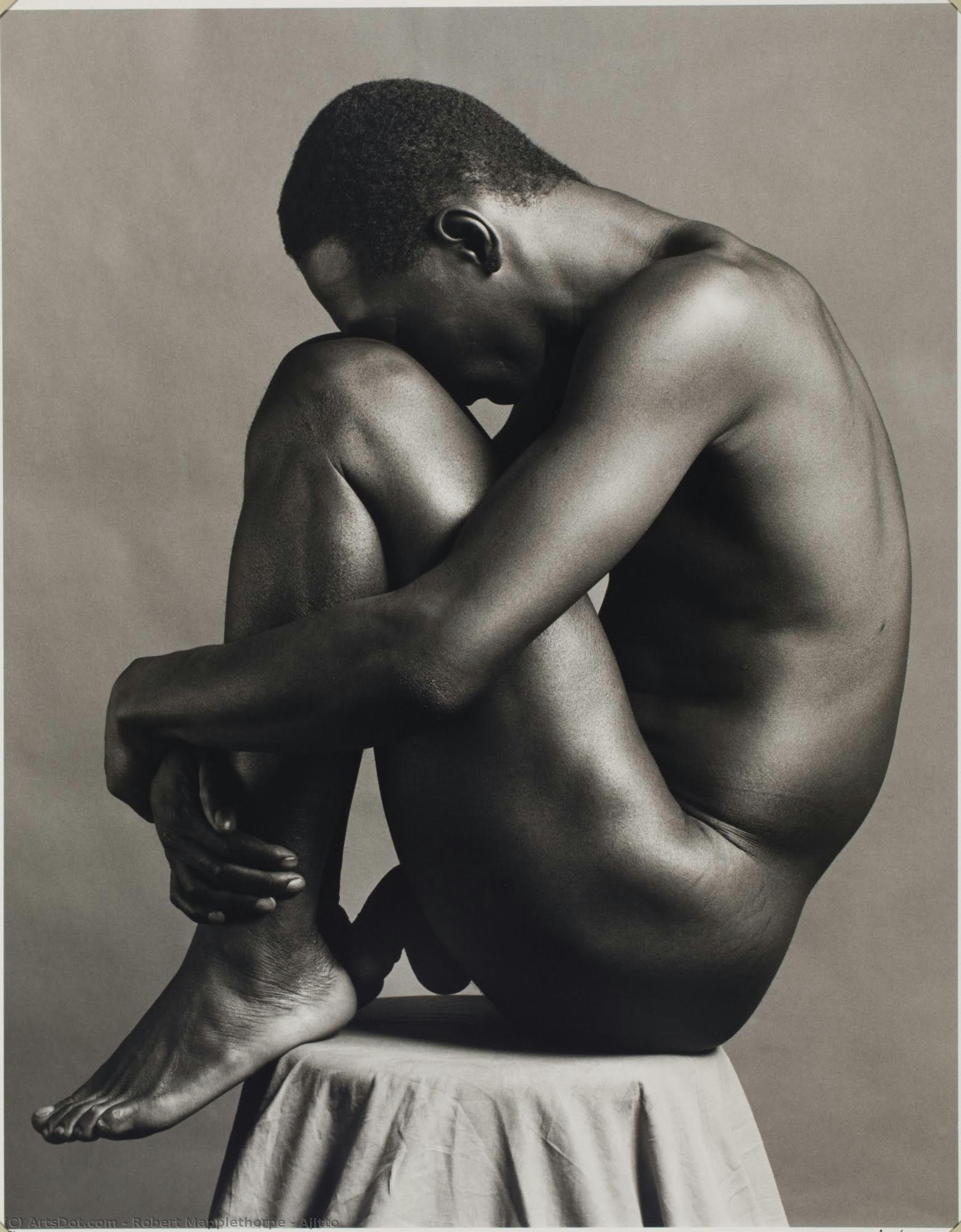
Robert Mapplethorpe's 'Ajitto': A striking black & white photograph capturing introspection and vulnerability. Explore the iconic photographer’s masterful use of form and light.

Robert Mapplethorpe (1946-1989) amerikai fotós, aki a provokatív fekete-fehér portrékkal, nőkkel és virágokkal vált híressé. A BDSM képeivel és művészi szabadsággal kapcsolatos vitákban maradt fenn.

Giclée / Műnyomat

Múzeumi minőségű giclée vagy vászonnyomat, gyors gyártással és rugalmas finomítási lehetőségekkel.

Standard
custom
CM
INCH

Válasszon előre meghatározott méreteink közül, amelyek megfelelnek a műalkotás eredeti arányainak.

szélesség
magasság

Megadhat saját méreteket is egy konkrét kerethez vagy helyszínhez igazítva. Amennyiben a kiválasztott méret nem egyezik az eredeti kép arányokkal, a műalkotást le fogjuk vágni, vagy kiegészítjük a képet tükrözött vagy egyszínű szélekkel. A gyártás megkezdése előtt egy digitális tervezetet küldünk jóváhagyásra.
Kérjük, vegye figyelembe, hogy a képernyőn látható előnézet nem tükrözi a tényleges levágást vagy kiegészítést. Csak a tervezet mutatja pontosan a végső kompozíciót.
Bár az egyedi méretek is elérhetőek, az eredeti arányok megőrzése érdekében azt javasoljuk, hogy válasszon a előre meghatározott listából származó méretet.

Világszerte történő kiszállítás területére 2 hét alatt, a szokásos 4-5 hét helyett. 2 július

why_choose_icon
Ingyenes globális expressz szállítás
why_choose_icon
Prémium minőségű len vászon
why_choose_icon
Teljes szállítási biztosítás
why_choose_icon
Vámvisszatérítési Garancia
why_choose_icon
Tökéletes színpontosság garancia
why_choose_icon
60 napos visszaküldési lehetőség (csak gyártási hibák esetén)
why_choose_icon
100%-os pénzvisszatérítési garancia
why_choose_icon
Kedvezmény több termény esetén

Összesen

-

reproduction

Ajitto

Giclée / Műnyomat

A reprodukció mérete

-

Összesített ár

-

Rövid tények

  • Subject or theme: Male figure, portraiture
  • Artist: Robert Mapplethorpe
  • Medium: Gelatin silver print
  • Artistic style: Formalist, nude study
  • Year: 1981
  • Location: MoMA, Guggenheim
  • Dimensions: 45 x 35.6 cm

Művészeti kvíz

Minden kérdésre csak egy helyes válasz létezik.

Kérdés 1:
What is the primary subject of Robert Mapplethorpe’s photograph ‘Ajitto’?
Kérdés 2:
In what year was the photograph ‘Ajitto’ created?
Kérdés 3:
Which of the following best describes Mapplethorpe’s artistic style as exemplified in ‘Ajitto’?
Kérdés 4:
The photograph ‘Ajitto’ is often associated with which of the following themes?
Kérdés 5:
What artistic movement did Mapplethorpe’s work draw inspiration from?

Termékinformációk

A Moment of Quiet Intensity: Robert Mapplethorpe’s “Ajitto”

Robert Mapplethorpe's "Ajitto," created in 1981, is not merely a photograph; it’s a distilled essence of vulnerability and introspection. The image, rendered in stark black and white gelatin silver print, depicts a young man seated on a simple stool, his hands clasped together between his legs – a pose that immediately evokes both shame and profound contemplation. The blurred background subtly emphasizes the subject's isolation, drawing our attention entirely to his posture and expression, which is one of quiet sadness and perhaps even a touch of defiance. This photograph transcends its literal depiction; it’s a powerful meditation on masculinity, sexuality, and the complexities of human experience.

The Artist and His Vision: Mapplethorpe's Formalist Approach

Born in Floral Park, New York, in 1946, Robert Mapplethorpe was a revolutionary figure in photography. He rejected the prevailing trends of his time, eschewing documentary or narrative approaches for a rigorously formalist style. Influenced by artists like Marcel Duchamp and Joseph Cornell, he sought to elevate photography to the level of sculpture, meticulously controlling every element within the frame – lighting, composition, and subject matter. “Ajitto” exemplifies this philosophy; it’s a study in geometry, line, and texture, where the human form becomes an object of aesthetic contemplation rather than a vehicle for storytelling. Mapplethorpe famously stated his goal was to "look for perfection in form," and this pursuit is strikingly evident in the photograph's precise arrangement.

Symbolism and Interpretation: The Weight of the Pose

The pose itself – hands clasped between the legs – carries a significant weight of symbolism. It’s a gesture often associated with shame, vulnerability, and self-consciousness. However, Mapplethorpe deliberately avoids sentimentality, presenting this posture not as an expression of weakness but rather as a moment of quiet resistance. The man's downward gaze suggests introspection, perhaps even a struggle to reconcile his inner world with external expectations. The photograph’s starkness amplifies this ambiguity, leaving the viewer to grapple with the unspoken emotions conveyed by the subject’s stillness. It invites us to consider the private moments of self-reflection that often go unseen.

Historical Context and Artistic Legacy

“Ajitto” was created during a period of significant social and cultural upheaval in America, marked by evolving attitudes towards sexuality and gender roles. Mapplethorpe’s work, particularly his explorations of male beauty and intimacy, often provoked controversy but also challenged conventional notions of artistic representation. The photograph's enduring power lies not only in its aesthetic qualities but also in its ability to resonate with contemporary audiences who continue to grapple with issues of identity, vulnerability, and the complexities of human connection. It’s a testament to Mapplethorpe’s lasting influence on the art world, solidifying his place as one of the most important photographers of the 20th century. Reproductions of “Ajitto” are highly sought after by collectors and interior designers alike, valued for their ability to inject a sense of quiet intensity into any space.

  • Size: 35 x 45 cm
  • Date: Unknown

Hasonló műalkotások


A művész életrajza

A Life Forged in Form: The World of Robert Mapplethorpe

Robert Mapplethorpe, a name inextricably linked to both breathtaking beauty and profound controversy, remains one of the most influential photographers of the 20th century. Born in Floral Park, New York, in 1946, his journey was not one of immediate artistic recognition but rather a gradual evolution fueled by experimentation, mentorship, and an unwavering commitment to exploring the boundaries of form and desire. Initially drawn to graphic arts at Pratt Institute, Mapplethorpe quickly found himself chafing against traditional academic constraints, ultimately leaving before completing his degree. This departure wasn’t a rejection of art itself, but a search for a medium that could more directly translate his burgeoning vision – a vision deeply influenced by artists like Joseph Cornell and Marcel Duchamp, whose embrace of the found object and conceptual play resonated with his own developing aesthetic sensibilities. These early years were marked by mixed-media collages, intricate assemblages born from salvaged materials and cut images, hinting at the formal precision and thematic concerns that would later define his photographic work.

The Polaroid Genesis and a Creative Partnership

The pivotal moment arrived with the acquisition of a Polaroid camera in 1970. This wasn’t merely a change in tools; it was a revelation. The immediacy of the Polaroid process allowed Mapplethorpe to bypass traditional darkroom techniques, focusing instead on composition, light, and shadow – elements that would become hallmarks of his style. Initially, these Polaroids were integrated into his collages, but they soon began to assert their independence, revealing a unique power in their stark black and white tonality. Simultaneously, a deeply significant relationship blossomed with poet and musician Patti Smith. Their connection, spanning from 1967 to 1972, was one of mutual artistic support and inspiration. Smith became a frequent subject for Mapplethorpe’s lens, her raw energy and bohemian spirit captured in images that possess an intimate vulnerability. This period wasn't just about romantic partnership; it was a crucible where both artists honed their craft, challenging each other to push creative boundaries. They shared a studio space, experimenting with visual and literary expression, creating a dynamic environment of artistic exchange.

Mastering the Form: Style, Subjects, and Controversy

Mapplethorpe’s photographic style is characterized by a rigorous formalism – an emphasis on composition, symmetry, and the interplay of light and shadow reminiscent of classical sculpture. He wasn't simply documenting his subjects; he was *constructing* them, elevating everyday objects and human forms to iconic status through meticulous technique. His subject matter was remarkably diverse: celebrity portraits featuring figures like Andy Warhol and Deborah Harry, exquisitely rendered floral still lifes – particularly orchids and calla lilies – and strikingly intimate self-portraits. However, it was his exploration of the BDSM subculture in 1970s and 80s New York City that ignited significant controversy. These images, unflinching in their depiction of sexuality and power dynamics, challenged conventional notions of taste and morality, sparking debates about censorship and artistic freedom. Mapplethorpe didn’t shy away from these controversies; he embraced them as an inherent part of his artistic practice, believing that art should provoke thought and challenge societal norms. He frequently referenced religious or classical imagery within his work, creating a compelling dialogue between contemporary subjects and historical art forms, further complicating interpretations and adding layers of meaning. The influence of artists like Duchamp is evident in Mapplethorpe’s deliberate use of everyday objects as artistic statements, elevating the mundane to the level of high art.

Influences and Development

Mapplethorpe's early work was profoundly shaped by several key influences. Joseph Cornell’s box constructions, with their carefully arranged found objects and symbolic imagery, instilled in him a fascination with assemblage and the creation of miniature worlds. Marcel Duchamp’s conceptual approach to art – challenging traditional notions of beauty and authorship – encouraged Mapplethorpe to question established artistic conventions. Furthermore, his exposure to the vibrant counterculture scene of 1960s New York, fueled by artists like Warhol and the burgeoning music scene, provided a fertile ground for experimentation and self-expression. He initially experimented with collage techniques, combining photographs, text, and other materials into layered compositions that reflected his interest in both visual and literary narratives. The transition to Polaroid photography marked a crucial turning point, allowing him to prioritize composition and light over the technical complexities of traditional darkroom processes.

Legacy and Lasting Impact

The mentorship of art curator Sam Wagstaff proved instrumental in Mapplethorpe’s career trajectory, providing crucial financial support and guidance during his formative years. Throughout the 1980s, Mapplethorpe exhibited extensively, gaining increasing recognition within the art world culminating in a major retrospective at the Whitney Museum of American Art in 1988 – a landmark achievement that solidified his position as a significant contemporary artist. However, this success was shadowed by controversy surrounding *Robert Mapplethorpe: The Perfect Moment* exhibition, which ignited fierce debates about public funding for art deemed obscene. Tragically, Mapplethorpe succumbed to AIDS in 1989, leaving behind a vast and complex body of work that continues to resonate today. Following his death, the Robert Mapplethorpe Foundation was established to preserve his artistic legacy, support medical research related to HIV/AIDS, and promote photography as an art form. His influence extends far beyond the realm of photography, impacting generations of artists with his bold exploration of sexuality, formalist approach, and unwavering commitment to pushing creative boundaries. Robert Mapplethorpe’s work remains a subject of ongoing discussion and analysis, cementing his place as one of the most – and often challenging – American artists of the 20th century. He elevated photography to a respected art form, proving that it could be more than just documentation; it could be sculpture, poetry, and provocation all rolled into one striking image.
Mapplethorpe Robert

Mapplethorpe Robert

1946 - 1989 , Egyesült Államok

Rövid tények

  • Artistic Movement Or Style: Formalisztikus fotográfia
  • Artists Or Movements Influenced By This Artist:
    • Korszerű művészek
    • Fotográfusok
  • Artists Who Influenced This Artist:
    • Joseph Cornell
    • Marcel Duchamp
  • Date Of Birth: 1946. nov. 4.
  • Date Of Death: 1989. március 9.
  • Full Name: Robert Mapplethorpe
  • Nationality: Amerikai
  • Notable Artworks:
    • Polaroidok
    • Virágok
    • Nudelemek
  • Place Of Birth: Floral Park, USA