A Glimpse into the Shadows: Unveiling Robert Henri’s “The Masquerade Dress”
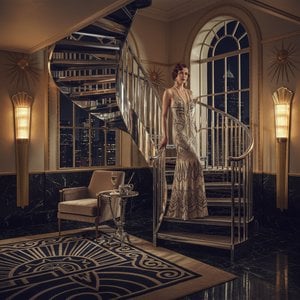
Robert Henri's "The Masquerade Dress," painted in 1911, isn’t merely a portrait; it’s a carefully constructed tableau vivant—a frozen moment of intrigue and veiled identity. This captivating work, currently residing within the Metropolitan Museum of Art, offers a rare window into the vibrant, often turbulent, world of early twentieth-century New York City, specifically the artistic circles surrounding Henri himself. The painting immediately draws the viewer in with its dramatic composition: a woman stands poised on a grand staircase, her presence both alluring and enigmatic, partially obscured by the folds of a magnificent white gown adorned with delicate floral patterns. But it’s the mask—a symbol of concealment and transformation—that truly commands attention, instantly raising questions about her true nature and intentions.

The Ashcan School and the Spirit of Urban Life
To fully appreciate “The Masquerade Dress,” one must understand its context within the broader artistic movement known as the Ashcan School. Henri, along with artists like George Bellows and John Sloan, rejected the idealized subjects and polished techniques favored by the established art academies. Instead, they sought to capture the gritty reality of urban life—the crowded streets, the poverty, and the unvarnished faces of ordinary people. Henri’s work reflects this commitment to realism, but with a distinctly personal and expressive style. He wasn't simply documenting; he was interpreting, imbuing his subjects with a sense of humanity and emotion. The choice of a masked figure within this context is particularly significant, suggesting a commentary on the hidden identities and social facades prevalent in the rapidly changing city.
Henri’s artistic lineage is deeply rooted in European masters like Velázquez and Hals, artists known for their directness and ability to capture fleeting moments. He studied with Thomas Anshutz at the Pennsylvania Academy of Fine Arts, inheriting a tradition of analyzing nature objectively – a key element that informed his approach to portraiture. The painting’s composition echoes this influence; Henri employs a simplified perspective, focusing intently on his subject while subtly hinting at the surrounding environment through carefully rendered details like the staircase and the suggestion of a darkened room beyond.
Symbolism and the Allure of Concealment
The mask itself is laden with symbolic weight. In the early 20th century, masquerade balls were popular social events, offering an escape into fantasy and anonymity. Wearing a mask allowed individuals to shed their everyday identities and embrace a different persona—a concept powerfully explored in Henri’s painting. The woman's gaze, direct and unwavering, suggests a deliberate choice of concealment, inviting the viewer to speculate on her motivations. Is she seeking adventure? Protecting herself from judgment? Or simply enjoying the thrill of the unknown?
Henri’s use of color further enhances the painting’s evocative quality. The pristine white of the dress contrasts sharply with the darker tones of the background, drawing attention to the figure and emphasizing her elegance. The floral pattern, rendered in delicate brushstrokes, adds a touch of romanticism to the scene, while also subtly hinting at the ephemeral nature of beauty and pleasure. The subtle use of light and shadow creates a sense of depth and atmosphere, inviting the viewer to step into the painting’s world.
A Legacy of American Realism – Perfect for Reproduction
“The Masquerade Dress” stands as a testament to Robert Henri's enduring legacy as one of America’s most influential artists. His ability to capture the essence of human experience with honesty and empathy continues to resonate with audiences today. WahooArt offers meticulously crafted, hand-painted reproductions that faithfully recreate the painting’s rich textures, vibrant colors, and captivating atmosphere. Whether you're an art collector, a design enthusiast, or simply someone seeking a piece of timeless beauty, a reproduction of “The Masquerade Dress” is sure to add a touch of sophistication and intrigue to any space.



 Megtekintés
 Áttérés Nyomtatványra
 Küldés
 Megosztás
 Részletek

 Letöltés
 Hasonló darabok
 X-ray felvétel
 Diavetítés
 Statisztika


 Összes részlet megjelenítése






































 Az üvegkeretes opció csak 110 cm alatti méretben érhető el