INGYENES MŰVÉSZETI TANÁCSADÁS

x
Készíttetnék festményként Készíttetnék festménykéntKép letöltése Kép letöltése MegosztásMegosztás
RészletekRészletek Kedvencekhez ad Kedvencekhez ad LetöltésLetöltés Hasonló alkotásokHasonló alkotások X-ray felvételX-ray felvétel DiavetítésDiavetítés

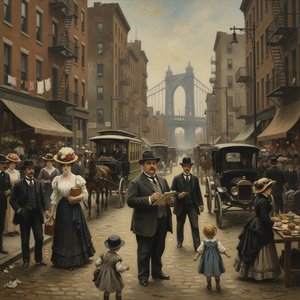
Paris Éjszaka

Robert Henri ikonikus képe, a Paris éjszakájának vibráló hangulata. A korabeli élet, lófutók, fények és a város csínyegyzete egyetlen festményben. Nézze meg Henri mester művészetét!

Robert Henri (1865-1929) amerikai realista festő, az Ashcan School egyik vezető alakja. Életművei a városi élet, a hétköznapi emberek és a társadalmi igazságosság témáit ábrázolja. Hatott számos művészre!

Giclée / Műnyomat

Múzeumi minőségű giclée vagy vászonnyomat, gyors gyártással és rugalmas finomítási lehetőségekkel.

P118B $10
P118H $10
P118W $10
P438Z $10
P508JH $12
P508YH $12
P805H $10
P805Z $10
P919BZ $10
P919G $10
P919XJ $10
P959ZH $10
P968JZ $12
W106C $8
W218G $10
W218JH $8
W218Y $10
W307PJ $10
W316G $10
W316PJ $8
W316Y $10
W398PJ $8
W4111J $10
W500HY $15
W500JH $15
W692G $12
W849H $8
W940BG $15
W953PJ $8

Standard
custom
CM
INCH

Válasszon előre meghatározott méreteink közül, amelyek megfelelnek a műalkotás eredeti arányainak.

szélesség
magasság

Megadhat saját méreteket is egy konkrét kerethez vagy helyszínhez igazítva. Amennyiben a kiválasztott méret nem egyezik az eredeti kép arányokkal, a műalkotást le fogjuk vágni, vagy kiegészítjük a képet tükrözött vagy egyszínű szélekkel. A gyártás megkezdése előtt egy digitális tervezetet küldünk jóváhagyásra.
Kérjük, vegye figyelembe, hogy a képernyőn látható előnézet nem tükrözi a tényleges levágást vagy kiegészítést. Csak a tervezet mutatja pontosan a végső kompozíciót.
Bár az egyedi méretek is elérhetőek, az eredeti arányok megőrzése érdekében azt javasoljuk, hogy válasszon a előre meghatározott listából származó méretet.

Világszerte történő kiszállítás területére 2 hét alatt, a szokásos 4-5 hét helyett. 7 július

why_choose_icon
Ingyenes globális expressz szállítás
why_choose_icon
Prémium minőségű len vászon
why_choose_icon
Teljes szállítási biztosítás
why_choose_icon
Vámvisszatérítési Garancia
why_choose_icon
Tökéletes színpontosság garancia
why_choose_icon
60 napos visszaküldési lehetőség (csak gyártási hibák esetén)
why_choose_icon
100%-os pénzvisszatérítési garancia
why_choose_icon
Kedvezmény több termény esetén

Összesen

-

reproduction

Paris Éjszaka

Giclée / Műnyomat

A reprodukció mérete

-

Összesített ár

-

Rövid tények

  • Year: 1898
  • Artist: Robert Henri
  • Notable elements: Night scene, figures
  • Influences: Impressionists
  • Location: Metropolitan Museum
  • Title: Paris Night
  • Dimensions: 65 x 81 cm

Művészeti kvíz

Minden kérdésre csak egy helyes válasz létezik.

Kérdés 1:
What is the primary subject matter depicted in Robert Henri’s ‘Paris Night’?
Kérdés 2:
The painting ‘Paris Night’ is associated with which artistic movement?
Kérdés 3:
Based on the image description, what is a notable feature of the composition?
Kérdés 4:
Robert Henri’s life was marked by a significant early event. What happened?
Kérdés 5:
The painting ‘Paris Night’ was created in which year?

Termékinformációk

Robert Henri’s “Paris Night”: A Glimpse of Urban Life in 1898

Robert Henri’s “Paris Night,” painted in 1898, isn't merely a depiction of a Parisian street; it’s a vibrant snapshot of a city teeming with life, ambition, and the quiet drama of everyday existence. The painting captures a scene bathed in the soft glow of gaslight, a common element in late nineteenth-century urban landscapes, lending an immediate sense of nostalgia and romanticism. Henri, a key figure in the Ashcan School movement, deliberately rejected the idealized portrayals favored by academic art, opting instead to present a raw, unvarnished view of American life – and, in this case, a slice of Parisian reality through his distinctly American lens.

The composition is deceptively simple yet remarkably effective. Henri masterfully employs perspective to create depth, drawing the viewer’s eye from the foreground figures—a scattering of pedestrians hurrying along the cobblestone street—to the distant, hazy outlines of buildings and the illuminated windows that hint at hidden lives within. The two horses and carriage contribute a touch of old-world elegance amidst the bustle, grounding the scene in a specific historical moment while simultaneously suggesting the enduring rhythms of urban transportation.

A Painter’s Technique: Impressionism Meets Realism

Henri's technique is a fascinating blend of Impressionistic brushwork and a distinctly realistic approach. He utilizes loose, broken strokes—a hallmark of Impressionism—to capture the fleeting effects of light and shadow on the street surfaces and the faces of the passersby. However, unlike many Impressionists who focused primarily on capturing atmospheric effects, Henri imbues his figures with a palpable sense of solidity and presence. The details of their clothing, the expressions on their faces, are rendered with careful attention to observation, reflecting his commitment to portraying the human experience authentically.

The use of black and white photography as inspiration is evident in the painting’s stark contrasts and slightly flattened perspective. Henri wasn't attempting to replicate photographic realism; rather, he was drawing upon the visual language of the emerging medium to create a sense of immediacy and documentary-like quality. The absence of color allows the viewer to focus on form, texture, and the interplay of light and shadow, intensifying the emotional impact of the scene.

Symbolism and the American Soul

“Paris Night” is more than just a visual record; it’s imbued with symbolic meaning. Henri's choice to depict an urban street at night speaks to the dynamism and anonymity of modern life—a theme that resonated deeply with artists of his time. The figures, though largely indistinct, represent the diverse population of Paris, each engaged in their own private dramas. The painting subtly captures a sense of both opportunity and alienation – a common experience for those navigating the complexities of a rapidly changing world.

Furthermore, Henri’s focus on everyday subjects—street scenes, ordinary people—was a deliberate challenge to the established art world's preference for grand historical narratives and mythological themes. By elevating the mundane to the level of artistic subject matter, he sought to capture the essence of the American spirit – its grit, resilience, and inherent humanity. It’s a powerful statement about finding beauty and significance in the ordinary.

A Reproduction Worth Cherishing

WahooArt offers meticulously crafted hand-painted reproductions of Robert Henri's “Paris Night,” allowing you to bring this evocative masterpiece into your home or office. Our skilled artists replicate Henri’s distinctive brushwork, capturing the painting’s atmospheric depth and emotional resonance with remarkable accuracy. Each reproduction is created using archival quality materials, ensuring that it will retain its beauty and vibrancy for generations to come. “Paris Night” isn't just a print; it’s a window into a bygone era—a testament to Henri’s artistic vision and his enduring legacy as one of America’s most important realist painters.

Hasonló műalkotások


A művész életrajza

A Turbulent Genesis: The Early Life of Robert Henri

Robert Henri, born Robert Henry Cozad in Cincinnati, Ohio, in 1865, carried within him from the outset a sense of displacement and reinvention that would profoundly shape both his life and art. His childhood was far from idyllic; shadowed by the volatile relationship between his father, John Jackson Cozad—a man of ambition and risk as a gambler and real estate developer—and his mother, Theresa Gatewood Cozad. This instability culminated in a dramatic event in 1882: a fatal shooting over a land dispute that forced the family into flight, adopting new identities to escape retribution. Young Robert became Robert Henri, a deliberate severing from a past fraught with conflict and a symbolic rebirth as an artist. The westward journey through Nebraska and Colorado, culminating in a settling in New York City and then Atlantic City, instilled within him a deep empathy for those living on the fringes of society—an empathy that would become a defining characteristic of his artistic vision. This early experience of upheaval and reinvention fostered a spirit of independence and a commitment to portraying life as it truly was, unburdened by convention or societal expectation. The family’s relocation was not merely a change of scenery; it represented a desperate attempt to escape the consequences of his father's actions, shaping Henri’s understanding of social injustice and the plight of marginalized individuals.

Forging a New Vision: Artistic Development and Influences

Henri’s formal artistic education began at the Pennsylvania Academy of the Fine Arts in Philadelphia under Thomas Anshutz, where he honed his technical skills. However, it was his subsequent journey to Paris in 1888 that truly ignited his artistic awakening. Initially drawn to the academic tradition at the Académie Julian and influenced by masters like William-Adolphe Bouguereau and François Millet, Henri gradually gravitated towards Impressionism. Yet, he wasn’t content with merely replicating what he saw; he sought a more profound engagement with reality—a way to capture not just the fleeting effects of light but also the raw emotion and vitality of modern life. This quest led him to embrace a bolder, more direct approach, influenced by the Dutch Realist Franz Hals, whose loose brushwork and psychological insight resonated deeply with Henri’s own artistic sensibilities. He began experimenting with *pochades*, small wood panels used for quick sketches, encouraging spontaneity and immediacy in his work. Returning to America, he became a dedicated teacher, imparting not just technique but also a philosophy of art rooted in observation, honesty, and individual expression. His early years were marked by a restless exploration of different artistic styles and techniques, seeking to find a voice that authentically reflected his own experiences and perspectives.

Championing the Real: The Ashcan School and “The Eight”

Robert Henri’s impact on American art extended far beyond his own canvases; he became a catalyst for change, challenging the conservative norms of the established art world. He was a central figure in the emergence of the Ashcan School—a group of artists who dared to depict the gritty realities of urban life, from bustling city streets to crowded tenements. Henri’s commitment to realism and his rejection of academic pretension led him to organize “The Eight” in 1908—a collective of like-minded artists including William Glackens, George Luks, Everett Shinn, and John Sloan—who staged an independent exhibition as a direct protest against the restrictive policies of the National Academy of Design. This act of defiance was a watershed moment in American art history, signaling a shift away from European dominance and towards a uniquely American artistic voice. Henri’s paintings during this period, such as “Woman in Manteau” (1899) and his evocative portraits, captured the dignity and resilience of ordinary people, offering a powerful counterpoint to the idealized representations favored by the establishment. The group's work was often characterized by its unflinching portrayal of urban poverty, social inequality, and the everyday struggles of working-class Americans.

Legacy and Enduring Influence

Robert Henri’s influence on subsequent generations of American artists is immeasurable. As a teacher, he mentored a remarkable roster of talent, including Joseph Stella, Edward Hopper, Rockwell Kent, George Bellows, Norman Raeben, Louis D. Fancher, and Stuart Davis—artists who would go on to shape the course of 20th-century art. His book, *The Art Spirit*, published posthumously in 1923, remains a seminal text for aspiring artists, offering timeless wisdom on observation, technique, and the importance of artistic integrity. Henri’s commitment to portraying life with honesty and empathy, his rejection of convention, and his unwavering belief in the power of art to connect with audiences continue to inspire artists today. His paintings are not merely representations of reality; they are windows into the human condition—testaments to the beauty, struggle, and resilience of the human spirit. He left an indelible mark on American Realism, paving the way for a more democratic and inclusive art world that celebrated the everyday experiences of ordinary people. His legacy endures not only through his own masterful works but also through the countless artists he inspired to find their own voices and tell their own stories.
Robert Henri

Robert Henri

1865 - 1929 , Egyesült Államok

Rövid tények

  • Artistic Movement Or Style: Ashcan School, Realizmus
  • Artists Or Movements Influenced By This Artist:
    • Edward Hopper
    • Az Nyolc
  • Artists Who Influenced This Artist:
    • William-Adolphe Bouguereau
    • François Millet
  • Date Of Birth: 24. június 1865
  • Date Of Death: 12. július 1929
  • Full Name: Robert Henri
  • Nationality: Amerikai
  • Notable Artworks:
    • Nő a mantóban
    • A hó
    • Sissy aranyszínű
  • Place Of Birth: Cincinnati, USA
Fedezze fel a műalkotásokat témák, stílusok és jellemzők szerint csoportosítva.