


Az ezen az oldalon megjelenített műalkotások szerzői jogi védelem alatt állnak, ami azt jelenti, hogy törvényileg nem készíthetünk és nem adhatunk el belőlük pontos másolatokat. Ez a védelem olyan nemzetközi megállapodások alapján érvényesül, mint például a Berni Egyezmény és a nemzeti jogszabályok által, beleértve azokat is, amelyeket meghatározott Az USA szerzői jogi törvénye – 17. cím.
Ez a módszer teljes mértékben megfelel a szerzői jogi szabályozásnak, mivel nem tartalmazza a védett műalkotás másolását vagy duplikálását. Ehelyett ez egy kreatív újinterpretáció – egy új festmény, amely az eredetivel való összefüggései miatt hatással van rá, de nem az az.
Múzeumi minőségű giclée vagy vászonnyomat, gyors gyártással és rugalmas finomítási lehetőségekkel. ( Kézzel festett másolat rendelése Áttérés digitális képre)





























Válasszon előre meghatározott méreteink közül, amelyek megfelelnek a műalkotás eredeti arányainak.

Írja be a keretének vagy a falának megfelelő szélességet és magasságot. A nyomatot csak le lehet vágni, soha nem tehető nagyobbá, mint az eredeti kép, így egy eltérő alakú méretnél a kép egy része elveszik. Mielőtt bármit kinyatintanánk, küldünk egy digitális próbamodellt jóváhagyásra. Az oldalon látható kép nem tartalmazza a valós levágást — ezt csak a próbamodell mutatja meg.
Világszerte történő kiszállítás területére mindössze 2 hét alatt, a szokásos 4-5 hét helyett. (10 november)
Untitled (
Reprodukció mérete
Richard Prince's "Untitled," a deceptively simple black and white photograph, isn’t merely a reproduction; it’s a carefully orchestrated intervention into the very fabric of American visual culture. Created in 1990, this piece exemplifies Prince’s signature approach – a masterful blend of appropriation, rephotography, and a subtle yet persistent critique of mass media. The image itself is unassuming: a handwritten text overlaid on a sheet of paper, its lines casual and fluid, suggesting an almost accidental arrangement. Yet, within that apparent simplicity lies a complex narrative about repetition, language, and the unsettling nature of familiar imagery.
The photograph’s genesis resides in Prince's early career at Time Inc., where he spent years sifting through discarded magazine pages – a treasure trove of advertising, illustrations, and snippets of news. This experience fundamentally shaped his artistic practice, fostering an acute awareness of the ubiquity of images and their power to shape our perceptions. He began to see these fragments not as isolated elements but as building blocks for constructing new narratives, often deliberately disrupting the original context and injecting a layer of ironic commentary. The text itself – “Yes are No” repeated with a deliberate lack of punctuation – immediately establishes an unsettling ambiguity, challenging straightforward interpretation and inviting the viewer to engage in a process of decoding.
Prince’s technique is rooted in appropriation, a strategy he developed as a way to bypass traditional notions of authorship and originality. He doesn't create these images from scratch; instead, he meticulously selects existing photographs – often found images or advertisements – and manipulates them through rephotography and layering. This process isn’t about simply copying an image; it’s about transforming it, adding new meaning, and exposing the inherent artificiality of representation. The handwritten text acts as a further layer of appropriation, inserting a personal voice into the pre-existing visual language.
The choice to use black and white is also significant. It strips away any potential distraction from color, forcing the viewer to focus on the content – the words themselves – and their arrangement. The monochromatic palette lends an air of timelessness to the image, elevating it beyond a simple snapshot and transforming it into a meditation on language and its relationship to visual imagery. The deliberate lack of sharp detail contributes to the photograph’s overall sense of unease, mirroring the unsettling quality of the text itself.
“Untitled” is rich with potential symbolic meaning. The repetition of “Yes are No” suggests a fundamental contradiction, a questioning of established truths and binary oppositions. It could be interpreted as a commentary on the limitations of language, its inability to fully capture complex realities. The casual handwriting style adds an element of intimacy, suggesting that this is not a calculated statement but rather a spontaneous expression – perhaps even a private reflection. The image evokes a sense of disorientation and uncertainty, mirroring the experience of being bombarded with images in contemporary culture.
Furthermore, the reference to a brother marrying a two-headed woman—a detail often found within the text—introduces an element of surrealism and absurdity. It’s a jarring juxtaposition that disrupts our expectations and forces us to confront the irrationality inherent in human relationships and storytelling. Ultimately, “Untitled” is not simply a photograph; it's a provocative meditation on the nature of image-making, language, and the American psyche.
Reproductions of Richard Prince’s "Untitled" offer a compelling way to bring this complex work into your home or office. The meticulous detail captured in the original photograph is faithfully reproduced, allowing you to appreciate the subtle nuances of Prince's technique and the evocative power of his imagery. This piece serves as a potent reminder of the pervasive influence of visual culture and the importance of critically examining the images that surround us. It’s an investment not just in art, but in a conversation about representation, meaning, and the enduring legacy of Richard Prince’s groundbreaking work.
A „Untitled (” nyomtatvány ajánlott felhasználása: Neutral.
A formátum (Landscape) és a javasolt helyiség (Living Room) a „Untitled (”, Richard Prince alkotása alkotáshoz tartozó két elhelyezési adat.
A „Untitled (”, Richard Prince alkotása egy Monochrome színpalettát ötvöz a Reflective hangulatú tónussal.

Richard Prince, born in the U.S.-controlled Panama Canal Zone in 1949, isn’t simply an artist; he's a cultural archaeologist, meticulously excavating the detritus of American popular culture and reassembling it into unsettlingly familiar narratives. His work—a sprawling collection of photographs, paintings, and installations—challenges notions of authorship, originality, and the very nature of image-making. From his early fascination with Jackson Pollock’s abstract expressionism to his current explorations of Instagram aesthetics, Prince has consistently pushed the boundaries of art, blurring the lines between high art and low culture, and forcing viewers to confront their own complicity in a world saturated with images.
Prince's artistic journey began not within the hallowed halls of formal training but amidst the practical realities of working at Time Inc., where he spent years sifting through the discarded remnants of magazines—tear sheets, advertisements, and photographs. This seemingly mundane experience proved to be a fertile ground for his later work. As he himself described, it was like “beachcombing,” discovering fragments of everyday life and transforming them into something new. This early exposure to mass-produced imagery instilled in him a deep understanding of the mechanics of reproduction and the power of visual persuasion – concepts that would become central to his artistic practice.
Prince’s most significant contribution to contemporary art lies in his pioneering use of rephotography. Rejecting traditional notions of originality, he began systematically copying existing photographs—advertisements, celebrity portraits, and even snapshots from newspapers—and transforming them through subtle alterations: adding text, manipulating color, or simply altering the composition. This process, initially met with skepticism, quickly established itself as a powerful tool for critiquing consumer culture and exposing the constructed nature of images. His seminal work, “Untitled (Cowboy)” (2005), a rephotographed advertisement featuring a cowboy model, sold for over $1 million at auction—a watershed moment that cemented his status as a leading figure in the Pictures Generation.
The act of rephotography isn’t merely about imitation; it's an interrogation. By taking something already existing and presenting it anew, Prince forces us to reconsider its original context and purpose. He strips away the veneer of authenticity, revealing the inherent artificiality of images designed to sell a product or shape our perceptions. His series “Joke” (1986), featuring reproductions of stand-up comedy routines alongside photographs of suburban life, exemplifies this strategy—juxtaposing the aspirational fantasies of American middle-class culture with the mundane realities of everyday existence.
Prince’s work extends far beyond simple appropriation. He delves into complex themes of American identity, sexuality, and celebrity. His “Spiritual America” (1983), featuring a photograph of Brooke Shields as a child in a bathtub—an allusion to Alfred Stieglitz's iconic image—is a particularly potent example. The work subtly critiques the commodification of childhood innocence and the pervasive influence of media on shaping our understanding of sexuality.
More recently, Prince has turned his attention to the visual language of Instagram, creating series like “Self-Portraits” (2010) that document the selfies of celebrities and ordinary individuals alike. These works offer a fascinating glimpse into the performative nature of identity in the digital age—highlighting how we construct our selves through carefully curated images shared online. His exploration of this medium demonstrates his ability to adapt and engage with contemporary culture, while simultaneously offering critical commentary on its trends and anxieties.
Richard Prince’s impact on contemporary art is undeniable. He has profoundly influenced a generation of artists who have embraced appropriation, remixing, and the deconstruction of images. His work continues to be exhibited in major museums around the world, and his influence can be seen in countless contemporary artworks. He's not just an artist; he’s a provocateur, challenging us to question our assumptions about art, originality, and the power of images in shaping our world.
His record-breaking sales, including “Overseas Nurse” (2002), further solidify his position as one of the most commercially successful and critically acclaimed artists of his generation. Prince’s career demonstrates a remarkable ability to navigate the complex relationship between art, commerce, and popular culture—a testament to his vision and enduring influence.

1949 -

Explore the profound evolution of contemporary photography through a connoisseur's lens. From monochrome mastery to digital innovation, discover how modern photographic works shape fine art collections and define our cultural legacy.

Explore the profound artistry of black and white photography. From historical mastery to the interplay of light and shadow, discover how monochrome captures timeless emotion and form through a sophisticated lens of art history.
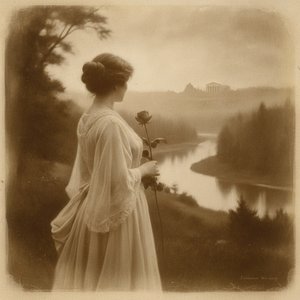
Explore the profound history of Pictorialism, the revolutionary movement that elevated photography to a fine art. Uncover how visionaries used painterly techniques and soft focus to transcend mere documentation, imbuing the lens with the emotional depth of classical masterpieces.
 Megtekintés
 Küldés
 Megosztás
 Részletek
 Útmutató

 Letöltés
 Hasonló darabok
 X-ray felvétel
 Diavetítés
 Kérdések és válaszok
 Statisztika


 Összes részlet megjelenítése









 Az üvegkeretes opció csak 110 cm alatti méretben érhető el


