 Oil On CanvasWallArtSurrealism
 1947Modern
 53.0 x 66.0 cm
Vásároljon nagy felbontású, javított digitális képet, amely minőségében messze felülmúlja az online előnézetet.
Minden fájlt szakembereink a legmodernebb eszközök és precíz, kézi retusálás segítségével készítenek el aprólékosan. Gondoskodunk arról, hogy minden kép kivételes tisztasággal, pontos színhelyességgel és részletgazdag finomsággal rendelkezzen.
A végleges fájl 72 órán belül e-mailben megérkezik, professzionális, szerkesztői és nyomtatási környezetbe optimalizálva az azonnali használathoz. Ez ugyanaz a minőség, amelyben a legmeghatározóbb tervezőstúdiók, kiadók és galériák is megbízhatnak.
Töltsön le nagy felbontású fájlt személyes kiállításokhoz, nyomtatáshoz és kreatív projektekhez. ( Nyomat rendelése Kézzel festett másolat rendelése)
Amikor a WahooArt.com szolgáltatást választja, nem csupán egy képet kap – professzionálisan felmagasított digitális műalkotást kap, amely precizitással készült, és amelyet megelégsedési gwarancia tesz biztoslássá. Az alábbiakban automatikusan minden benne 】

A nagy felbontású digitális képmásolatát a megrendelést követő 72 órán belül e-mailben elküldjük Önnek – azonnal használható formátumban.

Műve professzionális módon kerül optimalizálásra fejlett mesterséges intelligencia eszközök és manuális szerkesztés segítségével, biztosítva a maximális részletességet, tisztaságot és színpontosságot.

Véletlenül törölted vagy elvesztetted a fájlodat? Ne aggódj – bármikor ingyen újra megküldjük neked.

Élvezze műalkotásait azonnal, vám, illeték vagy szállítási költség nélkül – a digitális letöltések mindig adamentesek.

Professzionális eszközök és színkezelés segítségével garantáljuk, hogy digitális képe a lehető legpontosabban tükrözze az eredeti színeket.

Ha nemມີ elégedett a digitális képpel, 100 napon belül átmunkáljuk azt, vagy 100% visszatérítjük az amountot – kérdés nélkül.

Nem érheted el a teljes elégedettséget? 100 napon belül teljes visszatérítést kapsz a digitális fájlod megérkezése után – kérdés nélkül.

Vásároljon 3 képet, spóroljon 10%-et - Vásároljon 5-öt, spóroljon 15%-et - Vásároljon 10+ képet, spóroljon 20%-at. Kiváló kreatív projektekhez, galériákhoz és ügynökségekhez.
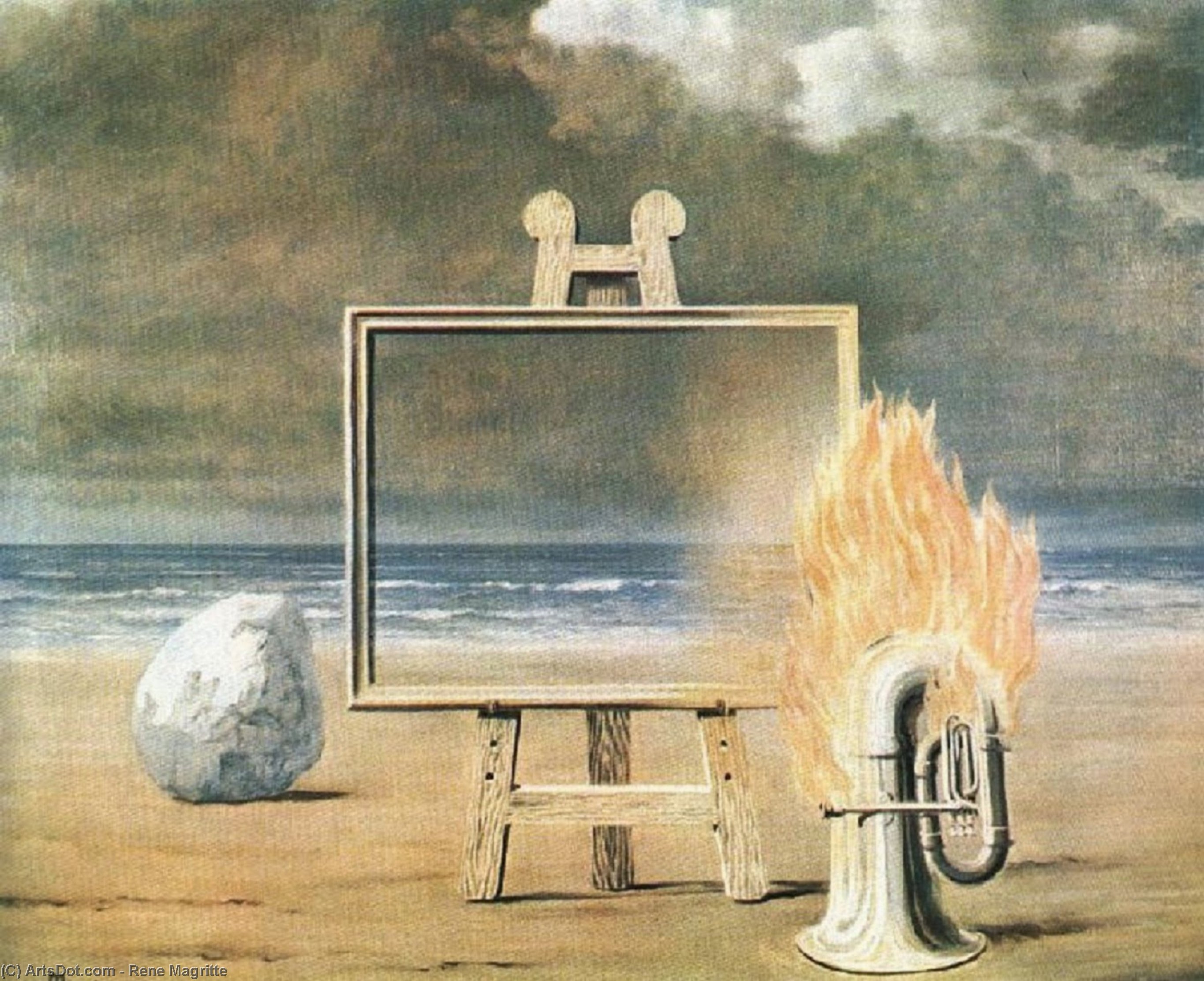
In the realm of Surrealism, few works possess the haunting, quiet gravity found in René Magritte’s 1947 masterpiece, The Fair Captive. At first glance, the viewer is presented with a meticulously rendered beach landscape, yet the scene is far from tranquil. A large, ornate picture frame dominates the foreground, standing seemingly unsupported and, most provocatively, entirely empty. This deliberate void creates an immediate psychological tension, pulling the observer away from the horizon and forcing a confrontation with the frame itself. To the left, a substantial stone rests heavily upon the sand, providing a grounded, tactile contrast to the ethereal, rolling waves that move toward the shore under a heavy, overcast sky. It is a composition designed to unsettle, where the familiar elements of nature are rearranged into a profound visual paradox.
The technical execution of this work exemplifies Magritte’s mature mastery of the oil medium. Eschewing the frantic energy of more expressive movements, Magritte employs a precise, almost hyper-realistic draftsmanship that lends an air of undeniable reality to his illogical subject matter. Every texture is rendered with remarkable fidelity—the weathered grain of the wooden frame, the cold smoothness of the stone, and the subtle, rhythmic undulations of the seawater. This smooth, polished technique serves a specific purpose: by presenting the impossible with such clarity and photographic stillness, Magritte bridges the gap between the waking world and the subconscious, making the dream feel disturbingly tangible.
Beyond its striking visual presence, The Fair Captive serves as a profound meditation on the limitations of art and perception. The empty frame is perhaps the most potent symbol within the piece; it represents an absence of representation, a window that refuses to show us a world, but instead highlights the boundary between what is seen and what is imagined. It suggests that reality cannot be truly captured or contained by mere borders. The title itself introduces a layer of psychological intrigue—does the "captive" refer to the viewer, trapped within their own conventional perceptions, or does it speak to the way we attempt to imprison truth within the confines of a canvas?
For the discerning collector or interior designer, this painting offers more than just aesthetic beauty; it provides a conversational centerpiece that invites deep contemplation. The somber, diffused lighting and the muted, earthy palette create an atmosphere of quiet mystery that can anchor a sophisticated space. Whether placed in a minimalist gallery setting or a richly textured study, the work’s ability to provoke thought makes it a timeless addition to any collection. It is a piece that does not merely decorate a wall but transforms the very energy of a room, offering a window into the enigmatic soul of one of the twentieth century's most influential visionaries.


1898 - 1967 , Belgium

 Megtekintés
 Küldés
 Megosztás
 Részletek

 Letöltés
 Hasonló darabok
 X-ray felvétel
 Diavetítés
 Összes részlet megjelenítése