Megtekintés AR előnézet Kézzel festett másolat rendelése Áttérés digitális képre Küldés
Részletek Útmutató Kedvencekhez ad Letöltés Hasonló darabok X-ray felvétel Diavetítés Kérdések és válaszok Letöltés Statisztika

Untitled (D2X65E)

Méretek
79.0 x 66.0 cm

Authentic Petrus Christus painting reproduction – ‘The Lamentation’ (c. 1450). Northern Renaissance masterpiece. Hand-painted replicas available in various sizes. Invest in art history.

Fedezze fel Petrus Christust, a lineáris perspektíva és a precíz olajfestési technika úttörő flamandi festőjét. Ismerje meg befolyásos műveit és örökségét Brugében.

Giclée / Műnyomat

Múzeumi minőségű giclée vagy vászonnyomat, gyors gyártással és rugalmas finomítási lehetőségekkel. ( Kézzel festett másolat rendelése Áttérés digitális képre)

Corner sample of the P118B picture frame: formázott polisztirol, 5 cm wide and 3 cm thick
P118B Ft10
Corner sample of the P118H picture frame: formázott polisztirol, 5 cm wide and 3 cm thick
P118H Ft10
Corner sample of the P118W picture frame: formázott polisztirol, 5 cm wide and 3 cm thick
P118W Ft10
Corner sample of the P438Z picture frame: formázott polisztirol, 5.5 cm wide and 3.5 cm thick
P438Z Ft10
Corner sample of the P508JH picture frame: formázott polisztirol, 7 cm wide and 3.5 cm thick
P508JH Ft12
Corner sample of the P508YH picture frame: formázott polisztirol, 7 cm wide and 3.5 cm thick
P508YH Ft12
Corner sample of the P805H picture frame: formázott polisztirol, 5 cm wide and 3.5 cm thick
P805H Ft10
Corner sample of the P805Z picture frame: formázott polisztirol, 5 cm wide and 3.5 cm thick
P805Z Ft10
Corner sample of the P919BZ picture frame: formázott polisztirol, 7 cm wide and 3.5 cm thick
P919BZ Ft10
Corner sample of the P919G picture frame: formázott polisztirol, 7 cm wide and 3.5 cm thick
P919G Ft10
Corner sample of the P919XJ picture frame: formázott polisztirol, 7 cm wide and 3.5 cm thick
P919XJ Ft10
Corner sample of the P959ZH picture frame: formázott polisztirol, 5 cm wide and 3 cm thick
P959ZH Ft10
Corner sample of the P968JZ picture frame: formázott polisztirol, 6 cm wide and 4 cm thick
P968JZ Ft12
Corner sample of the W106C picture frame: tömörfa, 5 cm wide and 3 cm thick
W106C Ft8
Corner sample of the W218G picture frame: tömörfa, 5 cm wide and 3 cm thick
W218G Ft10
Corner sample of the W218JH picture frame: tömörfa, 5 cm wide and 3 cm thick
W218JH Ft8
Corner sample of the W218Y picture frame: tömörfa, 5 cm wide and 3 cm thick
W218Y Ft10
Corner sample of the W307PJ picture frame: tömörfa, 6 cm wide and 3 cm thick
W307PJ Ft10
Corner sample of the W316G picture frame: tömörfa, 6 cm wide and 3 cm thick
W316G Ft10
Corner sample of the W316PJ picture frame: tömörfa, 6 cm wide and 3 cm thick
W316PJ Ft8
Corner sample of the W316Y picture frame: tömörfa, 6 cm wide and 3 cm thick
W316Y Ft10
Corner sample of the W398PJ picture frame: tömörfa, 5 cm wide and 3 cm thick
W398PJ Ft8
Corner sample of the W4111J picture frame: tömörfa, 6.5 cm wide and 3.5 cm thick
W4111J Ft10
Corner sample of the W500HY picture frame: tömörfa, 7 cm wide and 5 cm thick
W500HY Ft15
Corner sample of the W500JH picture frame: tömörfa, 7 cm wide and 5 cm thick
W500JH Ft15
Corner sample of the W692G picture frame: tömörfa, 8 cm wide and 4 cm thick
W692G Ft12
Corner sample of the W849H picture frame: tömörfa, 5 cm wide and 3 cm thick
W849H Ft8
Corner sample of the W940BG picture frame: tömörfa, 7.5 cm wide and 4.5 cm thick
W940BG Ft15
Corner sample of the W953PJ picture frame: tömörfa, 6 cm wide and 3.5 cm thick
W953PJ Ft8

Standard méret
egyedi méretű
CM
INCH

Válasszon előre meghatározott méreteink közül, amelyek megfelelnek a műalkotás eredeti arányainak.

szélesség
magasság

Írja be a keretének vagy a falának megfelelő szélességet és magasságot. A nyomatot csak le lehet vágni, soha nem tehető nagyobbá, mint az eredeti kép, így egy eltérő alakú méretnél a kép egy része elveszik. Mielőtt bármit kinyatintanánk, küldünk egy digitális próbamodellt jóváhagyásra. Az oldalon látható kép nem tartalmazza a valós levágást — ezt csak a próbamodell mutatja meg.

Világszerte történő kiszállítás területére mindössze 2 hét alatt, a szokásos 4-5 hét helyett. (9 november)

Ingyenes globális expressz szállítás
Prémium minőségű len vászon
Teljes körű szállítási biztosítás
Vámvisszatérítési Garancia
Hiteles színarányosság garancia
100 napos visszaküldési lehetőség (csak hibás termékek esetén)
100% pénzvisszatérítési garancia
Több darab vásárlásakor kedvezmény

Összesített ár

Ft 22502

Untitled (D2X65E)

Giclée / Műnyomat

Reprodukció mérete

-

Összesített ár

Ft 22502

Gyors információk

  • Location: WahooArt.com
  • Influences:
    • Van Eyck
    • Rogier van der Weyden
  • Movement: Northern Renaissance
  • Year: 1445
  • Artistic style: Linear perspective, meticulous
  • Medium: Oil on panel

Művészeti kvíz

Minden kérdésre csak egy helyes válasz létezik.

Kérdés 1:
What is the primary subject depicted in Petrus Christus’s ‘Untitled (D2X65E)’?
Kérdés 2:
The painting ‘Untitled (D2X65E)’ is considered an example of which artistic movement?
Kérdés 3:
According to the provided text, what is a key innovation demonstrated in ‘Untitled (D2X65E)’?
Kérdés 4:
What material is the painting ‘Untitled (D2X65E)’ executed on?
Kérdés 5:
Petrus Christus was active in which city during a significant period of his career?

Petrus Christus’s “Head of Christ (Ecce Homo)” – A Window into Early Renaissance Devotion

The image before us—Petrus Christus’s “Head of Christ (Ecce Homo),” painted circa 1445—isn't merely a portrait; it’s a profound meditation on sacrifice, suffering, and the very essence of Christian faith. Often considered a precursor to the more fully realized depictions of Christ’s Passion that would emerge later in the Renaissance, this intimate panel offers a remarkably direct and emotionally resonant experience for the viewer. It’s a work born from a specific historical context—the burgeoning influence of oil painting in Bruges, a city rapidly becoming a center for artistic innovation—and imbued with a deeply personal devotional purpose.

The genesis of this piece is fascinating. Tradition holds that it was created as a copy of a lost “Holy Face” image by Jan van Eyck, the master who had tragically died just three years before Christus began his career. This foundational image—a depiction of Christ’s face after the crucifixion—was believed to possess miraculous powers and was frequently used in private prayer. Christus's version retains the core elements of this prototype: the stark realism of Christ’s features, the visible wounds inflicted during his ordeal, and the solemnity of his gaze. However, Christus subtly transforms the image, imbuing it with a palpable sense of anguish and vulnerability that transcends mere replication.

A Masterclass in Oil Technique and Linear Perspective

Christus’s skill as a painter is immediately apparent in the meticulous detail he applies to every aspect of the work. The oil paint, relatively new to Northern European art at this time, allows for an unprecedented level of luminosity and depth—a far cry from the tempera paints favored by earlier artists. Notice how the light catches on Christ’s brow, highlighting the lines etched by pain, and how the folds of his garment subtly suggest texture and volume. This isn't a flat, idealized representation; it’s a remarkably lifelike portrayal of human suffering.

Crucially, Christus employs a technique known as “linear perspective,” a revolutionary approach to depicting space that he likely learned from Italian artists who were increasingly influencing the Northern Renaissance. The framing device—a meticulously rendered architectural setting—creates an illusion of depth, drawing the viewer’s eye directly to Christ's face and intensifying the emotional impact of the image. This innovative use of perspective was groundbreaking for its time, demonstrating Christus’s forward-thinking approach to artistic representation.

Symbolism and Emotional Resonance

Beyond the technical mastery, “Head of Christ (Ecce Homo)” is rich in symbolic meaning. The crown of thorns, a potent symbol of suffering and sacrifice, dominates the composition, immediately conveying the gravity of Christ’s fate. The drops of blood streaming down his face are not merely depictions of physical wounds; they represent the shedding of his blood for humanity's sins—a central tenet of Christian theology. Christ’s furrowed brow and downward gaze communicate a profound sense of sorrow and resignation, inviting contemplation on themes of redemption and forgiveness.

The choice to depict only Christ’s head—a cropped portrait—further intensifies the emotional impact. It forces the viewer to confront the image directly, fostering a sense of intimacy and personal connection with the subject. This was likely intended for private devotion, a silent prayer offered in contemplation of Christ's sacrifice.

A Timeless Testament to Faith

“Head of Christ (Ecce Homo)” is more than just a beautiful painting; it’s a powerful testament to the enduring themes of faith, suffering, and redemption. Christus’s masterful technique, combined with his profound understanding of symbolism and emotional resonance, creates an image that continues to move viewers centuries after its creation. It stands as a pivotal work in the development of Northern Renaissance art—a window into the spiritual world of 15th-century Bruges and a timeless reminder of the sacrifice at the heart of Christian belief.

Kérdések és válaszok

Mit ábrázol a „Untitled (D2X65E)”, Petrus Christus alkotása?

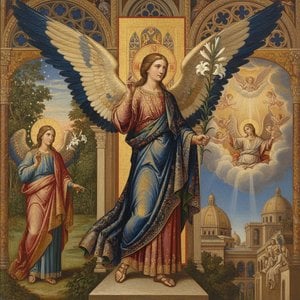
„Untitled (D2X65E)”, Petrus Christus alkotása a következőket ábrázolja: mary and angel gabriel, religious scene artwork, medieval european art, brick wall composition, devotional painting style, renaissance religious art, angel figure depiction.

Hogyan tekinthetném meg a(t) „Untitled (D2X65E)”, Petrus Christus alkotása diaváltogatás formájában?

A „Untitled (D2X65E)”, Petrus Christus alkotása diaporámaként tekinthető a mű Diaváltás oldalán.

Hol találhatók statisztikák a(z) „Untitled (D2X65E)”, Petrus Christus alkotása kapcsán?

A „Untitled (D2X65E)”, Petrus Christus alkotása statisztikái a mű Statisztikák oldalán érhetőek el: a mű havi látogatottsága, a művész alkotásainak megtekintése, valamint a legutóbbi látogatók országos és nyelvi lebontása.


A művész életrajza

Brügge mestere: Petrus Christus élete és művészete

Petrus Christus neve talán kevésbé ismert, mint kortársai, Jan van Eyck vagy Rogier van der Weyden, azonban alapvető szerepet játszott az early Netherlandish – a korai flamando – festészet fejlődésében. Az 1465 körül, Baarle-Hertog kis hercegségében született, amely Belgium és Hollandia határán húzódik, Christus olyan művészként emelkedett ki, aki Brugge egyik vezető alakja lett a példátlan művészi innovációk korában. Bár életrajzi részletei ritkák – ami a kor számos festőjének gyakori sorsa –, megmaradt alkotásai bőségesen beszélnek technikai tudásáról, intellektuális kíváncsiságáról, valamint a vallási szimbolika és az olajfestékes technika feltörekvő lehetőségeinek mély ismeretéről. Ő nem csupán Van Eyck nyomában járó követő volt; egy olyan innovátor, aki finoman, mégis jelentősen meghosszabbította a realizmus és a perspektíva határait, maradandót hagyva a 15. század művészeti tájára.

Korai pályafutás és művészi alapok

Christus elsőként az 1444-es történelmi feljegyzésekben bukkan fel Brugge mesterfestőjeként, ami arra utal, hogy alapos megtanítást végzett végig – bár tanárának kilétét nem ismerhetjük. Ami azonban egyértelmű, az az, hogy gyorsan sikerült helyet szereznie a város virágzó művészeti közösségében. Jan van Eyck 1441-es halála után Christus egy üreget töltött be, és Brugge egyik legkeresettebb művésze lett. Korai munkái Van Eyck technikáinak éles érzéset mutatnak: a precíz részletgazdagságot, az olajfesték fényűző minőségét és az egyszerűnek tűnő tárgyakba ágyazott szimbolikus gazdagságot. Azonban nem csupán előzakolatját másolta. Christus saját stílusát kezdte kifejleszteni, amelyet a tisztább formák, az építészeti környezet hangsúlyosabb szerepe és a lineáris perspektíva egyre kifinomultabb alkalmazása jellemezett. Rogier van der Weyden hatásait is befogadta, különösen az érzelmi mélység és a spirituális intenzitás közvetítésében.

Innovációk a perspektívában és a realizmusban

Christus legjelentősebb hozzájárgulása a lineáris perspektíva mesteri alkalmazásában rejlik. Míg Van Eyck már alkalmazott egyfajta térbeli visszahúzódást műveiben, Christus továbbment erre, olyan festményeket alkotva, amelyek rendkívül meggyőző érzetet keltettek a mélységről és a háromdimenziós ábrázolásról. Ez különösen jól látható olyan alkotásokban, mint az Szűz Mária a Gyermekkel, amely ma a National Gallery gyűjteményében található, ahol az építészeti háttér matematikai pontossággal távolodik el a távolba. Ő nem csupán valószerű terek létrehozására törekedett; a perspektívát arra használta, hogy a nézőt bevonja a jelenetbe, intimebb kapcsolatot teremtve az ábrázolt témával. Ez nem csupán technikai feladat volt; ez növelte a festmény spirituális hatását, meghívva a nézőt a kontemplációra és az imádságra. Aprólékos technikája – az olajfesték vékony rétegeinek egymásra felvitele a páratlan fényesség és részletesség elérése érdekében – tovább fokozta a realizmus érzetét. Minden textúra, a szövetek ráncolódásától kezdve a fém csillogásáig, megdöbbentő pontossággal jelenik meg.

Főbb alkotások és szimbolikus nyelv

A Szűz Mária a Gyermekkel mellett Christus számos más jelentős alkotást is készített, amelyek bemutatják művészi tudását és intellektuális mélységét. A Portré egy fiatalemberről, amely jelenleg a Museo Thyssen-Bornemisza gyűjteményében található, különösen lenyűgöző példája az emberi karakter megfogásának képességének. A portrétлülő tekintete közvetlen és magával ragadó, intelligenciát és önismeretet sugallva. A festmény Christus finom szimbolikus használatát is felfedi: az egyetlen égig égő gyertya Krisztust jelentehetike a világ fényeként, míg az ablakpárkányon lévő narancs a tisztaságra és erényességre utalhat. Gyakran alkalmazott ilyen szimbolikus elemeket festményeiben, gazdagítva azok jelentését a tiszta vizualitáson túlmutató mélységben. Egy másik fontos alkotása az Új ultimately, egy összetett kompozíció, amely demonstrates képességét a számos alak dinamikus térbe való ábrázolására.

Örökség és történelmi jelentőség

Petrus Christus 1476-ban halt meg Brugge városában, hagyva magára viszonylag kicsi, de mélyen befolyásos művészi örökséget. A lineáris perspektíva és a precíz technika iránti innovációinak tartós hatása volt a későbbi festőgenerációkra. Bár nem alapított hatalmas műhelyt és nem vonzott rengeteg követőt, stílusát a régió más művészei befogták, hozzájárulva aÉszak-Reneszánsz festészet szélesebb körű fejlődéséhez. Áthidalta a szakadékot az International Gothic stílus és a 15. századi természetközeli tendenciák között, utat nyitva olyan művészek előtt, mint Hans Memling vagy Hugo van der Goes. Ma Petrus Christus az early Netherlandish művészet kulcsfontosságú alakjaként ismert – egy mesteri kézműves, akinek festményei szépségükkel, realizmusukkal és intellektuális mélységükkel ma is lenyűgözik a nézőket. Művészete egy egyedülálló ablak a 15. századi Brugge művészeti és vallási világába, emlékeztet minket a festészet erejére, amely képes tükrözni és alakítani is a valóságértelmészetünket.
Petrus Christus

Petrus Christus

1465 - 1476 , Belgium

Rövid információk

  • Artistic Movement Or Style: Kora-netherlandikus művészet
  • Artists Or Movements Influenced By This Artist:
    • Jan van Eyck
    • Rogier van der Weyden
  • Artists Who Influenced This Artist:
    • Jan van Eyck
    • Rogier van der Weyden
  • Date Of Birth: 1465
  • Date Of Death: 1476
  • Full Name: Petrus Christus
  • Nationality: Belga
  • Notable Artworks:
    • Szűz Mária a Gyermekkel
    • Fiatal férfi portréja
  • Place Of Birth: Baarle-Hertog, Belgium