MegtekintésMegtekintés Műalkotás AR előnézeteMűalkotás AR előnézete Kézzel festett másolat rendelése Kézzel festett másolat rendeléseSwitch to Digital Image Switch to Digital Image KüldésKüldés
RészletekRészletek Kedvencekhez ad Kedvencekhez ad LetöltésLetöltés Hasonló darabokHasonló darabok X-ray felvételX-ray felvétel DiavetítésDiavetítés StatsStats

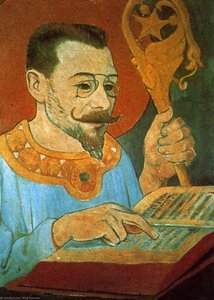
The Corydon shepherd

Discover "The Corydon Shepherd" by Paul Sérusier! A stunning Post-Impressionist landscape featuring a vibrant orange tree & rural charm. Explore this iconic artwork's unique style & timeless appeal.

Paul Sérusier (1864-1927) francia festő, a Nabis csoport egyik alapítója és a modern művészet úgymeg kezdeteinek meghatározó alakja. Cloisonnism stílusával, a tájak és figurák expresszív ábrázolásával jelent meg, inspirálva ezzel a tömegét.

Giclée / Műnyomat

Múzeumi minőségű giclée vagy vászonnyomat, gyors gyártással és rugalmas finomítási lehetőségekkel. (Kézzel festett másolat rendelése Kézzel festett másolat rendeléseSwitch to Digital Image Switch to Digital Image)

P118B $10
P118H $10
P118W $10
P438Z $10
P508JH $12
P508YH $12
P805H $10
P805Z $10
P919BZ $10
P919G $10
P919XJ $10
P959ZH $10
P968JZ $12
W106C $8
W218G $10
W218JH $8
W218Y $10
W307PJ $10
W316G $10
W316PJ $8
W316Y $10
W398PJ $8
W4111J $10
W500HY $15
W500JH $15
W692G $12
W849H $8
W940BG $15
W953PJ $8

Standard méret
egyedi méretű
CM
INCH

Válasszon előre meghatározott méreteink közül, amelyek megfelelnek a műalkotás eredeti arányainak.

szélesség
magasság

Megadhat saját méreteket is egy konkrét kerethez vagy helyszínhez igazítva. Amennyiben a kiválasztott méret nem egyezik az eredeti kép arányokkal, a műalkotást le fogjuk vágni, vagy kiegészítjük a képet tükrözött vagy egyszínű szélekkel. A gyártás megkezdése előtt egy digitális tervezetet küldünk jóváhagyásra.
Kérjük, vegye figyelembe, hogy a képernyőn látható előnézet nem tükrözi a tényleges levágást vagy kiegészítést. Csak a tervezet mutatja pontosan a végső kompozíciót.
Bár az egyedi méretek is elérhetőek, az eredeti arányok megőrzése érdekében azt javasoljuk, hogy válasszon a előre meghatározott listából származó méretet.

Világszerte történő kiszállítás területére mindössze 2 hét alatt, a szokásos 4-5 hét helyett. (7 szeptember)

why_choose_icon
Ingyenes globális expressz szállítás
why_choose_icon
Prémium minőségű len vászon
why_choose_icon
Teljes körű szállítási biztosítás
why_choose_icon
Vámvisszatérítési Garancia
why_choose_icon
Hiteles színpontosság garancia
why_choose_icon
100 napos visszaküldési lehetőség (csak hibás termékek esetén)
why_choose_icon
100% pénzvisszatérítési garancia
why_choose_icon
Több darab vásárlása esetén kedvezmény

Összesített ár

$ 68

reproduction

The Corydon shepherd

Giclée / Műnyomat

Reprodukció mérete

-

Összesített ár

$ 68

Gyors információk

  • Location: Private Collection
  • Notable elements or techniques: Cloisonnism, Impasto
  • Title: The Corydon Shepherd
  • Artistic style: Symbolic
  • Artist: Paul Sérusier
  • Subject or theme: Rural life, Pastoral
  • Movement: Post-Impressionism

Művészeti kvíz

Minden kérdésre csak egy helyes válasz létezik.

Kérdés 1:
What artistic movement is Paul Sérusier primarily associated with?
Kérdés 2:
The painting 'The Corydon Shepherd' prominently features what visual element?
Kérdés 3:
What technique is Sérusier known for employing in his artwork?
Kérdés 4:
In what year was 'The Corydon Shepherd' created?
Kérdés 5:
What is a key characteristic of the painting’s mood and atmosphere?

The Corydon Shepherd - Paul Sérusier: A Pioneer of Breton Impressionism

Paul Sérusier’s “The Corydon Shepherd,” painted in 1888, stands as a cornerstone of Breton Impressionism and arguably the genesis of the influential Nabis movement. Created during his formative years alongside Paul Gauguin at Pont-Aven, this artwork transcends mere depiction; it embodies a profound exploration of landscape and spirituality, reflecting the burgeoning artistic currents challenging traditional academic conventions.

  • Subject Matter: The painting captures a tranquil rural scene featuring a shepherd guiding cattle across a grassy meadow. This idyllic portrayal harkens back to pastoral traditions while simultaneously rejecting detailed realism in favor of capturing mood and atmosphere—a hallmark of Impressionist philosophy.
  • Style & Technique: Sérusier’s masterful use of cloisonnism – a technique pioneered by Gauguin – distinguishes “The Corydon Shepherd.” Cloisonnism involves applying pigment onto raised surfaces separated by thin lines, creating a mosaic-like effect that prioritizes color and form over meticulous shading. Thick impasto brushstrokes dominate the composition, particularly on the foliage and tree trunk, lending textural richness and dynamism to the canvas.
  • Historical Context: Pont-Aven served as a crucible for artistic experimentation during the Belle Époque, attracting artists eager to forge new paths beyond Impressionism’s limitations. Sérusier's collaboration with Gauguin profoundly shaped his aesthetic sensibilities, establishing him as a key figure in challenging established norms and advocating for expressive abstraction.
  • Symbolism: The prominent orange tree serves as a central visual element and carries symbolic weight. Traditionally associated with fertility and vitality, it represents the regenerative power of nature—a theme prevalent throughout Breton landscape art. Its bold color contrasts sharply with the muted tones of the figures, emphasizing their insignificance against the grandeur of the natural world.
  • Emotional Impact: “The Corydon Shepherd” evokes a contemplative mood characterized by serenity and melancholy. The subdued lighting contributes to an atmosphere of quiet introspection, inviting viewers to contemplate the beauty and fragility of rural life—a sentiment deeply rooted in Breton folklore and artistic tradition.

Further research into Sérusier’s work reveals his unwavering dedication to capturing the essence of Breton landscape through innovative techniques and a profound engagement with spiritual contemplation. His influence extended beyond Pont-Aven, inspiring subsequent generations of artists who embraced abstraction and championed expressive color palettes—solidifying his legacy as one of the most significant figures in the development of modern art.

Useful Links: The Corydon Shepherd - Paul Sérusier — Google Arts & Culture

Artist Database: Paul Sérusier

Wikipedia Search: Paul Sérusier


A művész életrajza

Early Life and Artistic Beginnings

Paul Sérusier, a pivotal figure in the development of modern art, was born on November 9th, 1864, in the heart of Paris. His upbringing within a prosperous middle-class family provided him with an exceptional education, beginning at the Lycée Fontane – later known as Lycée Condorcet – where he immersed himself in classical philosophy, Greek and Latin studies, and the sciences. This rigorous foundation laid the groundwork for his future artistic explorations. Notably, Sérusier’s classmates included fellow artists who would profoundly influence his trajectory, including Maurice Denis, Édouard Vuillard, and Ker-Xavier Roussel. His father, a successful businessman involved in the perfume industry, ensured that Paul received an upbringing conducive to pursuing his passions, recognizing his innate talent and desire for artistic expression. This familial support allowed Sérusier to dedicate himself fully to his burgeoning career as a painter, free from the constraints of immediate financial concerns.

The Pont-Aven Years: Gauguin’s Influence and Cloisonnism

Sérusier's artistic journey truly took shape during the summer of 1888 when he traveled to Pont-Aven in Brittany. This picturesque coastal village became a vibrant hub for artists seeking inspiration and camaraderie, drawing figures like Paul Gauguin, Emile Bernard, and many others. It was within this environment that Sérusier encountered Gauguin, whose artistic philosophy and techniques exerted a powerful influence on the young painter. Gauguin encouraged Sérusier to break free from traditional academic painting practices, urging him to embrace pure colors, simplified forms, and a more intuitive approach to representation. This guidance culminated in the creation of *Bois d’Amour* (1888), a seminal work that exemplifies Sérusier's pioneering use of cloisonnism – a technique characterized by bold, flat shapes delineated by dark outlines, creating an almost mosaic-like effect. This innovative approach marked a significant departure from conventional painting methods and foreshadowed the development of abstract art.

The Nabis Movement: Synthesis and Symbolism

Building upon his experiences at Pont-Aven, Sérusier became a key figure in the formation of the *Nabis* (meaning “prophet”) group – a collective of artists united by their desire to synthesize diverse artistic influences. Alongside Paul Gauguin, Maurice Denis, Pierre Bonnard, and Édouard Vuillard, the Nabis sought to create a new visual language that blended elements of Post-Impressionism, Symbolism, and even hints of Japanese aesthetics. The group met regularly at Ranson’s studio in Paris, engaging in spirited discussions about art, philosophy, and spirituality. Sérusier's work during this period reflected the Nabis’ emphasis on subjective experience, emotional expression, and a rejection of purely representational painting. He explored themes of melancholy, solitude, and the beauty of the natural world, often employing muted colors and evocative compositions to convey his inner state.

Notable Works and Lasting Legacy

Throughout his career, Sérusier produced a remarkable body of work that continues to captivate viewers today. Key pieces include *L’Averse* (1893), a poignant depiction of a rainy day in Paris, which showcases his mastery of color and composition; the portrait of Paul Ranson (1890), offering a glimpse into the artist's personality; and *The Snake Eaters* (1894), a striking image that reflects the group’s interest in symbolism and mythology. Later in life, Sérusier taught at the École Ranson, further disseminating his artistic ideas and mentoring a new generation of artists. He also published “ABC de la peinture” in 1921, a seminal work exploring the fundamentals of painting. Paul Sérusier passed away on October 7th, 1927, in Morlaix, leaving behind a legacy as one of the most influential figures in the transition from Impressionism to modern art. His pioneering use of abstraction and his contributions to the Nabis movement continue to inspire artists today.

Paul Sérusier

Paul Sérusier

1864 - 1927 , Franciaország

A művészről röviden

  • Artistic Movement Or Style: Post-Impressionista
  • Artists Or Movements Influenced By This Artist:
    • Les Nabis
    • Synthetizmus
  • Artists Who Influenced This Artist:
    • Paul Gauguin
    • Maurice Denis
  • Date Of Birth: November 9, 1864
  • Date Of Death: October 7, 1927
  • Full Name: Louis-Paul-Henri Sérusier
  • Nationality: Francia
  • Notable Artworks:
    • A Talisman
    • L'averse
    • Melancholy
  • Place Of Birth: Párizs, Franciaország
Fedezze fel a műalkotásokat témák, stílusok és jellemzők szerint csoportosítva.