


Kézzel festett olajvastú vászon, az Ön által választott méretben és keretben, művészeink készítik meglévőre. ( Nyomat rendelése Kép letöltése)





























Válasszon előre meghatározott méreteink közül, amelyek megfelelnek a műalkotás eredeti arányainak.

Ön megadhat saját méreteket egy adott kerethez vagy térhez igazításhoz. Ha a kiválasztott méret nem egyezik az eredeti kép arányával, akkor a műalkotást levágjuk, vagy további kézzel festett elemekkel meghosszabbítjuk a festményt. A gyártás megkezdése előtt küldünk Önnek egy digitális előnézetet jóváhagyásra.
Kérjük, vegye figyelembe, hogy a képernyőn megjelenő előnézet nem tükrözi a tényleges vágást vagy kiterjesztést. Csak az előnézet fog pontosan mutatni a végső kompozíciót.
Bár egyedi méretek állnak rendelkezésre, javasoljuk, hogy válasszon egy méretet az előre meghatározott listából az eredeti arányok megőrzése érdekében.
Világszerte elérhető szállítás () 3-4 hét alatt a szokásos 5 hét helyett. (6 szeptember). A minőség nem kérdőjelezhető.


Apollo and Muses
Reprodukció mérete
In the hallowed halls of art history, few works capture the intersection of divine intellect and earthly beauty as profoundly as Nicolas Poussin’s Apollo and Muses. Created during the artist's transformative Roman period between 1642 and 1645, this masterpiece serves as a breathtaking window into the High Renaissance’s enduring legacy. The canvas presents us with an idyllic, sun-drenched park where Apollo, the radiant god of music, light, and prophecy, presides over the nine Muses. This is not merely a pastoral scene; it is a meticulously orchestrated symphony of figures engaged in the sacred exchange of ideas. As the Muses converse, their gestures and expressions weave a tapestry of creative energy, suggesting that art is a living, breathing dialogue between the soul and the cosmos.
The composition is anchored by a profound philosophical depth, drawing heavily from Platonic ideals. Poussin invites the viewer to look beyond the surface of the lush landscape to find an allegory of enlightenment. While the Muses represent the various branches of human knowledge and artistic endeavor, Apollo’s upward gaze directs our attention toward the heavens, symbolizing the eternal pursuit of cosmic truth. The presence of a small child nestled within the scene adds a layer of poignant symbolism, representing the purity of innocence and the untapped potential of new ideas. Even a solitary book resting near the group serves as a quiet testament to the importance of literacy and recorded wisdom in the cultivation of the human spirit.
Technically, Apollo and Muses stands as a triumph of Poussin’s unique brand of Baroque refinement. Eschewing the aggressive, shadow-heavy chiaroscity often associated with his contemporary Caravaggio, Poussin instead employs a sophisticated use of sfumato. This subtle gradation of light softens the edges of the figures, bathing the entire assembly in an ethereal, luminous glow that feels both tangible and dreamlike. His brushwork is characterized by a disciplined precision inherited from the masters Raphael and Michelangelo, ensuring that every fold of drapery and every leaf in the background contributes to a sense of structural clarity and monumental stability.
For the discerning collector or interior designer, this painting offers more than just visual splendor; it provides an emotional anchor for any sophisticated space. The painting’s palette—a harmonious blend of soft earth tones and celestial light—creates an atmosphere of tranquility and intellectual repose. It is a piece that commands attention through its quiet dignity rather than through loud spectacle. Whether placed in a grand library, a formal salon, or a contemporary study, a high-quality reproduction of this work brings with it an aura of classical sophistication, inviting guests to pause, reflect, and lose themselves in the timeless dance of myth and meaning.


1594 - 1665 , Franciaország

Embark on a sophisticated journey through the eternal allure of mythological art. Discover how master painters breathe life into ancient legends, from Greek deities to Baroque masterpieces, and learn to curate these timeless narratives within your own exquisite art collection.
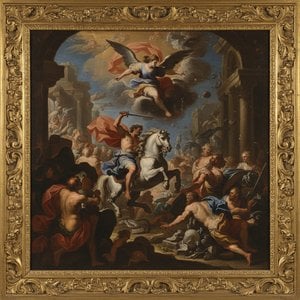
Explore the breathtaking power of Baroque art. Delve into the dramatic interplay of light, shadow, and motion through the works of masters like Caravaggio. Discover how the era's intense emotional realism continues to inspire collectors and connoisseurs of classical grandeur.

 Megtekintés
 Küldés
 Megosztás
 Részletek

 Letöltés
 Hasonló darabok
 X-ray felvétel
 Diavetítés

 Összes részlet megjelenítése







 Az üvegkeretes opció csak 110 cm alatti méretben érhető el


