

Az ezen az oldalon megjelenített műalkotások szerzői jogi védelem alatt állnak, ami azt jelenti, hogy törvényileg nem készíthetünk és nem adhatunk el belőlük pontos másolatokat. Ez a védelem olyan nemzetközi megállapodások alapján érvényesül, mint például a Berni Egyezmény és a nemzeti jogszabályok által, beleértve azokat is, amelyeket meghatározott Az USA szerzői jogi törvénye – 17. cím.
Ez a módszer teljes mértékben megfelel a szerzői jogi szabályozásnak, mivel nem tartalmazza a védett műalkotás másolását vagy duplikálását. Ehelyett ez egy kreatív újinterpretáció – egy új festmény, amely az eredetivel való összefüggései miatt hatással van rá, de nem az az.
Múzeumi minőségű giclée vagy vászonnyomat, gyors gyártással és rugalmas finomítási lehetőségekkel. ( Kézzel festett másolat rendelése Áttérés digitális képre)
Válasszon előre meghatározott méreteink közül, amelyek megfelelnek a műalkotás eredeti arányainak.

Írja be a keretének vagy a falának megfelelő szélességet és magasságot. A nyomatot csak le lehet vágni, soha nem tehető nagyobbá, mint az eredeti kép, így egy eltérő alakú méretnél a kép egy része elveszik. Mielőtt bármit kinyatintanánk, küldünk egy digitális próbamodellt jóváhagyásra. Az oldalon látható kép nem tartalmazza a valós levágást — ezt csak a próbamodell mutatja meg.
Világszerte történő kiszállítás területére mindössze 2 hét alatt, a szokásos 4-5 hét helyett. (18 november)
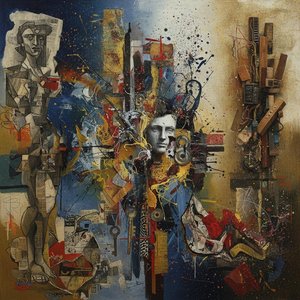
untitled
Reprodukció mérete

In 1905, Weber ventured to Europe, specifically Paris—the undisputed epicenter of avant-garde thought. His initial foray into the Académie Julian was merely preparatory; it was his immersion in the city’s vibrant artistic milieu that truly ignited his creative spirit. He forged enduring friendships with Henri Rousseau—whose naive yet profoundly evocative style captivated him—and found himself drawn into the orbit of luminaries like Henri Matisse and Pablo Picasso—artists who dared to dismantle conventional notions of representation. Weber frequented Gertrude Stein's salon, a legendary gathering place for artists, writers, and intellectuals, absorbing the latest currents in poetic discourse and artistic theory. This exposure to the School of Paris fundamentally recalibrated his artistic trajectory.
Upon returning to New York in 1909, Weber assumed the role of a cultural ambassador—boldly introducing Cubism to an American audience largely unfamiliar with its revolutionary principles. His early canvases during this period—such as Chinese Restaurant (1915)—stand as compelling testament to his embrace of Cubist fragmentation and geometric abstraction. However, this pioneering spirit was met not with universal acclaim but with vehement opposition from segments of the art establishment.
The 1911 exhibition at the 291 Gallery—organized by Alfred Stieglitz—marked a watershed moment—and an agonizing one for Weber. His paintings were subjected to what many consider “one of the most merciless critical whippings” ever endured by an American artist. Critics dismissed his work as “brutal,” “vulgar,” and utterly devoid of artistic merit, labeling it as a betrayal of traditional aesthetic values.
Despite this disheartening censure—and fueled by unwavering conviction—Weber persevered in his artistic pursuits. He recognized the importance of Stieglitz’s patronage and the encouragement offered by fellow artists Alvin Langdon Coburn, Clarence White, and John Cotton Dana—who championed Weber's vision as a crucial step toward legitimizing modernist aesthetics.
The sustained barrage of negative criticism prompted Weber to reassess his artistic direction. Around 1920, he began to temper his Cubist explorations with elements of Expressionism—a stylistic choice that allowed him to convey profound emotion and psychological depth. Simultaneously, Weber deepened his engagement with Jewish iconography—incorporating motifs from Jewish tradition into his paintings—reflecting a renewed connection to his heritage and exploring themes of faith, family, and remembrance.
Weber’s legacy extends beyond his artistic achievements; he stands as a pivotal figure in the history of American Modernism—a testament to resilience, innovation, and the transformative power of confronting adversity. His unwavering belief in artistic experimentation—coupled with his profound sensitivity to cultural identity—continues to inspire artists today.

1881 - 1961 , Lengyelország

Explore 10 iconic graphite masterpieces that redefined art history. Discover museum-quality legends on WahooArt.com.
Journey through history with 10 iconic mixed media masterpieces that redefined modern art. Explore the stories, textures, and techniques behind these legendary works. Find museum-quality reproductions and curated decor inspiration at WahooArt.com. Discover all masterpieces online.

Immerse yourself in the profound emotion of Abstract Expressionism. Explore our curated guide to the top 25 Mark Rothko masterpieces, from iconic color field paintings to museum-quality reproductions for your decor. Discover all masterpieces on WahooArt.com.

Journey through the dreamlike realms of Max Ernst. Explore 25 iconic Surrealist masterpieces, from pioneering collage to haunting landscapes. Find inspiration and museum-quality reproductions for your collection. Discover all masterpieces on WahooArt.com.
 Megtekintés
 Küldés
 Megosztás
 Részletek
 Útmutató

 Letöltés
 Hasonló darabok
 X-ray felvétel
 Diavetítés
 Kérdések és válaszok
 Statisztika
 Összes részlet megjelenítése






































 Az üvegkeretes opció csak 110 cm alatti méretben érhető el


