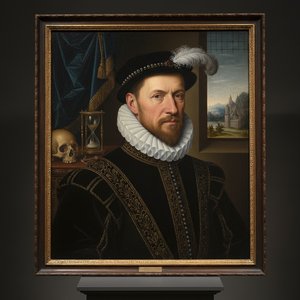
A Vision of Martyrdom and Grace
In the quiet corridors of the Musée d'Unterlinden, there exists a painting that does not merely depict a scene, but breathes with the raw, unshielded intensity of human suffering and divine resilience. Matthias Grünewald’s St Sebastian, completed around 1515, is far more than a religious icon; it is a profound psychological landscape. At first glance, the viewer is struck by the visceral reality of the figure—a man caught in the agonizing intersection of physical torment and spiritual transcendence. Unlike many Renaissance depictions that favor idealized, classical beauty, Grünewald embraces a Northern European tradition of unflinching realism. The saint’s body, pierced by arrows, serves as a canvas for an exploration of pain, yet there is an undeniable elegance in his posture that suggests a soul already beginning its ascent toward the divine.
The composition is a masterclass in dramatic tension and atmospheric depth. Grünewald utilizes a somber, dark interior to push the figure of St. Sebastian into the immediate foreground, creating an intimacy that feels almost intrusive. Light plays a pivotal role here, streaming from a window on the left to sculpt the musculature of the torso and illuminate the wounds with a haunting clarity. This use of chiaroscuro—the dramatic interplay of light and shadow—does more than create three-dimensional form; it directs the viewer's emotional journey, pulling our eyes toward the crimson marks of martyrdom. The presence of a delicate vase of flowers on the periphery offers a poignant contrast, a fleeting whisper of natural beauty set against the heavy, eternal weight of the saint's sacrifice.
The Language of Symbolism and Technique
To gaze upon this masterpiece is to read a complex language of symbols deeply rooted in the late medieval and early Northern Renaissance consciousness. Each arrow embedded in the flesh is not merely a weapon of execution but a symbol of the piercing nature of faith and the shared suffering of Christ. The vibrant yet subdued palette, dominated by earthy tones and punctuated by sudden, startling flashes of red, mirrors the biological reality of blood and wound. Grünew nwald’s technique involves a meticulous layering of oil paint that creates an illusionistic surface, allowing the textures of skin, fabric, and light to feel palpably real. His brushwork, while precise in anatomical detail, possesses a rhythmic energy that captures the very vibration of life under duress.
For the discerning collector or interior designer, a reproduction of this work offers more than mere decoration; it provides a focal point of profound intellectual and emotional gravity. The painting’s ability to command a room lies in its duality—it is simultaneously unsettling and deeply comforting. It invites contemplation on themes of endurance, the beauty found within struggle, and the transformative power of devotion. Whether placed in a curated gallery setting or as a centerpiece in a sophisticated study, St Sebastian serves as a timeless testament to the human spirit's capacity to endure the unimaginable and emerge with a quiet, luminous dignity.



 Megtekintés
 Kézzel festett másolat rendelése
 Küldés
 Megosztás
 Részletek

 Letöltés
 Hasonló darabok
 X-ray felvétel
 Diavetítés
 Statisztika


 Összes részlet megjelenítése






































 Az üvegkeretes opció csak 110 cm alatti méretben érhető el