The Venetian Vision of Matteo Raverti
Matteo Raverti emerges as a compelling figure in the ongoing narrative of Venetian painting, an artist deeply rooted in the traditions of his city yet possessing a distinctive voice that resonates with both historical reverence and personal interpretation. While biographical details surrounding Raverti remain somewhat elusive – a characteristic not uncommon for artists who prioritized the work itself over self-promotion – his canvases speak volumes about his mastery of technique, his fascination with architectural grandeur, and his ability to imbue biblical narratives with a uniquely Venetian sensibility. Raverti’s art is inextricably linked to Venice; it isn't merely *of* Venice but feels as though it has grown *from* the city itself – from its shimmering waterways and palatial facades to the very stones that whisper tales of centuries past. He doesn’t simply depict scenes, he recreates atmospheres, transporting viewers into a world where light dances on marble and history breathes in every brushstroke.
A Legacy Forged in Architectural Detail
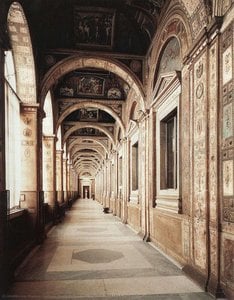
Raverti's oeuvre is particularly celebrated for its meticulous depictions of Venetian architecture. He doesn’t approach buildings as mere backdrops but rather as protagonists, imbuing them with a life and presence that rivals the human figures within his compositions. His paintings often feature iconic landmarks – the Doge's Palace, the Rialto Bridge, and especially the Ca d'Oro – rendered with astonishing accuracy and an almost obsessive attention to detail. This focus isn’t simply about technical skill; it reflects a deep appreciation for Venice’s unique urban fabric and its historical significance. He captures not just the physical structure of these buildings but also their symbolic weight, representing the power, wealth, and artistic legacy of the Venetian Republic.
The 'Drunkenness of Noah', perhaps his most recognized work, exemplifies this approach. While depicting a pivotal biblical scene, Raverti sets it within an elaborately rendered Venetian interior, seamlessly blending sacred narrative with the tangible reality of his surroundings. The architectural elements aren’t incidental; they become integral to the story itself, suggesting a parallel between Noah's fall and the potential excesses of Venetian society.
Influences and Artistic Development
Tracing Raverti’s artistic lineage reveals a clear connection to the great masters of the Venetian Renaissance – particularly Titian and Veronese. Like these predecessors, Raverti demonstrates a remarkable command of color, employing rich, luminous palettes and dynamic compositions that draw the viewer's eye across the canvas. However, he isn’t simply an imitator; he builds upon these foundations, incorporating elements of Baroque drama and a heightened sense of realism.
The influence of Canaletto, with his precise architectural renderings, is also readily apparent, though Raverti infuses his work with a greater emotional depth and narrative complexity. His early works suggest a focus on portraiture and smaller-scale religious scenes, gradually evolving towards larger, more ambitious compositions that showcase his mastery of perspective and spatial organization. This development wasn’t merely technical; it reflected a growing ambition to tackle complex themes and create paintings that would not only delight the eye but also engage the intellect and stir the soul.
Themes and Symbolism in Raverti's Work
Beyond his architectural prowess, Raverti consistently explores themes of morality, excess, and redemption within his biblical scenes. The 'Drunkenness of Noah', for example, isn’t simply a depiction of a scandalous event; it serves as a cautionary tale about the dangers of indulgence and the fragility of human virtue. He often juxtaposes opulent settings with moments of vulnerability or transgression, creating a sense of dramatic tension that compels viewers to confront uncomfortable truths.
- The use of light and shadow: Raverti masterfully employs chiaroscuro to highlight key figures and create a sense of emotional depth.
- Symbolic objects: His paintings are often filled with subtle symbolic details that add layers of meaning to the narrative.
- Venetian settings as metaphors: The city itself becomes a character, representing both the splendor and the potential pitfalls of earthly life.
His work isn’t overtly didactic; he doesn't preach or moralize. Instead, he presents complex narratives that invite viewers to draw their own conclusions, fostering a sense of intellectual engagement and personal reflection.
Historical Significance and Enduring Appeal
While Raverti may not be as widely recognized as some of his Renaissance predecessors, his work holds a significant place in the history of Venetian painting. He represents a continuation of the city’s artistic traditions, blending historical reverence with personal innovation. His meticulous attention to detail, his mastery of color and composition, and his ability to imbue biblical narratives with a uniquely Venetian sensibility have earned him a devoted following among collectors and art enthusiasts alike.
His paintings offer a glimpse into the soul of Venice, capturing not just its physical beauty but also its complex history and enduring spirit. As long as viewers seek to understand the artistic legacy of this remarkable city, Matteo Raverti’s work will continue to captivate and inspire.



 Megtekintés
 Áttérés Nyomtatványra
 Küldés
 Megosztás
 Részletek

 Letöltés
 Hasonló darabok
 X-ray felvétel
 Diavetítés
 Statisztika
 Összes részlet megjelenítése