Szerezzen be nyomtatásra kész fájlt, amely messze túlmutat a webes előnézeten. Minden általunk értékesített digitális kép az adatbázisunkban található nagy felbontású mesterfájlból származik – általában 5 000 és 15 000 pixel szélességű –, így magabiztosan nyomtathat nagy méretben, sokat vághat a képen, vagy reprodukálhatja a legfinomabb részleteket is.
Stúdiómból egyetlen fájl sem távozik feltartózkodás nélkül. Egy digitális szakértő az eredeti festménnyel összehasonlítja a színeket, és szükség esetén korrigálja azokat, majd professzionális retusználó eszközökkel javítja a tisztaságot és a részletgazdagságot — miközben mindig hű marad a művész vonalvezetéséhez és stílusához. Az eredmény egy olyan kép, amely úgy néz ki, mint egy festmény, és nem úgy, mint egy szűrőzött szkenn.
A végső munka befejezése előtt jóvá kell hagynia a képet: szakértőnk 72 órán belül elküldi azt e-mailben ellenőrzésre. Nem tetszett? Kérhet javításokat vagy korrekciókat, illetve visszatérítést kérhet, amennyiben a minőség nem felel meg az elvárásoknak.
Ez az a minőség, amelyre a kiadók, a design stúdiók, a galériák és a nyomdaték megbízhatnak.
Töltsön le nagy felbontású fájlt személyes kiállításokhoz, nyomtatáshoz és kreatív projektekhez. ( Váltás nyomtatványra Kézzel festett másolat rendelése)
Amikor a WahooArt.com szolgáltatást választja, nem csupán egy képet kap – professzionálisan felmagasított digitális műalkotást kap, amely precizitással készült, és amelyet megelégsedési gwarancia tesz biztoslássá. Az alábbiakban automatikusan minden benne 】
A nagy felbontású digitális képmásolatát a megrendelést követő 72 órán belül e-mailben elküldjük Önnek – azonnal használható formátumban.
Műve professzionális módon kerül optimalizálásra fejlett mesterséges intelligencia eszközök és manuális szerkesztés segítségével, biztosítva a maximális részletességet, tisztaságot és színpontosságot.
Véletlenül törölted vagy elvesztetted a fájlodat? Ne aggódj – bármikor ingyen újra megküldjük neked.
Élvezze műalkotásait azonnal, vám, illeték vagy szállítási költség nélkül – a digitális letöltések mindig adamentesek.
Professzionális eszközök és színkezelés segítségével garantáljuk, hogy digitális képe a lehető legpontosabban tükrözze az eredeti színeket.
Ha nemມີ elégedett a digitális képével, 100 napon belül felülvizsgáljuk vagy 100% visszatérítjük az amountot – kérdés बिना.
Nem tetszett a vásárlás? 100 napon belül teljes visszatérítést garantálunk a digitális fájl megvételétől számítva – kérdés nélkül.
Vásároljon 3 képet, spóroljon 10%-et - Vásároljon 5-öt, spóroljon 15%-et - Vásároljon 10+ képet, spóroljon 20%-at. Kiváló kreatív projektekhez, galériákhoz és ügynökségekhez.
Mariano Fortuny y Madrazo (1871-1949), the Spanish artist and designer born in Venice, remains a figure of profound mystery and captivating beauty. More than simply a painter or textile innovator, he was a master orchestrator of sensation – a creator who seamlessly blended Orientalist dreams with European elegance, theatrical spectacle with intimate design. His legacy isn’t confined to a single style; it's woven into the very fabric of his creations, most famously embodied in pieces like this exquisite tunic, a testament to his revolutionary approach to color, texture, and light.
Fortuny’s artistic journey began not in Spain, but amidst the vibrant canals and artistic circles of Venice. His father, Mariano Fortuny y Marsal, a celebrated genre painter who tragically died when Mariano was just three years old, instilled in him a deep appreciation for visual storytelling and the power of capturing fleeting moments. This early exposure shaped his own approach – he wasn’t merely depicting reality; he was constructing an atmosphere, a mood, a carefully curated experience for the viewer. His work frequently draws upon the exoticism of the East, particularly Morocco, reflecting a fascination with its rich culture, vibrant colors, and intricate patterns, which he then reinterpreted through a distinctly European lens.
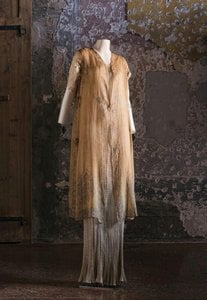
This particular tunic exemplifies Fortuny’s groundbreaking techniques. Crafted from Marocain silk crepe – a luxurious fabric known for its subtle sheen and ability to hold dye with remarkable intensity – it showcases his mastery of layering and manipulation. The design itself is a marvel of intricate stamping, a process he perfected over decades, allowing him to create incredibly detailed patterns directly onto the fabric without the need for traditional printing methods. This technique, combined with hand-painted embellishments, resulted in a surface that appears both meticulously planned and intuitively organic.
Notice the subtle variations in color – the deep blues and greens of the background, punctuated by delicate ivory accents. Fortuny’s use of color wasn't arbitrary; he understood its psychological impact, employing muted tones to evoke a sense of serenity and mystery while strategically placed highlights drew the eye to key elements within the design. The fabric itself is treated with a special finish that gives it a unique tactile quality – a slight sheen combined with a subtle matte effect, creating an illusion of depth and movement.
The tunic’s design isn't merely decorative; it’s laden with symbolic meaning. The geometric patterns—squares, rectangles, and stylized floral motifs—echo the aesthetic principles of ancient civilizations, particularly Egypt and Greece. Fortuny was deeply influenced by antiquities, collecting fragments of Roman mosaics and Egyptian textiles that informed his artistic vision. The arrangement of these shapes suggests a deliberate attempt to evoke a sense of timelessness, connecting the viewer to a distant past.
Furthermore, the tunic’s overall composition—the interplay of light and shadow, the carefully balanced proportions—recalls the principles of theatrical design, a field in which Fortuny made his most significant contributions. He revolutionized stage lighting with his “fortuny cyclorama dome,” a device that used reflected light to create seamless transitions between scenes, transforming the theater into a truly immersive experience. This same meticulous attention to detail and dramatic effect is evident in this tunic, suggesting a deliberate intention to transport the wearer – and the viewer—to another world.
Mariano Fortuny's work continues to resonate today, not only for its exquisite beauty but also for its innovative techniques and profound artistic vision. His influence can be seen in the work of countless designers, from Elsa Schiaparelli to Yves Saint Laurent. The “Delphos” gown, a signature piece of his oeuvre, remains an iconic symbol of elegance and sophistication. Reproductions of Fortuny’s textiles are highly sought after by collectors and interior designers alike, who appreciate their timeless appeal and the unique atmosphere they create. This tunic, in particular, stands as a powerful reminder of the artist's genius – a testament to his ability to transform simple materials into objects of extraordinary beauty and enduring significance.
A "Tunic" egy Textile alkotás.
A szerzői jogokkal kapcsolatban a "Tunic" mű közösségi tulajdon – a szerzői jog lejártt.
A "Tunic" alkotást egy Earthy színekből álló paletta határozza meg, melyet Espresso (#342722) dominál.

1871 - 1949 , Spanyolország
 Küldés
 Megosztás
 Részletek
 Útmutató

 Letöltés
 Hasonló darabok
 Diavetítés
 Kérdések és válaszok
 Statisztika


 Összes részlet megjelenítése