x
MegtekintésMegtekintés Műalkotás AR előnézeteMűalkotás AR előnézete Kézzel festett másolat rendelése Kézzel festett másolat rendeléseKép letöltése Kép letöltése KüldésKüldés

RészletekRészletek Kedvencekhez ad Kedvencekhez ad LetöltésLetöltés Hasonló darabokHasonló darabok X-ray felvételX-ray felvétel DiavetítésDiavetítés

Noah and the Rainbow (9)

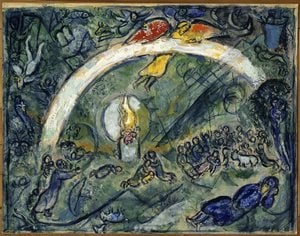
Experience Marc Chagall’s dreamlike "Noah and the Rainbow" pastel drawing, a surrealist masterpiece from 1963 featuring a man on horseback amidst a fantastical flood scene. Explore this iconic work and bring home a unique piece of art history.

Marc Chagall ikonikus „Szórványos Szélószúró” című alkotása egy szürreális művészeti érték, mely felfedik az artista mélyebb tudatosságát és egyedi képességét a megszokott és fantasztiikus elemök ötvözésére. Mély színekkel és jelképekkel tarkított festmény!

Giclée / Műnyomat

Múzeumi minőségű giclée vagy vászonnyomat, gyors gyártással és rugalmas finomítási lehetőségekkel. (Kézzel festett másolat rendelése Kézzel festett másolat rendeléseKép letöltése Kép letöltése)

P118B $10
P118H $10
P118W $10
P438Z $10
P508JH $12
P508YH $12
P805H $10
P805Z $10
P919BZ $10
P919G $10
P919XJ $10
P959ZH $10
P968JZ $12
W106C $8
W218G $10
W218JH $8
W218Y $10
W307PJ $10
W316G $10
W316PJ $8
W316Y $10
W398PJ $8
W4111J $10
W500HY $15
W500JH $15
W692G $12
W849H $8
W940BG $15
W953PJ $8

Standard méret
egyedi méretű
CM
INCH

Válasszon előre meghatározott méreteink közül, amelyek megfelelnek a műalkotás eredeti arányainak.

szélesség
magasság

Megadhat saját méreteket is egy konkrét kerethez vagy helyszínhez igazítva. Amennyiben a kiválasztott méret nem egyezik az eredeti kép arányokkal, a műalkotást le fogjuk vágni, vagy kiegészítjük a képet tükrözött vagy egyszínű szélekkel. A gyártás megkezdése előtt egy digitális tervezetet küldünk jóváhagyásra.
Kérjük, vegye figyelembe, hogy a képernyőn látható előnézet nem tükrözi a tényleges levágást vagy kiegészítést. Csak a tervezet mutatja pontosan a végső kompozíciót.
Bár az egyedi méretek is elérhetőek, az eredeti arányok megőrzése érdekében azt javasoljuk, hogy válasszon a előre meghatározott listából származó méretet.

Világszerte történő kiszállítás területére mindössze 2 hét alatt, a szokásos 4-5 hét helyett. (3 szeptember)

why_choose_icon
Ingyenes globális expressz szállítás
why_choose_icon
Prémium minőségű len vászon
why_choose_icon
Teljes körű szállítási biztosítás
why_choose_icon
Vámvisszatérítési Garancia
why_choose_icon
Hiteles színpontosság garancia
why_choose_icon
60 napos visszaküldési lehetőség (csak hibás termékek esetén)
why_choose_icon
100% pénzvisszatérítési garancia
why_choose_icon
Több darab vásárlása esetén kedvezmény

Összesített ár

$ 68

reproduction

Noah and the Rainbow (9)

Giclée / Műnyomat

Reprodukció mérete

-

Összesített ár

$ 68

Gyors információk

  • Year: 1963
  • Title: Noah and the Rainbow
  • Movement: Surrealism
  • Influences: Folklore
  • Artist: Marc Chagall
  • Notable elements or techniques: Symbolic figures & Expressionist color
  • Medium: Pastel drawing

A Dreamscape of Faith: The Ethereal Vision of Noah and the Rainbow

In the vast, kaleidoscopic universe of Marc Chagall, certain moments transcend the boundaries of mere biblical retelling to become profound meditations on the human spirit. His 1963 masterpiece, Noah and the Rainbow, is one such portal. This work does not simply depict a post-diluvian promise; it invites the viewer into a surrealist dreamscape where the weight of history meets the lightness of divine hope. As one gazes upon the composition, the boundaries between reality and imagination dissolve, replaced by a luminous atmosphere that feels as much like a cherished memory as it does a sacred vision. The painting captures a fantastical moment following the Great Flood, rendered with an unmistakable Expressionist flair that speaks to Chagall’s lifelong fascination with the interplay of myth and personal identity.

The heart of the piece is anchored by a striking, dreamlike central figure: a man perched atop a horse, his gaze directed upward toward the heavens. This upward movement serves as a spiritual conduit, drawing the eye from the terrestrial struggle toward the celestial promise. Scattered throughout this busy, enchanting landscape are other figures and elements—a boat drifting on the periphery and people moving through a dense, mystical forest—all interacting in a way that defies traditional physics but adheres perfectly to the logic of a dream. For the collector or interior designer, this piece offers more than just visual interest; it provides a focal point of profound narrative depth, making it an ideal centerpiece for spaces designed to inspire contemplation and wonder.

Technique and the Alchemy of Color

Chagall’s mastery lies in his ability to manipulate medium and color to evoke visceral emotional responses. In Noah and the Rainbow, he employs a sophisticated layering of Indian ink, oil, and pastel on paper to achieve a remarkable textural depth. The meticulous application of ink provides a foundational structure, grounding the more whimsical elements with fine detail and sharp definition. Over this, the fluid application of oil paints infuses the canvas with a radiant, inner light, particularly evident in the lush blues and greens that dominate the landscape. These colors are not merely decorative; they are echoes of Chagall’s formative years in Vitebsk, Belarus, reflecting the verdant, mystical landscapes of his childhood.

The true triumph of the technique, however, is found in the depiction of the rainbow itself. A radiant band of color that dominates the upper portion of the composition, it acts as a bridge between the earthly and the divine. The way the light seems to bleed through the pigments creates a sense of translucency, as if the rainbow were composed of pure emotion rather than mere light. This luminous quality makes a high-quality reproduction of this work particularly captivating, as the interplay of light and shadow can be captured to bring that same sense of spiritual transcendence into a modern home or gallery setting.

Symbolism and the Legacy of a Modernist Icon

To understand this artwork is to understand the cultural tapestry of Chagall’s soul. His work is deeply rooted in the duality of his upbringing—the juxtaposition of Orthodox churches and Jewish marketplaces in Eastern Europe. In Noah and the Rainbow, this duality manifests as a tension between the heavy, grounded reality of the flood's aftermath and the weightless, soaring hope of the rainbow. The rainbow serves as the ultimate symbol of God’s covenant, a promise of peace and renewal that resonates universally, transcending its specific biblical origins to represent the resilience of life itself.

For those seeking to curate an environment of sophistication and emotional resonance, this piece offers an unparalleled opportunity. It is a work that demands attention through its complexity yet rewards the viewer with a sense of peace. Whether placed in a quiet study, a grand living area, or a curated art collection, Noah and the Rainbow brings with it the legacy of a master who could paint the very essence of a dream. Owning a reproduction of such a significant work allows one to inhabit a space where memory, faith, and the infinite beauty of the imagination are always present.


A művész életrajza

A Life Painted in Dreams: The World of Marc Chagall

Marc Chagall, born Moishe Shagal in 1887 in the small Belarussian town of Liozna near Vitebsk, wasn’t merely a painter; he was a poet of color, a weaver of dreams, and a chronicler of memory. His life, spanning nearly a century, mirrored the tumultuous currents of the 20th century, yet his art remained steadfastly rooted in a deeply personal vision—one infused with the folklore of his Hasidic Jewish upbringing and an unwavering belief in the power of imagination. Vitebsk itself was more than just a birthplace; it became the emotional core of his artistic universe, a recurring motif populated by flying figures, whimsical animals, and the vibrant hues of remembered landscapes. The town’s unique blend of cultures—Russian Orthodox churches alongside bustling Jewish marketplaces—forged an aesthetic sensibility that would defy easy categorization throughout his long career. Though he sought formal training first with a local sign painter and later in St. Petersburg under Léon Bakst, and then in Paris at the Académie de la Grande Chaumière, Chagall never fully embraced any single artistic movement. He absorbed elements of Cubism, Symbolism, and Fauvism, but always filtered them through his own intensely personal lens, creating a style that was uniquely, unmistakably Chagall.

Early Years and Artistic Beginnings

Chagall’s formative years were marked by hardship and displacement. Born into a family of impoverished Jewish artisans, he experienced the trauma of pogroms—violent anti-Jewish riots—which instilled in him a lifelong preoccupation with themes of persecution and resilience. Despite these challenges, Chagall possessed an innate talent for drawing and painting from a young age. He initially studied at Vitebsk Art School, where he honed his skills under Léon Bakst, a prominent figure in the Ballets Russes avant-garde movement. This exposure to theatrical art profoundly influenced his visual language, fostering a fascination with dynamism and expressive gesture. However, Chagall’s artistic ambitions extended beyond the confines of academic training; he sought inspiration from folk traditions—particularly Jewish folklore—which would become central to his artistic vision. His early canvases already hinted at the distinctive style that would define his career: bold color palettes, flattened perspectives, and fantastical imagery—elements that defied conventional realism.

The Symbolism of Vitebsk

Vitebsk remained an indelible presence in Chagall’s imagination throughout his life. The town served as a constant source of inspiration for his paintings, appearing repeatedly in works such as I and the Village (1911) and *Over Vitebsk* (1920-1922). These canvases aren't merely depictions of place; they are explorations of identity, memory, and the relationship between the individual and community. The village isn’t rendered realistically but as a fragmented collection of recollections, imbued with symbolic meaning. Houses tumble upside down, figures float in midair, and animals mingle seamlessly—creating an otherworldly atmosphere that captures the essence of Vitebsk's cultural landscape. Chagall’s use of color was particularly striking during this period. He employed vibrant hues—blues, yellows, reds—to convey emotion rather than literal representation, reflecting the spiritual fervor of his Jewish upbringing. This stylistic approach wasn’t accidental; it stemmed from a desire to move beyond mere imitation of reality and capture the essence of feeling, the weight of memory, and the power of folklore.

The Influence of Cubism and Surrealism

While Chagall rejected strict adherence to any single artistic movement, he absorbed influences from Cubism and Surrealism—particularly from Pablo Picasso and André Breton. He experimented with fragmented perspectives and geometric forms, as seen in works like *The Chapel of Saint Helena* (1927), adapting cubist techniques to express his inner vision. Simultaneously, Chagall embraced the dreamlike logic of Surrealism, incorporating fantastical imagery and irrational juxtapositions into his canvases. This fusion of styles resulted in a distinctive visual language characterized by lyrical abstraction—a hallmark of his artistic oeuvre. He sought inspiration from biblical narratives and Jewish mysticism, translating these themes into emotionally charged paintings that explored profound questions about faith, suffering, and redemption.

Major Achievements and Legacy

Throughout his prolific career, Chagall achieved international acclaim for his monumental canvases and innovative stained glass windows. His masterpiece, *White Crucifixion* (1937), stands as a poignant meditation on the horrors of Nazism and Jewish persecution—a testament to his artistic courage and moral conviction. He continued to produce works during World War II, reflecting the anxieties and uncertainties of the time. Following the war, Chagall emigrated to New York City, where he established himself as one of America’s leading artists. His paintings from this period explored themes of exile and displacement, capturing the spirit of a generation grappling with trauma and loss. He received numerous prestigious commissions, including the ceiling of the Paris Opera (1964), a breathtaking explosion of color and form that celebrated musical masterpieces. And his stunning stained glass windows for the Hadassah Hebrew University Medical Center synagogue in Jerusalem—a project undertaken in collaboration with Anatoly Yankilevich—transformed sacred space into an immersive experience of light and color. Marc Chagall’s legacy extends beyond his artistic creations; it resides in the enduring power of his vision—a vision that celebrates love, memory, and the boundless possibilities of the human imagination. He left behind a body of work that is both deeply personal and universally accessible, inviting viewers to lose themselves in a world painted with dreams and illuminated by hope. His art continues to inspire, challenge, and move us, ensuring that his vibrant and imaginative spirit will live on for generations to come.
Marc Chagall

Marc Chagall

1887 - 1985 , Білорусь

A művészről röviden

  • Artistic Movement Or Style: Современный стиль
  • Artists Or Movements Influenced By This Artist: ['Сюрреализм']
  • Artists Who Influenced This Artist:
    • Леон Бакст
    • Дюманьи
  • Date Of Birth: 6 július 1887
  • Date Of Death: 28 március 1985
  • Full Name: Marc Chagall
  • Nationality: Білім беруші
  • Notable Artworks:
    • В городе Витебск
    • Белая распятие
  • Place Of Birth: Liozna, Беларусь
Fedezze fel a műalkotásokat témák, stílusok és jellemzők szerint csoportosítva.